Your AI gardener, in your pocket
Photograph a plant and Greenly names it, finds what’s wrong and plans its care by the frost dates of your own garden — from sowing to harvest, with reminders.

Scan with your phone to open it on Google Play
Free to start · no account needed · English, Українська, Русский, Español
Blogger or garden shop? Earn 30% of your audience’s subscriptions for 12 months →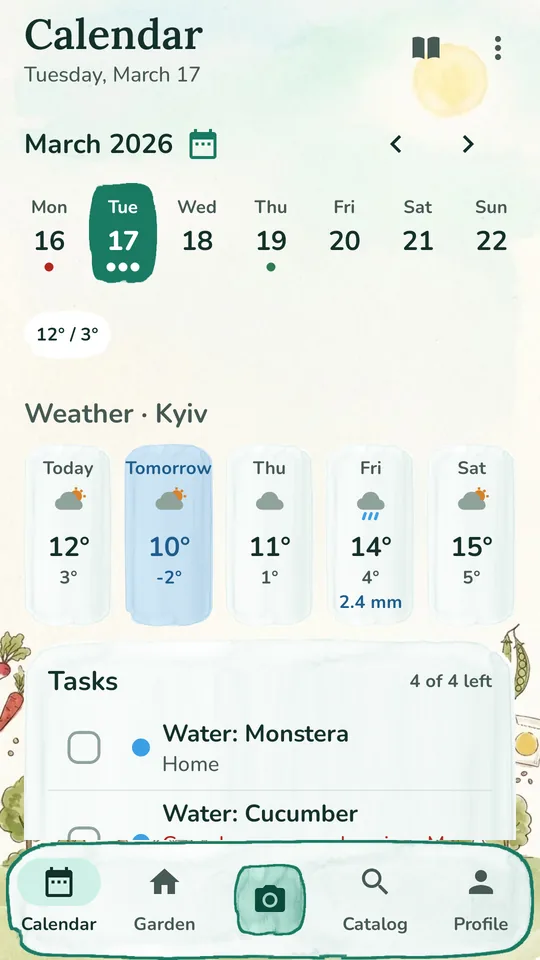
One camera, five answers
Point the phone at a plant, a leaf, a fruit, a spot on the sill or a bottle's label.
- What is it?
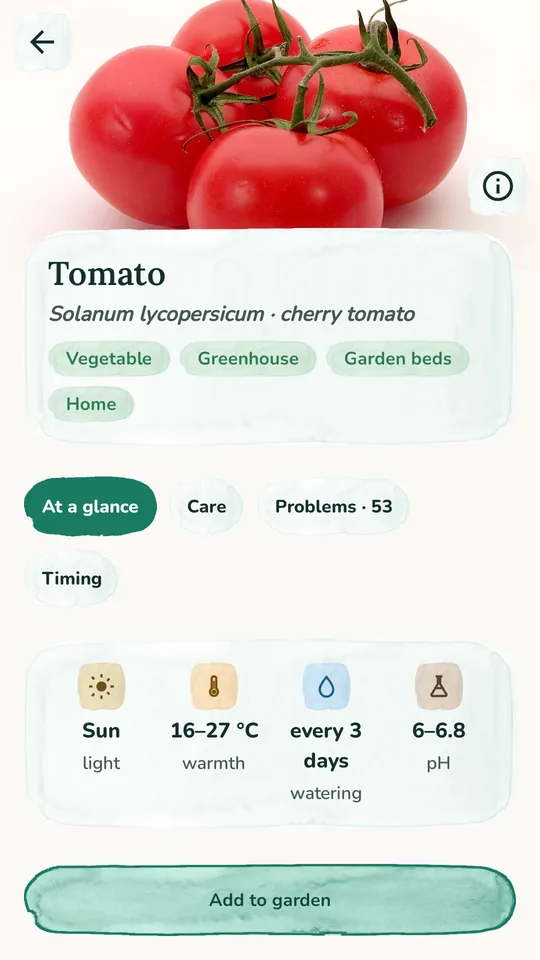
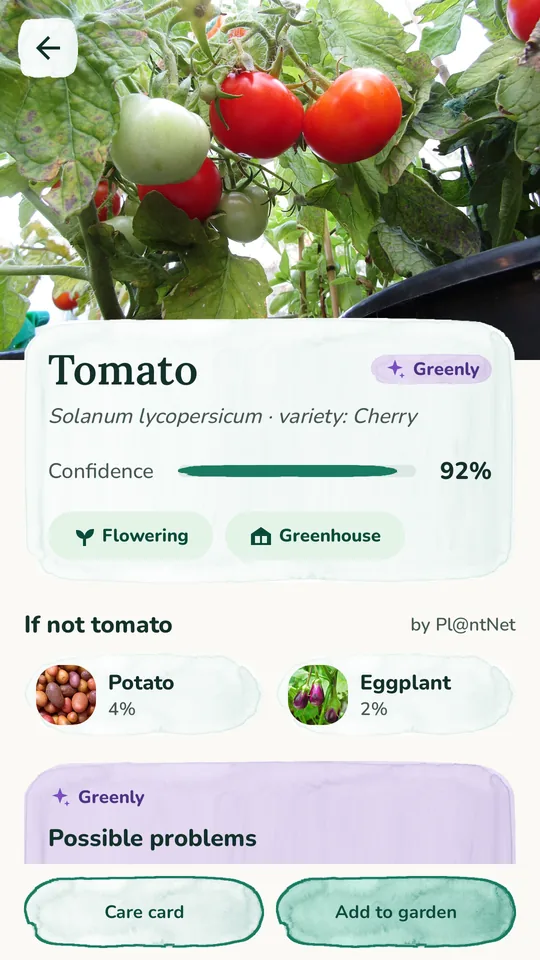
- The plant's name and its care card.
In the app → - What's wrong?
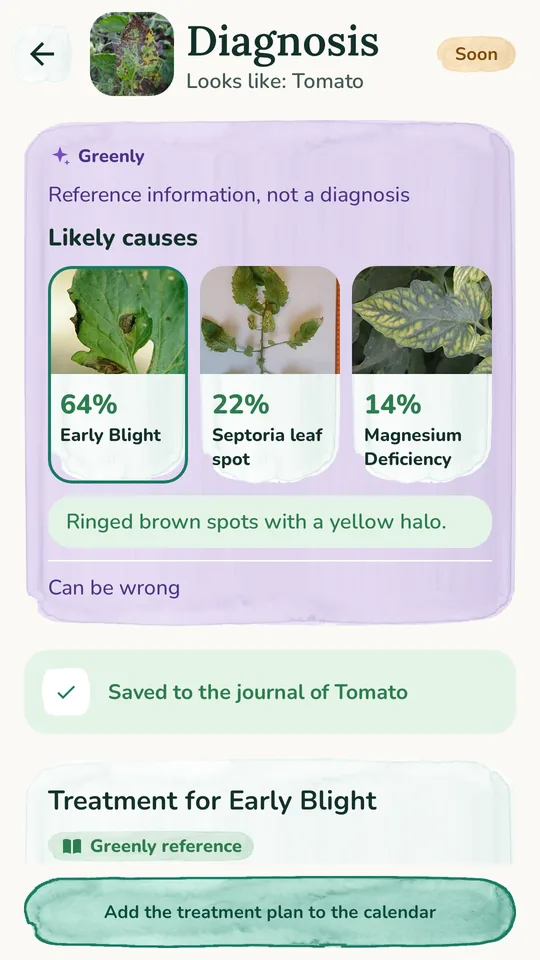
- Two or three likely causes with how sure it is, and a plan: organic and chemical. No brands.
In the app → - Ripe?
- Ripe, almost, or how many days to wait — and how to check by hand.
In the app → - Light
- How much light a spot really gets, and which of your plants will be happy there.
In the app → - Label
- The dose for your watering can, read only from the label of the bottle.
In the app →
Dates from your own frosts
Frost dates come from 10 years of weather records for your location, anywhere in the world. Every plant in your greenhouse, beds, orchard or windowsill gets its own dates, and the day shows as four simple tiles: water, feed, treat, garden work. Frost warnings come 48 hours ahead.
- Sowing, pricking out, planting out and harvest
- Pruning and flowering for fruit trees and shrubs
- Frost and heat warnings; rain counts as watering

Frost warnings 48 hours ahead
Set your town and Greenly checks the forecast morning and evening, and reminds you to cover the seedlings. Free, always.
Reminders stay free
Watering, feeding and treatment reminders are local and free forever: €0 on every plan. They come at the time you choose, with or without the internet, and can be read aloud.
Free, or Premium
Free: the calendar, reminders, weather, journal and the whole reference, 3 plants, 5 plant identifications and 3 diagnoses a month. Premium: unlimited plants, 60 identifications and 60 diagnoses a month. If you cancel, your garden stays readable. Premium costs $1.50 a month or $12 a year, two to five times less than other paid plant apps.
Questions gardeners ask
How does Greenly know when to sow?
Greenly takes the average last spring frost and first autumn frost for your coordinates from 10 years of historical weather (the Open-Meteo archive) and counts every date from them: sowing, pricking out, planting out, feeding and the expected harvest. The dates are worked out on the phone and kept offline, so the calendar and reminders keep working without the internet. Change the location and every plant's dates move with it.
Is Greenly free?
Yes, to start. The calendar, reminders, weather warnings, journal and the full plant reference are free, with up to 3 plants, 5 identifications and 3 diagnoses a month. Premium adds unlimited plants and 60 identifications and 60 diagnoses a month. Reminders are never behind a paywall, and if you cancel Premium your garden stays readable.
How does the photo diagnosis work?
Photograph the affected leaf, fruit or stem and, if you like, answer a few short questions. Greenly returns 2–3 likely causes with how sure it is, and a treatment plan in two versions, organic and chemical, without brand names. It is reference information, not a verdict: look at the plant yourself and always follow the product label.
Which plants and places does it cover?
Vegetables, herbs, berries, fruit trees, shrubs, houseplants and garden flowers, each with light, water, temperature, feeding and pests. It works anywhere in the world: the climate is counted from your coordinates, not from a list of regions, and units follow your country. The app knows more than 180 plants and 100 pests, diseases and disorders; this site lists frost dates for 197 cities in 53 countries.
Let Greenly look after your garden
Get it on Google PlayDiagnoses and treatment advice are reference information, not professional advice. Always follow the product label; for a serious or spreading problem, ask a local agronomist or extension service.
