 Greenly
How to grow tuberous begonia (Begonia × tuberhybrida)
Begonia × tuberhybrida · Begonia tuberhybrida, begonia
When to plant tuberous begonia?
Plant the tubers straight into the bed after your last spring frost, once the soil has warmed.
In an unheated greenhouse everything moves about three weeks earlier.
It flowers about 70 days after growth starts and keeps flowering for about 90 days.
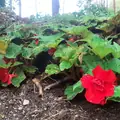
Tuberous Begonia (Begonia × tuberhybrida) — summer-flowering begonias grown from tubers, with flowers 5–10 cm across in white, yellow, orange, rose, red and pink, on upright or trailing plants for beds, pots and hanging baskets. They flower until the first frosts. Tuberous Begonia grows best in partial shade. Water it about every 2 days while it grows.

Quick facts
| Type | Flower |
|---|---|
| Latin name | Begonia × tuberhybrida |
| Family | Begoniaceae |
| Also called | Begonia tuberhybrida, begonia |
| Planted as | tubers |
| Life span | grown for one season |
| Planting season | spring |
| Light | Partial shade |
| Frost | does not tolerate frost |
| Soil for planting | from 10 °C |
| Growth starts | 14 days after planting |
| First flowers | 70 days after growth starts |
| Flowering lasts | 90 days |
| Grown in | Greenhouse, Open ground, At home |
How long does tuberous begonia take from planting to flowering?
From planting to the first flowers: about 84 days, or 12 weeks.
| Step | Day |
|---|---|
| Planting | 0 |
| Growth starts | 14 |
| First flowers | 84 |
| End of flowering | 174 |
Days count from the day of sowing or planting, by the figures of the card.
Where does tuberous begonia grow?
322 records of the plant in gardens, fields and the wild worldwide; most photos come from Colombia, Norway, New Zealand, and United States.

Tuberous Begonia care by growth stage
Greenhouse
| Stage | Watering | Temperature | Feeding |
|---|---|---|---|
| Growth | every 2 days | — | balanced (NPK), 14 days into the stage; balanced (NPK), 35 days into the stage; balanced (NPK), 56 days into the stage |
| Flowering | every 2 days | — | potassium, at the start of the stage; potassium, 14 days into the stage; potassium, 28 days into the stage; potassium, 42 days into the stage; potassium, 56 days into the stage; potassium, 70 days into the stage; potassium, 84 days into the stage |
Open ground
| Stage | Watering | Temperature | Feeding |
|---|---|---|---|
| Growth | every 2 days | — | balanced (NPK), 14 days into the stage; balanced (NPK), 35 days into the stage; balanced (NPK), 56 days into the stage |
| Flowering | every 2 days | — | potassium, at the start of the stage; potassium, 14 days into the stage; potassium, 28 days into the stage; potassium, 42 days into the stage; potassium, 56 days into the stage; potassium, 70 days into the stage; potassium, 84 days into the stage |
At home
| Stage | Watering | Temperature | Feeding |
|---|---|---|---|
| Growth | every 2 days | — | balanced (NPK), 14 days into the stage; balanced (NPK), 35 days into the stage; balanced (NPK), 56 days into the stage |
| Flowering | every 2 days | — | potassium, at the start of the stage; potassium, 14 days into the stage; potassium, 28 days into the stage; potassium, 42 days into the stage; potassium, 56 days into the stage; potassium, 70 days into the stage; potassium, 84 days into the stage |
Growing notes
Light
Grows best in partial shade; it needs bright light to flower well, but strong sun can burn the leaves.
Soil
Moist, well-drained soil with plenty of organic matter; in pots, a well-drained potting mix.
Care
Start tubers indoors 8–10 weeks before the last frost, hollow side up and covered with 1–2.5 cm of compost, at about 18–21 °C, keeping the compost moist but not wet so the tubers do not rot. Feed a dilute fertiliser every 2–3 weeks, then a high-potassium feed every two weeks until September. Harden off and plant out in a sheltered, partly shaded spot after the last frost. Water often but not too much, and keep water off the leaves; too much water or fertiliser makes the buds drop. Lift the tubers before the first frost, dry them and store at about 7 °C. Toxic to cats and dogs, the tubers most of all.
Pests and diseases of Tuberous Begonia
7 problems are recorded for tuberous begonia; each has a page with symptoms, treatment and prevention.
Tuberous Begonia: all pests and diseases with photos
Diseases
Pests
Other plants of the Begoniaceae family
Tuberous Begonia belongs to Begoniaceae; 1 other plant of this family has a guide here.
 Rex begonia
Plant lists it is in
Part of: Garden flowers · Summer bulbs and tubers · Long-flowering plants · Flowers for shade
Sources
Figures checked against these sources.
- gbif.org/species/8374675
- en.wikipedia.org/wiki/Begonia_×_tuberhybrida
- uk.wikipedia.org/wiki/Бегонія
- ru.wikipedia.org/wiki/Бегония
- hgic.clemson.edu/factsheet/begonia/
- rhs.org.uk/plants/begonias/outdoors
- yardandgarden.extension.iastate.edu/faq/when-should-i-start-tuberous-begonias-indoors
- longfield-gardens.com/blogs/spring-planted-bulbs-how-to/how-to-start-tuberous-begonias-ind
- aspca.org/pet-care/animal-poison-control/toxic-and-non-toxic-plants/begonia
