 Greenly
How to grow bleeding heart (Lamprocapnos spectabilis)
Lamprocapnos spectabilis · Asian bleeding heart, lyre flower
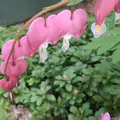
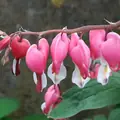
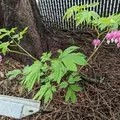
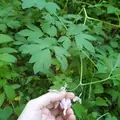
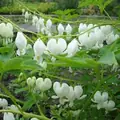
Bleeding heart (Lamprocapnos spectabilis) — clump-forming perennial from north-east Asia, 60–90 cm tall, with soft divided leaves and arching stems hung with heart-shaped rose-pink flowers with white tips (white in some forms) in late spring. The leaves turn yellow and die back by midsummer. Bleeding heart grows best in partial shade and soil with pH 6–8. Water it about every 7 days while it grows.

When to plant bleeding heart?
It tolerates light frost: plant divisions into the bed about three weeks before your last spring frost.
It flowers about 31 days after growth starts and keeps flowering for about 30 days.
Quick facts
| Type | Flower |
|---|---|
| Latin name | Lamprocapnos spectabilis |
| Family | Papaveraceae |
| Also called | Asian bleeding heart, lyre flower |
| Planted as | divisions |
| Life span | perennial |
| Planting season | spring |
| Light | Partial shade |
| Soil pH | 6–8 |
| Frost | tolerates light frost |
| Soil for planting | from 5 °C |
| First flowers | 31 days after growth starts |
| Flowering lasts | 30 days |
| Grown in | Open ground |
How long does bleeding heart take from planting to flowering?
From planting to the first flowers: about 31 days, or 4 weeks.
| Step | Day |
|---|---|
| Planting | 0 |
| Growth starts | 0 |
| First flowers | 31 |
| End of flowering | 61 |
Days count from the day of sowing or planting, by the figures of the card.
Where does bleeding heart grow?
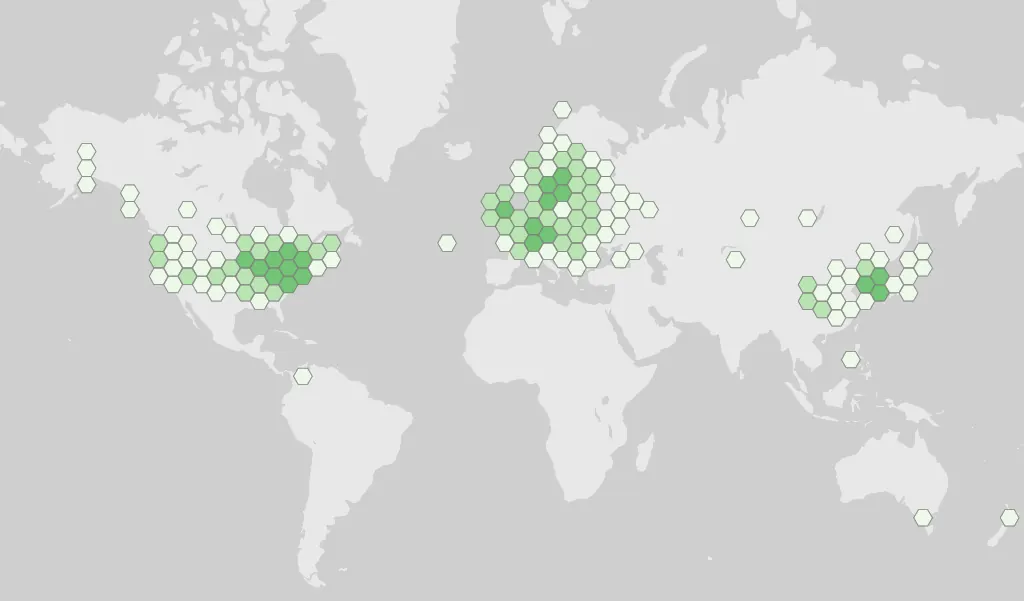
5,379 records of the plant in gardens, fields and the wild worldwide; most photos come from United States, Germany, Norway, Czechia, and Finland.
Bleeding heart care by growth stage
Open ground
| Stage | Watering | Temperature | Feeding |
|---|---|---|---|
| Growth | every 7 days | — | — |
| Flowering | every 7 days | — | — |
Growing notes
Light
Part shade, ideally morning sun and afternoon shade; it takes full sun only in a cool climate where the soil stays moist.
Soil
Moist, fertile, humus-rich, well-drained soil, neutral to slightly alkaline. It rots in soil that stays wet in winter and dies back early in soil that dries out in summer.
Care
Plant or divide in early spring, or in autumn after the leaves have died down. Keep the soil moist in spring and early summer; steady moisture keeps the leaves longer, drought sends it dormant sooner. After flowering the leaves yellow and disappear by midsummer — normal summer dormancy, not a dead plant — so grow it among hostas or ferns that fill the gap. Pests are few — aphids on the flower stems and slugs on the leaves. It may self-seed; seedlings flower after two or three years. All parts are poisonous if eaten and the leaves can irritate skin, so wear gloves; it is toxic to dogs and cats, though the risk is lower for them than for grazing livestock.
Other plants of the Papaveraceae family
Bleeding heart belongs to Papaveraceae; 1 other plant of this family has a guide here.
 Corn poppy
Plant lists it is in
Part of: Garden flowers · Perennial garden flowers · Flowers for shade
Sources
Figures checked against these sources.
- gbif.org/species/2888564
- wikidata.org/wiki/Q161171
- en.wikipedia.org/wiki/Lamprocapnos
- uk.wikipedia.org/wiki/Lamprocapnos_spectabilis
- ru.wikipedia.org/wiki/Дицентра_великолепная
- es.wikipedia.org/wiki/Lamprocapnos
- it.wikipedia.org/wiki/Dicentra
- fr.wikipedia.org/wiki/Cœur_de_Marie
- pt.wikipedia.org/wiki/Dicentra_spectabilis
- de.wikipedia.org/wiki/Tränendes_Herz
- cs.wikipedia.org/wiki/Srdcovka_nádherná
- pl.wikipedia.org/wiki/Serduszka_okazałe
- rhs.org.uk/plants/293049/lamprocapnos-spectabilis/details
- missouribotanicalgarden.org/PlantFinder/PlantFinderDetails.aspx?taxonid=292782
- plants.ces.ncsu.edu/plants/lamprocapnos-spectabilis/
- hort.extension.wisc.edu/articles/bleeding-heart-dicentra-spectabilis/
- weather.gov/media/lsx/climate/stl/temp/temp_stl_freeze_data.pdf
- petpoisonhelpline.com/poison/bleeding-hearts/
