 Greenly
How to care for Fittonia albivenis
Fittonia albivenis · nerve plant, mosaic plant
When to plant fittonia?
Plant or repot fittonia in spring, as it starts into growth; early to midsummer also works. It is a houseplant, so it has no outdoor planting date and no frost decides it: just avoid autumn and winter, when growth slows and fresh compost stays wet too long. After that, move it to a slightly larger pot about every three years, or sooner once roots circle the pot or grow through the drainage holes.
Watering in the growing and resting halves of the year: Watering and repotting fittonia through the year.
Sources: RHS: How to repot a plant · Penn State Extension: Repotting houseplants
Fittonia (Fittonia albivenis) — a low, creeping tropical perennial from South American rainforests, up to about 20 cm tall, grown for its leaves netted with white, pink or red veins. It needs humid air and suits terrariums. Fittonia needs partial shade. Water it about every 4 days while it grows and about every 8 days in the winter rest.

Watering and repotting fittonia through the year
It lives indoors all year, so it has no sowing or planting dates: it grows from March to September and rests from October to February (the other way round in the southern hemisphere).
Repot it about every 36 months.
Quick facts
| Type | Houseplant |
|---|---|
| Latin name | Fittonia albivenis |
| Family | Acanthaceae |
| Also called | nerve plant, mosaic plant |
| Light | Partial shade |
| Frost | does not tolerate frost |
| Repotting | every 36 months |
| Grown in | At home |
Where does fittonia grow?
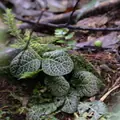
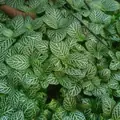
866 records of the plant in gardens, fields and the wild worldwide; most photos come from Ecuador, Peru, Brazil, Bolivia, and El Salvador.

Fittonia care by growth stage
At home
| Stage | Watering | Temperature | Feeding |
|---|---|---|---|
| Growth | every 4 days | — | balanced (NPK), 14 days into the stage; balanced (NPK), 74 days into the stage; balanced (NPK), 134 days into the stage |
| Winter rest | every 8 days | — | — |
Growing notes
Light
A bright spot out of direct sunlight, which scorches the leaves; near a north- or east-facing window is ideal. Yellowing leaves usually mean too little light.
Soil
Moisture-retentive peat-free houseplant or multi-purpose compost in a pot with drainage; the roots are shallow, so a small pot is enough. It dislikes waterlogged compost.
Care
Keep the compost moist by watering often, about twice a week, but never leave it waterlogged; in winter keep it barely moist. A dry plant wilts dramatically but usually recovers soon after a thorough watering. It needs humid air – a terrarium, a bathroom or a tray of damp gravel – and warmth above 15 °C, best above 17 °C, away from cold draughts and radiators. Feed lightly every two or three months in spring and summer with a half-strength general-purpose or houseplant fertiliser, pinch the stems to keep it bushy and repot every few years. It is non-toxic to cats and dogs.
Pests and diseases of Fittonia
3 problems are recorded for fittonia; each has a page with symptoms, treatment and prevention.
Diseases
Pests
Other plants of the Acanthaceae family
Fittonia belongs to Acanthaceae; 2 other plants of this family have a guide here.
 Zebra plant
 Polka dot plant
Plant lists it is in
Part of: Houseplants · Houseplants safe for cats and dogs · Houseplants you rarely repot · Thirsty houseplants
Sources
Figures checked against these sources.
- aspca.org/pet-care/animal-poison-control/toxic-and-non-toxic-plants/nerve-plant
- plants.ces.ncsu.edu/plants/fittonia-albivenis/
- gbif.org/species/5574508
- wikidata.org/wiki/Q144956
- en.wikipedia.org/wiki/Fittonia_albivenis
- uk.wikipedia.org/wiki/Фіттонія
- ru.wikipedia.org/wiki/Фиттония_беложильчатая
- es.wikipedia.org/wiki/Fittonia_verschaffeltii
- rhs.org.uk/plants/fittonia/how-to-grow-fittonia
- rhs.org.uk/plants/77753/fittonia-albivenis-verschaffeltii-group/details
- rhs.org.uk/plants/fittonia
