 Greenly
How to care for Gardenia jasminoides
Gardenia jasminoides · cape jasmine
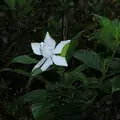
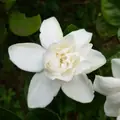
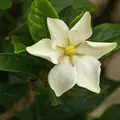
Gardenia (Gardenia jasminoides) — evergreen shrub from China and Japan with glossy dark green leaves and very fragrant, creamy-white flowers about 8 cm across in summer and autumn. Grown mainly as a flowering houseplant. Gardenia needs partial shade and 15–24 °C. Water it about every 4 days while it grows and about every 7 days in the winter rest.

Watering and repotting gardenia through the year
It lives indoors all year, so it has no sowing or planting dates: it grows from March to September and rests from October to February (the other way round in the southern hemisphere).
Repot it about every 12 months.
When to plant gardenia?
Plant or repot gardenia in spring, as it starts into growth; early to midsummer also works. It is a houseplant, so it has no outdoor planting date and no frost decides it: just avoid autumn and winter, when growth slows and fresh compost stays wet too long. After that, move it to a slightly larger pot about every year, or sooner once roots circle the pot or grow through the drainage holes.
Watering in the growing and resting halves of the year: Watering and repotting gardenia through the year.
Sources: RHS: How to repot a plant · Penn State Extension: Repotting houseplants
Quick facts
| Type | Houseplant |
|---|---|
| Latin name | Gardenia jasminoides |
| Family | Rubiaceae |
| Also called | cape jasmine |
| Light | Partial shade |
| Frost | does not tolerate frost |
| Repotting | every 12 months |
| Grown in | At home |
Where does gardenia grow?
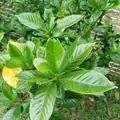
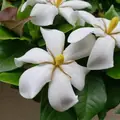
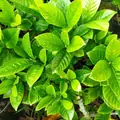
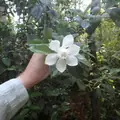
10,370 records of the plant in gardens, fields and the wild worldwide; most photos come from Taiwan, Japan, Hong Kong SAR China, China, and French Polynesia.

Gardenia care by growth stage
At home
| Stage | Watering | Temperature | Feeding |
|---|---|---|---|
| Growth | every 4 days | 15…24 °C | nitrogen, 14 days into the stage; nitrogen, 21 days into the stage; nitrogen, 28 days into the stage; nitrogen, 35 days into the stage; nitrogen, 42 days into the stage; nitrogen, 49 days into the stage; nitrogen, 56 days into the stage; nitrogen, 63 days into the stage; nitrogen, 70 days into the stage; nitrogen, 77 days into the stage; nitrogen, 84 days into the stage; nitrogen, 91 days into the stage; nitrogen, 98 days into the stage; nitrogen, 105 days into the stage; nitrogen, 112 days into the stage; nitrogen, 119 days into the stage; nitrogen, 126 days into the stage; nitrogen, 133 days into the stage; nitrogen, 140 days into the stage; nitrogen, 147 days into the stage; nitrogen, 154 days into the stage; nitrogen, 161 days into the stage; nitrogen, 168 days into the stage; nitrogen, 175 days into the stage; nitrogen, 182 days into the stage |
| Winter rest | every 7 days | 10…16 °C | — |
Growing notes
Light
Bright light but no direct sun; a west-facing windowsill suits it in summer, and in winter move it to a south-facing one for as much light as possible. Strong, hot sun scorches the leaves, while poor light and cold give yellow shoots and slow growth.
Soil
Needs acid (ericaceous) potting compost; Clemson gives a pH below 6.0. Repot every spring into a pot only slightly larger, or replace the top 5 cm of compost. Use rainwater in hard-water areas so the compost stays acid; yellowing new leaves then often mean iron deficiency, treated with chelated iron.
Care
Keep the compost constantly moist but not waterlogged in spring and summer, a little drier in winter, but never let it dry out. It likes 21–24 °C by day and 15–18 °C at night, about 16 °C in winter, with fresh air but no cold draughts. Buds drop after sharp temperature swings, irregular watering, dry air or too little light, and nights of 18 °C or warmer stop it flowering. Stand the pot on damp gravel and mist the leaves in hot weather, but not the flowers, which get marked. Feed weekly with a high-nitrogen liquid feed in spring and summer and with a balanced feed with trace elements every 5–6 weeks in winter. Remove faded flowers and prune lightly in February or March. It can spend summer outdoors in a sheltered, partly shaded spot, but must come in before nights fall below 10 °C. Flowering declines after a few years, so root cuttings to replace it. Toxic to cats, dogs and horses (ASPCA), causing mild vomiting or diarrhoea and hives.
Pests and diseases of Gardenia
4 problems are recorded for gardenia; each has a page with symptoms, treatment and prevention.
Gardenia: all pests and diseases with photos
Diseases
Pests
Other plants of the Rubiaceae family
Gardenia belongs to Rubiaceae; 1 other plant of this family has a guide here.
 Coffee plant
Plant lists it is in
Part of: Houseplants · Flowering houseplants · Houseplants for a cool room · Thirsty houseplants
Sources
Figures checked against these sources.
- aspca.org/pet-care/animal-poison-control/toxic-and-non-toxic-plants/gardenia
- plants.ces.ncsu.edu/plants/gardenia-jasminoides/
- gbif.org/species/5335125
- rhs.org.uk/plants/7605/gardenia-jasminoides/details
- wikidata.org/wiki/Q1072101
- en.wikipedia.org/wiki/Gardenia_jasminoides
- uk.wikipedia.org/wiki/Gardenia_jasminoides
- ru.wikipedia.org/wiki/Гардения_жасминовидная
- es.wikipedia.org/wiki/Gardenia_jasminoides
- it.wikipedia.org/wiki/Gardenia_jasminoides
- fr.wikipedia.org/wiki/Gardenia_jasminoides
- pt.wikipedia.org/wiki/Gardenia_jasminoides
- de.wikipedia.org/wiki/Gardenie
- cs.wikipedia.org/wiki/Gardénie_jasmínovitá
- pl.wikipedia.org/wiki/Gardenia_jaśminowata
- rhs.org.uk/plants/gardenia/how-to-grow
- yardandgarden.extension.iastate.edu/faq/how-do-i-care-potted-flowering-gardenia-purchased-
- hgic.clemson.edu/factsheet/gardenia/
- web.extension.illinois.edu/askextension/thisQuestion.cfm?ThreadID=12796&catID=31&AskSiteID
