 Greenly
How to care for Guzmania lingulata
Guzmania lingulata · Scarlet star, Orange star, Vase plant
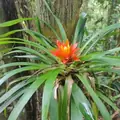
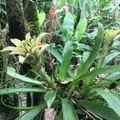
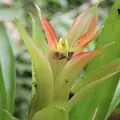
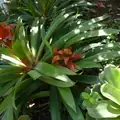
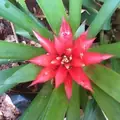
Guzmania (Guzmania lingulata) — a tropical bromeliad that grows on trees in the wild, with a funnel-shaped rosette of glossy, strap-shaped leaves up to about 45 cm long and a flower head of bright red or orange bracts around small white flowers. The bracts stay colourful for 2–4 months. Guzmania needs partial shade and 16–29 °C, with 50–75 % air humidity. Water it about every 7 days while it grows and about every 14 days in the winter rest.

Watering and repotting guzmania through the year
It lives indoors all year, so it has no sowing or planting dates: it grows from March to September and rests from October to February (the other way round in the southern hemisphere).
Repot it about every 24 months.
When to plant guzmania?
Plant or repot guzmania in spring, as it starts into growth; early to midsummer also works. It is a houseplant, so it has no outdoor planting date and no frost decides it: just avoid autumn and winter, when growth slows and fresh compost stays wet too long. After that, move it to a slightly larger pot about every two years, or sooner once roots circle the pot or grow through the drainage holes.
Watering in the growing and resting halves of the year: Watering and repotting guzmania through the year.
Sources: RHS: How to repot a plant · Penn State Extension: Repotting houseplants
Quick facts
| Type | Houseplant |
|---|---|
| Latin name | Guzmania lingulata |
| Family | Bromeliaceae |
| Also called | Scarlet star, Orange star, Vase plant |
| Light | Partial shade |
| Air humidity | 50–75 % |
| Frost | does not tolerate frost |
| Repotting | every 24 months |
| Grown in | At home |
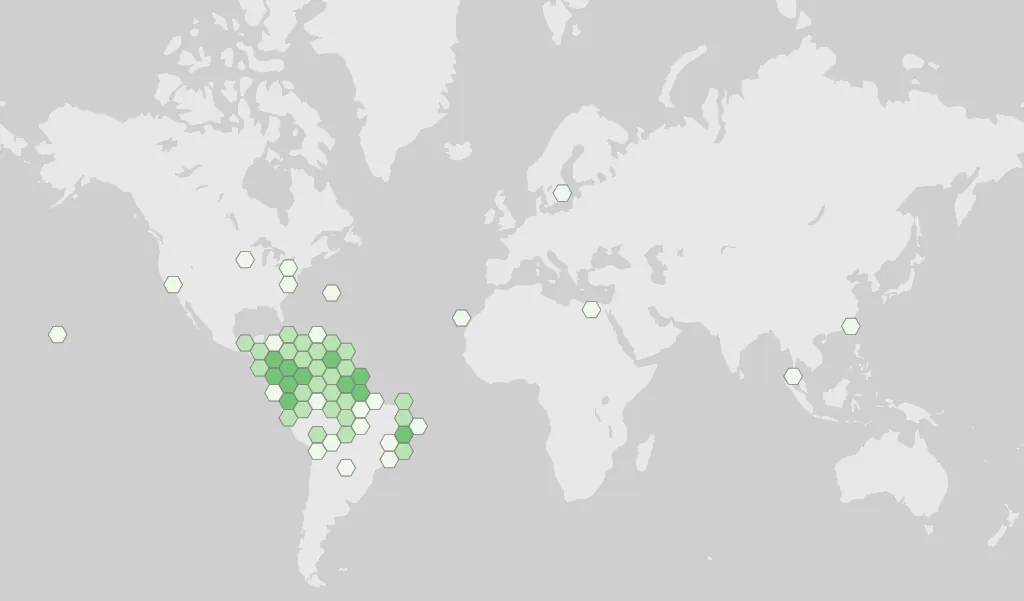
Where does guzmania grow?
4,703 records of the plant in gardens, fields and the wild worldwide; most photos come from Panama, Brazil, Costa Rica, Nicaragua, and Venezuela.
Guzmania care by growth stage
At home
| Stage | Watering | Temperature | Feeding |
|---|---|---|---|
| Growth | every 7 days | 16…29 °C | balanced (NPK), 14 days into the stage; balanced (NPK), 44 days into the stage; balanced (NPK), 74 days into the stage; balanced (NPK), 104 days into the stage; balanced (NPK), 134 days into the stage |
| Winter rest | every 14 days | — | — |
Growing notes
Light
Bright but indirect or filtered light; shade it from strong summer sun, which scorches the leaves. Guzmanias come from shadier habitats than most bromeliads and also grow well under artificial light.
Soil
A very open, free-draining mix such as bromeliad or orchid compost, or equal parts fine bark and peat-free multipurpose compost. Air must reach the roots and the mix must never stay soggy; the root system is small, so a small pot is enough.
Care
Keep a little water in the central cup of the rosette, especially in summer, ideally rainwater or distilled water, and empty and refill it every month or two so it does not go stale. Water the compost too, then let it dry before watering again, because wet compost rots the roots; keep it drier in winter. It needs humid air, about 50–75 %, so use a pebble tray or a humidifier, and warmth of at least 16 °C at night. In spring and summer add a balanced liquid fertiliser at half strength or less to the cup once a month; never put solid feed in it. Each rosette flowers only once, then slowly dies, but it produces offsets (pups) at its base; when they are about a third of the mother's size, cut them off in spring and pot them up separately. Watch for scale insects, mealybugs, spider mites and leaf spots. ASPCA lists the small variety (orange star, var. minor) as non-toxic to cats and dogs.
Pests and diseases of Guzmania
2 problems are recorded for guzmania; each has a page with symptoms, treatment and prevention.
Pests
Other plants of the Bromeliaceae family
Guzmania belongs to Bromeliaceae; 3 other plants of this family have a guide here.
 Aechmea
 Air plant
 Vriesea
Plant lists it is in
Part of: Houseplants · Houseplants for shade · Houseplants safe for cats and dogs · Flowering houseplants
Sources
Figures checked against these sources.
- aspca.org/pet-care/animal-poison-control/toxic-and-non-toxic-plants/orange-star
- plants.ces.ncsu.edu/plants/guzmania-lingulata/
- gbif.org/species/2699095
- wikidata.org/wiki/Q2710056
- en.wikipedia.org/wiki/Guzmania_lingulata
- uk.wikipedia.org/wiki/Гусманія
- ru.wikipedia.org/wiki/Гусмания_(растение)
- es.wikipedia.org/wiki/Guzmania_lingulata
- it.wikipedia.org/wiki/Guzmania
- fr.wikipedia.org/wiki/Guzmania_lingulata
- pt.wikipedia.org/wiki/Guzmania
- de.wikipedia.org/wiki/Guzmania
- cs.wikipedia.org/wiki/Guzmánie
- pl.wikipedia.org/wiki/Guzmania
- missouribotanicalgarden.org/PlantFinder/PlantFinderDetails.aspx?taxonid=278139
- rhs.org.uk/plants/8142/guzmania-lingulata/details
- rhs.org.uk/plants/bromeliads/growing-guide
- hort.extension.wisc.edu/articles/bromeliads/
- hgic.clemson.edu/factsheet/bromeliads/
