 Greenly
How to grow garden phlox (Phlox paniculata)
Phlox paniculata · summer phlox
When to plant garden phlox?
It tolerates light frost: plant divisions into the bed about three weeks before your last spring frost.
It flowers about 95 days after growth starts and keeps flowering for about 75 days.
Garden phlox (Phlox paniculata) — a hardy perennial with large, domed clusters of fragrant flowers from July to September, 0.6–1.2 m tall; a classic of summer borders that butterflies love. Garden phlox grows best in full sun. Water it about every 7 days while it grows.

Quick facts
| Type | Flower |
|---|---|
| Latin name | Phlox paniculata |
| Family | Polemoniaceae |
| Also called | summer phlox |
| Planted as | divisions |
| Life span | perennial |
| Planting season | spring |
| Light | Full sun |
| Frost | tolerates light frost |
| Soil for planting | from 5 °C |
| Growth starts | 14 days after planting |
| First flowers | 95 days after growth starts |
| Flowering lasts | 75 days |
| Grown in | Open ground |
How long does garden phlox take from planting to flowering?
From planting to the first flowers: about 109 days, or 16 weeks.
| Step | Day |
|---|---|
| Planting | 0 |
| Growth starts | 14 |
| First flowers | 109 |
| End of flowering | 184 |
Days count from the day of sowing or planting, by the figures of the card.
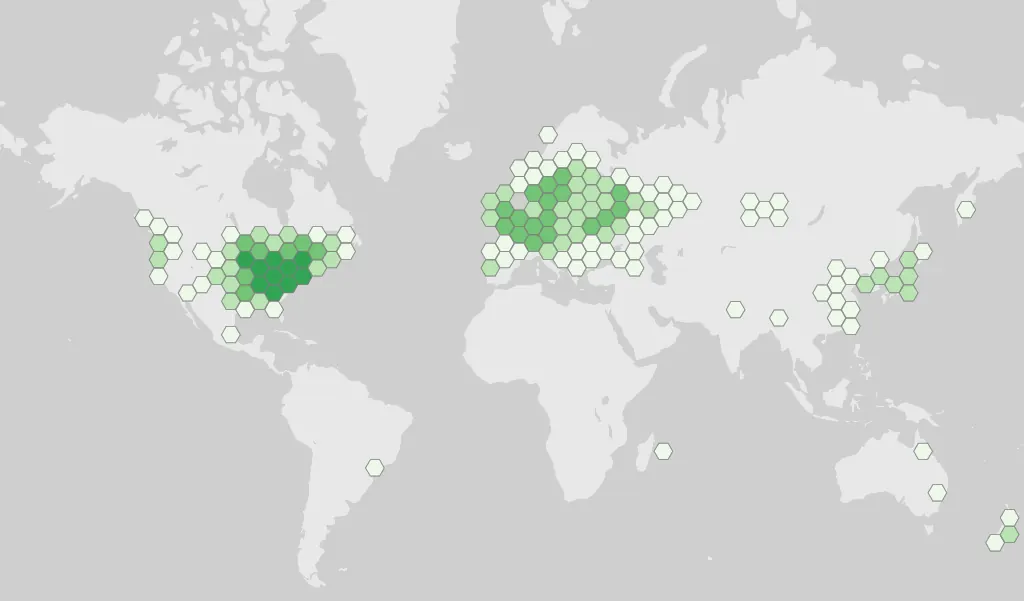
Where does garden phlox grow?
19,312 records of the plant in gardens, fields and the wild worldwide; most photos come from United States, Canada, Russia, Germany, and Czechia.
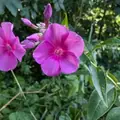
Garden phlox care by growth stage
Open ground
| Stage | Watering | Temperature | Feeding |
|---|---|---|---|
| Growth | every 7 days | — | balanced (NPK), at the start of the stage; balanced (NPK), 49 days into the stage |
| Flowering | every 7 days | — | — |
Growing notes
Light
Best in full sun, at least 6 hours a day; it tolerates light shade, and some afternoon shade helps in hot summers.
Soil
Fertile, moist but well-drained soil rich in organic matter; it is not fussy about pH. It does poorly in soil that dries out.
Care
Plant or divide in early spring (or in autumn), at least 60 cm apart, and divide clumps every three or so years. Water in dry spells, at the base rather than over the leaves, and mulch to keep the roots cool. On poor soil give a general fertiliser in spring. Thin crowded clumps to 4–5 strong stems for air flow against powdery mildew, the commonest problem. Removing faded flower heads prolongs flowering. Cut the stems to the ground in late autumn or early spring and clear away old leaves.
Pests and diseases of Garden phlox
1 problem is recorded for garden phlox; it has a page with symptoms, treatment and prevention.
Pests
Plant lists it is in
Part of: Garden flowers · Perennial garden flowers
Sources
Figures checked against these sources.
- gbif.org/species/2927744
- en.wikipedia.org/wiki/Phlox_paniculata
- uk.wikipedia.org/wiki/Phlox_paniculata
- ru.wikipedia.org/wiki/Флокс_метельчатый
- es.wikipedia.org/wiki/Phlox_paniculata
- missouribotanicalgarden.org/PlantFinder/PlantFinderDetails.aspx?kempercode=f193
- plants.ces.ncsu.edu/plants/phlox-paniculata/
- weather.gov/media/lsx/climate/stl/temp/temp_stl_freeze_data.pdf
- hgic.clemson.edu/factsheet/phlox/
- rhs.org.uk/plants/phlox/border/growing-guide
- umass.edu/agriculture-food-environment/home-lawn-garden/fact-sheets/fertilizing-flower-gar
