 Greenly
Bacterial wilt of cucurbits: how to recognise and treat it
Disease
Bacterial wilt of cucurbits is a plant disease. It affects cucumber, zucchini, pumpkin, and melon. Leaves on one runner turn dull green and wilt, even in moist soil; the wilt spreads along the vine to the crown and the whole plant dies.

Key facts
| Type | Disease |
|---|---|
| Urgency | high — the Greenly treatment plan starts the same day |
| Plants affected | 4 |
| Plant families | Cucurbitaceae |
| Symptoms described | 3 |
| Treatment options | organic and chemical (3 organic steps, 1 chemical) |
| Prevention measures | 3 |
| Sources | 8 |
Symptoms of bacterial wilt of cucurbits
- Leaves on one runner turn dull green and wilt, even in moist soil; the wilt spreads along the vine to the crown and the whole plant dies.
- Wilted leaves develop yellow and dead patches and shrivel.
- Cut a wilted stem and slowly pull the two ends apart — sticky threads of bacterial ooze stretch between them; in a glass of water a cloudy stream flows from the cut end. The test works best on cucumber and melon.
How to treat bacterial wilt of cucurbits
Organic treatment
- Remove infected plants at once and burn (where allowed) or bury them; do not compost — they attract more cucumber beetles.
- Cover young plants with row covers on hoops until flowering to keep striped and spotted cucumber beetles off, then remove them for pollination.
- Spray kaolin clay on seedlings or transplants before beetles arrive; it repels them but does not kill them.
Chemical treatment
- No spray cures infected plants. To protect healthy ones, control cucumber beetles with pyrethrins or azadirachtin labelled for them, sprayed in the evening; follow the label.
Reference information, not a guarantee. Read and follow the label of any product: dose, safety and the days to wait before harvest.
How to prevent bacterial wilt of cucurbits
- Scout seedlings at least twice a week; on cucumber, melon and zucchini act before beetles exceed 1 per 2 plants.
- Protect plants most carefully until the 5-leaf stage, when infection does the most harm.
- No resistant varieties are available; watermelon and less susceptible crops such as most pumpkins suffer much less.
Which plants are affected by bacterial wilt of cucurbits?
4 plants are listed for bacterial wilt of cucurbits; all have a guide and belong to 1 family.
Cucurbitaceae
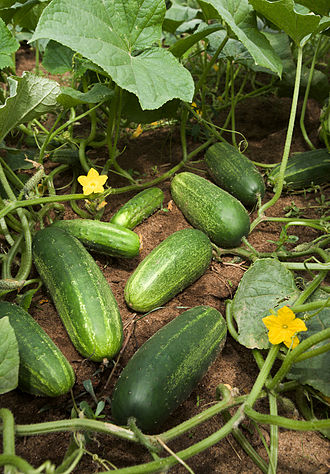 Cucumber
 Melon
 Pumpkin
 Zucchini
Pests and diseases by plant
What else affects the same plants as bacterial wilt of cucurbits?
- Cucumber beetles (Pest, shares 4 plants): Yellow beetles about 6–7 mm long with three black stripes (striped cucumber beetle) or yellow-green with 12 black spots (spotted cucumber beetle) on seedlings, leaves, flowers and fruit.
- Downy Mildew (Disease, shares 4 plants): Pale green, yellow, purple or brown blotches on the upper side of leaves, often angular where they are bordered by the veins.
- Leaf Curl Virus (Disease, shares 4 plants): Young leaves are small, curl upward and look crumpled, with yellowing between the veins and along the margins.
- White mould (Sclerotinia) (Disease, shares 4 plants): A soft, wet rot on stems, often near soil level; plants suddenly turn yellow, wilt and collapse.
- Bacterial soft rot (Disease, shares 4 plants): Small water-soaked spots that quickly enlarge, sink and turn soft and mushy; the tissue underneath is cream to black.
- Two-spotted spider mite (Pest, shares 4 plants): Fine pale stippling or mottling on the upper leaf surface; leaves may turn bronze.
Sources
Figures checked against these sources.
- gd.eppo.int/taxon/ERWITR
- en.wikipedia.org/wiki/Bacterial_wilt
- es.wikipedia.org/wiki/Erwinia_tracheiphila
- yardandgarden.extension.iastate.edu/encyclopedia/cucurbit-bacterial-wilt
- pddc.wisc.edu/2015/07/06/bacterial-wilt-of-cucurbits/
- extension.usu.edu/pests/ipm/notes_ag/veg-bacterial-wilt.php
- extension.umd.edu/resource/striped-cucumber-beetles-and-bacterial-wilt
- umass.edu/agriculture-food-environment/vegetable/fact-sheets/striped-cucumber-beetle
