 Greenly
How to grow carpathian bellflower (Campanula carpatica)
Campanula carpatica · campanula, tussock bellflower, Carpathian harebell
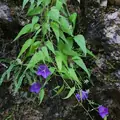
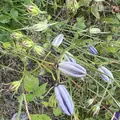
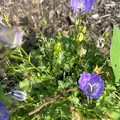
Carpathian bellflower (Campanula carpatica) — a low, mounding bellflower from the Carpathian Mountains, 10–30 cm tall and wide, with small heart-shaped toothed leaves and masses of upward-facing open bells, up to 3 cm across, in blue, violet or white in summer. Good for edging, rock gardens and pots. Carpathian bellflower grows best in full sun. Water it about every 7 days while it grows.

When to plant carpathian bellflower?
Planted as a young plant from a nursery while it is dormant — in early spring before the buds open, or in autumn after leaf fall.
Quick facts
| Type | Flower |
|---|---|
| Latin name | Campanula carpatica |
| Family | Campanulaceae |
| Also called | campanula, tussock bellflower, Carpathian harebell |
| Planted as | young plants from a nursery |
| Life span | perennial |
| Planting season | spring |
| Light | Full sun |
| Frost | tolerates light frost |
| Soil for planting | from 5 °C |
| First flowers | 78 days after growth starts |
| Flowering lasts | 60 days |
| Grown in | Open ground, At home |
How long does carpathian bellflower take from planting to flowering?
From planting to the first flowers: about 78 days, or 11 weeks.
| Step | Day |
|---|---|
| Planting | 0 |
| Growth starts | 0 |
| First flowers | 78 |
| End of flowering | 138 |
Days count from the day of sowing or planting, by the figures of the card.
Where does carpathian bellflower grow?
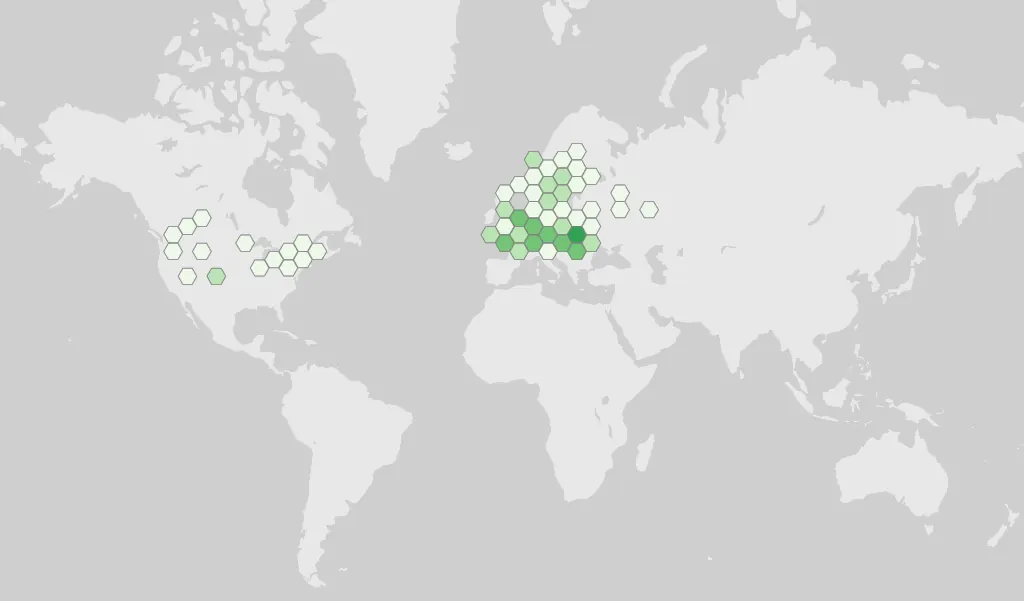
2,825 records of the plant in gardens, fields and the wild worldwide; most photos come from Romania, Slovakia, Norway, Ukraine, and United States.

Carpathian bellflower care by growth stage
Open ground
| Stage | Watering | Temperature | Feeding |
|---|---|---|---|
| Growth | every 7 days | — | — |
| Flowering | every 7 days | — | — |
At home
| Stage | Watering | Temperature | Feeding |
|---|---|---|---|
| Growth | every 3 days | — | — |
| Flowering | every 3 days | — | — |
Growing notes
Light
Full sun or partial shade. In hot, humid places where nights stay above about 21 °C it is short-lived, so give it shade from the hottest sun there.
Soil
Fertile, well-drained loamy, chalky or sandy soil; it suffers in soil that is too wet or too dry and does not survive wet winters.
Care
Plant 30–35 cm apart. It likes cool roots — mulch around it and water in dry weather. Remove spent flowers to keep it blooming longer. Divide clumps every two to four years in spring or late summer to keep them vigorous; division is also the easiest way to get new plants, as raising it from seed may not be reliable. Protect it from slugs and snails, and watch for rust, powdery mildew and leaf spot.
Pests and diseases of Carpathian bellflower
1 problem is recorded for carpathian bellflower; it has a page with symptoms, treatment and prevention.
Diseases
Other plants of the Campanulaceae family
Carpathian bellflower belongs to Campanulaceae; 1 other plant of this family has a guide here.
 Edging lobelia
Plant lists it is in
Part of: Garden flowers · Perennial garden flowers
Sources
Figures checked against these sources.
- gbif.org/species/5410826
- wikidata.org/wiki/Q159198
- wikidata.org/wiki/Q157069
- en.wikipedia.org/wiki/Campanula_carpatica
- uk.wikipedia.org/wiki/Дзвоники_карпатські
- ru.wikipedia.org/wiki/Колокольчик_карпатский
- es.wikipedia.org/wiki/Campanula_carpatica
- it.wikipedia.org/wiki/Campanula
- uk.wikipedia.org/wiki/Дзвоники
- ru.wikipedia.org/wiki/Колокольчик
- es.wikipedia.org/wiki/Campanula
- fr.wikipedia.org/wiki/Campanule
- de.wikipedia.org/wiki/Glockenblumen
- pl.wikipedia.org/wiki/Dzwonek_(roślina)
- en.wikipedia.org/wiki/Campanula
- fr.wikipedia.org/wiki/Campanula_carpatica
- pt.wikipedia.org/wiki/Campanula
- de.wikipedia.org/wiki/Karpaten-Glockenblume
- cs.wikipedia.org/wiki/Zvonek_(rostlina)
- pl.wikipedia.org/wiki/Dzwonek_karpacki
- plants.ces.ncsu.edu/plants/campanula-carpatica/
- rhs.org.uk/plants/campanula/border
- rhs.org.uk/plants/24372/campanula-carpatica/details
- weather.gov/media/lsx/climate/stl/temp/temp_stl_freeze_data.pdf
