 Greenly
How to grow clematis
Clematis · leather flower
When to plant clematis?
Planted as a young plant from a nursery while it is dormant — in early spring before the buds open, or in autumn after leaf fall.
Clematis (Clematis) — climbing perennial grown for its showy flowers; bought as a plant and trained on a trellis, wall or fence. Choosing different groups gives flowers from late winter to autumn. All parts are toxic to cats, dogs and horses, and the sap can irritate skin. Clematis grows best in full sun and soil with pH 6.5–7.5. Water it about every 7 days while it grows.

Quick facts
| Type | Flower |
|---|---|
| Latin name | Clematis |
| Family | Ranunculaceae |
| Also called | leather flower |
| Planted as | young plants from a nursery |
| Life span | perennial |
| Planting season | spring |
| Light | Full sun |
| Soil pH | 6.5–7.5 |
| Frost | tolerates light frost |
| Soil for planting | from 5 °C |
| First flowers | 90 days after growth starts |
| Flowering lasts | 60 days |
| Grown in | Open ground |
How long does clematis take from planting to flowering?
From planting to the first flowers: about 90 days, or 13 weeks.
| Step | Day |
|---|---|
| Planting | 0 |
| Growth starts | 0 |
| First flowers | 90 |
| End of flowering | 150 |
Days count from the day of sowing or planting, by the figures of the card.
Autumn feeding: what the garden needs in fall
Oregon State: feed in spring, summer and autumn. Clemson: avoid excess nitrogen, which drives soft growth.
When to feed: In the ground, rarely needed (RHS); in pots, through spring and summer.
Where does clematis grow?
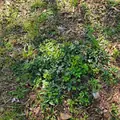
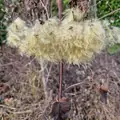
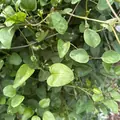
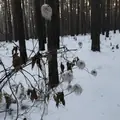
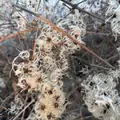
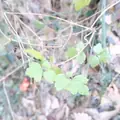
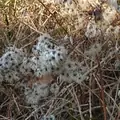
1,027,101 records of the plant in gardens, fields and the wild worldwide; most photos come from United States, France, New Zealand, Australia, and Germany.

Clematis care by growth stage
Open ground
| Stage | Watering | Temperature | Feeding |
|---|---|---|---|
| Growth | every 7 days | — | phosphorus and potassium, at the start of the stage; phosphorus and potassium, 35 days into the stage |
| Flowering | every 7 days | — | — |
Growing notes
Light
Best with at least six hours of sun on the leaves while the roots stay cool and shaded; give afternoon shade in hot climates. Flowering is poor in deep shade.
Soil
Deep, fertile, moist but well-drained soil, neutral to slightly alkaline (pH 6.5–7.5). Waterlogged ground is unsuitable.
Care
Plant in spring or early to mid autumn. Set large-flowered hybrids with the top of the root ball 5–7.5 cm below the soil, spring-flowering types just below the surface. Shade the roots with mulch or low plants. Water deeply once a week in dry weather, about 25 mm, soaking the soil 30 cm down. In fertile ground a spring mulch of compost is enough; on poor soil or in a container give a low-nitrogen fertiliser every 4–6 weeks in spring and early summer, but not while it is flowering. Prune by group — 1, spring-flowering, right after flowering; 2, large-flowered early summer, lightly in late winter; 3, flowering from midsummer, hard in late winter. Watch for clematis wilt, slugs on young shoots, aphids and, in pots, vine weevil.
Pests and diseases of Clematis
1 problem is recorded for clematis; it has a page with symptoms, treatment and prevention.
Pests
Other plants of the Ranunculaceae family
Clematis belongs to Ranunculaceae; 5 other plants of this family have a guide here.
 Columbine
 Poppy anemone
 Delphinium
 Ranunculus
 Hellebore
Plant lists it is in
Part of: Garden flowers · Perennial garden flowers
Sources
Figures checked against these sources.
- gbif.org/species/3033512
- wikidata.org/wiki/Q157634
- en.wikipedia.org/wiki/Clematis
- uk.wikipedia.org/wiki/Ломиніс
- ru.wikipedia.org/wiki/Ломонос
- es.wikipedia.org/wiki/Clematis
- plants.ces.ncsu.edu/plants/clematis/
- rhs.org.uk/plants/clematis/growing-guide
- hgic.clemson.edu/factsheet/clematis/
- aspca.org/pet-care/aspca-poison-control/toxic-and-non-toxic-plants/clematis
