 Greenly
How to grow hellebore (Helleborus × hybridus)
Helleborus × hybridus · Lenten rose
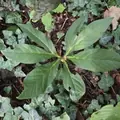
Hellebore (Helleborus × hybridus) — clump-forming perennial 30–45 cm tall with leathery, glossy dark green divided leaves, evergreen in mild winters, and nodding cup-shaped flowers 7–10 cm across in white, pink, plum, green or yellow, often spotted inside, from late winter into spring. Hellebore grows best in partial shade and soil with pH 6–8.

When to plant hellebore?
Planted as a young plant from a nursery while it is dormant — in early spring before the buds open, or in autumn after leaf fall.
Quick facts
| Type | Flower |
|---|---|
| Latin name | Helleborus × hybridus |
| Family | Ranunculaceae |
| Also called | Lenten rose |
| Planted as | young plants from a nursery |
| Life span | perennial |
| Planting season | autumn |
| Light | Partial shade |
| Soil pH | 6–8 |
| Frost | tolerates light frost |
| First flowers | 151 days after growth starts |
| Flowering lasts | 63 days |
| Grown in | Open ground |
How long does hellebore take from planting to flowering?
From planting to the first flowers: about 151 days, or 22 weeks.
| Step | Day |
|---|---|
| Planting | 0 |
| Growth starts | 0 |
| First flowers | 151 |
| End of flowering | 214 |
Days count from the day of sowing or planting, by the figures of the card.
Where does hellebore grow?
866 records of the plant in gardens, fields and the wild worldwide; most photos come from Austria, Germany, Switzerland, United States, and France.

Hellebore care by growth stage
Open ground
| Stage | Watering | Temperature | Feeding |
|---|---|---|---|
| Growth | — | — | — |
| Flowering | — | — | — |
Growing notes
Light
Light or dappled shade with some sun, for example under deciduous trees. Shelter it from cold winter winds; it dislikes bright winter sun and summer heat.
Soil
Moist but free-draining, fertile soil rich in humus, neutral to alkaline. It struggles in very dry or waterlogged ground; on heavy, poorly drained soil plant it in a raised bed.
Care
Plant from autumn to spring, avoiding dry summer months, at the same depth as in the pot and 35–45 cm apart. Water new plants through their first spring and summer, established ones in hot dry spells; plants in borders seldom need feeding, but pots need regular watering and a balanced liquid feed. Mulch every year with compost, leaving a gap around the crown. Cut off last year's leaves in late winter as the flower buds appear, to show the flowers and limit hellebore leaf spot. It self-seeds; remove seed pods or move the seedlings before they smother the parent. Divide old clumps in early autumn or just after flowering; the pieces may take a couple of years to flower well. All parts are toxic to dogs, cats and horses, and the sap irritates skin, so wear gloves.
Other plants of the Ranunculaceae family
Hellebore belongs to Ranunculaceae; 5 other plants of this family have a guide here.
 Clematis
 Columbine
 Poppy anemone
 Delphinium
 Ranunculus
Plant lists it is in
Part of: Garden flowers · Perennial garden flowers · Flowers for shade
Sources
Figures checked against these sources.
- gbif.org/species/9350566
- wikidata.org/wiki/Q147289
- wikidata.org/wiki/Q937300
- en.wikipedia.org/wiki/Hellebore
- en.wikipedia.org/wiki/Helleborus_orientalis
- uk.wikipedia.org/wiki/Чемерник
- ru.wikipedia.org/wiki/Морозник
- ru.wikipedia.org/wiki/Морозник_восточный
- es.wikipedia.org/wiki/Helleborus_orientalis
- it.wikipedia.org/wiki/Helleborus
- fr.wikipedia.org/wiki/Rose_de_carême
- pt.wikipedia.org/wiki/Helleborus
- de.wikipedia.org/wiki/Orientalische_Nieswurz
- cs.wikipedia.org/wiki/Čemeřice
- pl.wikipedia.org/wiki/Ciemiernik
- rhs.org.uk/plants/124882/helleborus-x-hybridus/details
- missouribotanicalgarden.org/PlantFinder/PlantFinderDetails.aspx?taxonid=286233
- plants.ces.ncsu.edu/plants/helleborus-x-hybridus/
- rhs.org.uk/plants/hellebore/growing-guide
- missouribotanicalgarden.org/PlantFinder/PlantFinderDetails.aspx?taxonid=248776
- weather.gov/media/lsx/climate/stl/temp/temp_stl_freeze_data.pdf
- aspca.org/pet-care/aspca-poison-control/toxic-and-non-toxic-plants/lenten-rose
