 Greenly
How to grow daylily (Hemerocallis)
Hemerocallis
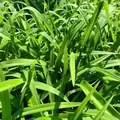
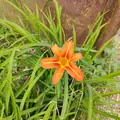
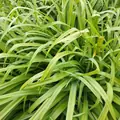
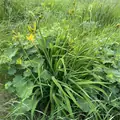
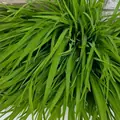
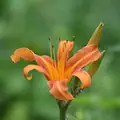
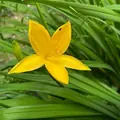
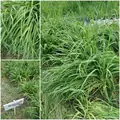
Daylily (Hemerocallis) — a tough clump-forming perennial with arching, strap-like leaves and lily-like trumpet or starry flowers, up to 20 cm across, in yellow, orange, red, purple, pink or white. Each flower lasts a single day, but many follow in succession through summer on stems 20 cm to 1.5 m tall. Daylily grows best in full sun. Water it about every 7 days while it grows.

When to plant daylily?
It tolerates light frost: plant divisions into the bed about three weeks before your last spring frost.
It flowers about 92 days after growth starts and keeps flowering for about 60 days.
Quick facts
| Type | Flower |
|---|---|
| Latin name | Hemerocallis |
| Family | Asphodelaceae |
| Planted as | divisions |
| Life span | perennial |
| Planting season | spring |
| Light | Full sun |
| Frost | tolerates light frost |
| Soil for planting | from 5 °C |
| First flowers | 92 days after growth starts |
| Flowering lasts | 60 days |
| Grown in | Open ground |
How long does daylily take from planting to flowering?
From planting to the first flowers: about 92 days, or 13 weeks.
| Step | Day |
|---|---|
| Planting | 0 |
| Growth starts | 0 |
| First flowers | 92 |
| End of flowering | 152 |
Days count from the day of sowing or planting, by the figures of the card.
Where does daylily grow?
59,117 records of the plant in gardens, fields and the wild worldwide; most photos come from United States, Russia, France, Germany, and Norway.

Daylily care by growth stage
Open ground
| Stage | Watering | Temperature | Feeding |
|---|---|---|---|
| Growth | every 7 days | — | balanced (NPK), at the start of the stage |
| Flowering | every 7 days | — | — |
Growing notes
Light
Flowers best in full sun and does well in partial shade; in heavy shade it grows straggly and flowers poorly. Rich colours can bleach in scorching sun.
Soil
Prefers fertile, well-drained soil but adapts to poor soil and heavy clay; it dislikes sitting in waterlogged ground.
Care
Plant in autumn or spring with the crown level with the soil. Established clumps survive drought but flower best with plenty of water in the growing season; water deeply in dry spells. Feeding is optional, a general fertiliser in spring; mulch with compost each spring. Deadhead faded blooms often — this also helps control hemerocallis gall midge, which distorts flowers and stops buds opening — and cut each stem to the base when it has finished. Divide every three to four years in spring or autumn; hybrids do not come true from seed. Watch for daylily rust (orange pustules under the leaves), thrips, spider mites, aphids and leaf miners. Toxic to cats (ASPCA), which can suffer kidney failure; not toxic to dogs.
Pests and diseases of Daylily
4 problems are recorded for daylily; each has a page with symptoms, treatment and prevention.
Daylily: all pests and diseases with photos
Diseases
Pests
Other plants of the Asphodelaceae family
Daylily belongs to Asphodelaceae; 3 other plants of this family have a guide here.
 Aloe vera
 Haworthia
 Gasteria
Plant lists it is in
Part of: Garden flowers · Perennial garden flowers
Sources
Figures checked against these sources.
- gbif.org/species/9557223
- en.wikipedia.org/wiki/Daylily
- uk.wikipedia.org/wiki/Лілійник
- ru.wikipedia.org/wiki/Лилейник
- es.wikipedia.org/wiki/Hemerocallis
- it.wikipedia.org/wiki/Hemerocallis
- fr.wikipedia.org/wiki/Hémérocalle
- pt.wikipedia.org/wiki/Hemerocallis
- de.wikipedia.org/wiki/Taglilien
- cs.wikipedia.org/wiki/Denivka
- pl.wikipedia.org/wiki/Liliowiec
- rhs.org.uk/plants/hemerocallis/growing-guide
- missouribotanicalgarden.org/PlantFinder/PlantFinderDetails.aspx?taxonid=246299
- missouribotanicalgarden.org/PlantFinder/PlantFinderDetails.aspx?taxonid=282203
- plants.ces.ncsu.edu/plants/hemerocallis/
- missouribotanicalgarden.org/PlantFinder/PlantFinderDetails.aspx?taxonid=246215
- weather.gov/media/lsx/climate/stl/temp/temp_stl_freeze_data.pdf
- hgic.clemson.edu/factsheet/daylily-diseases-insect-pests/
- aspca.org/pet-care/aspca-poison-control/toxic-and-non-toxic-plants/day-lilies-many-varieti
