 Greenly
How to grow fuchsia
Fuchsia
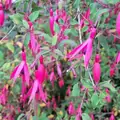
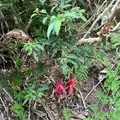
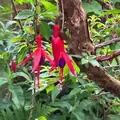
Fuchsia (Fuchsia) — shrubby plant from the mountains of Central and South America, grown in beds, pots and hanging baskets for its dangling flowers with flared sepals, single or double, in white, pink, red and violet, from spring to autumn. Most garden hybrids are tender; hardy fuchsias can stay outdoors all year. Fuchsia grows best in partial shade. Water it about every 3 days while it grows.

When to plant fuchsia?
Planted as a young plant from a nursery while it is dormant — in early spring before the buds open, or in autumn after leaf fall.
Quick facts
| Type | Flower |
|---|---|
| Latin name | Fuchsia |
| Family | Onagraceae |
| Planted as | young plants from a nursery |
| Life span | perennial |
| Planting season | spring |
| Light | Partial shade |
| Frost | does not tolerate frost |
| Soil for planting | from 10 °C |
| First flowers | 49 days after growth starts |
| Flowering lasts | 120 days |
| Grown in | Greenhouse, Open ground, At home |
How long does fuchsia take from planting to flowering?
From planting to the first flowers: about 49 days, or 7 weeks.
| Step | Day |
|---|---|
| Planting | 0 |
| Growth starts | 0 |
| First flowers | 49 |
| End of flowering | 169 |
Days count from the day of sowing or planting, by the figures of the card.
Where does fuchsia grow?
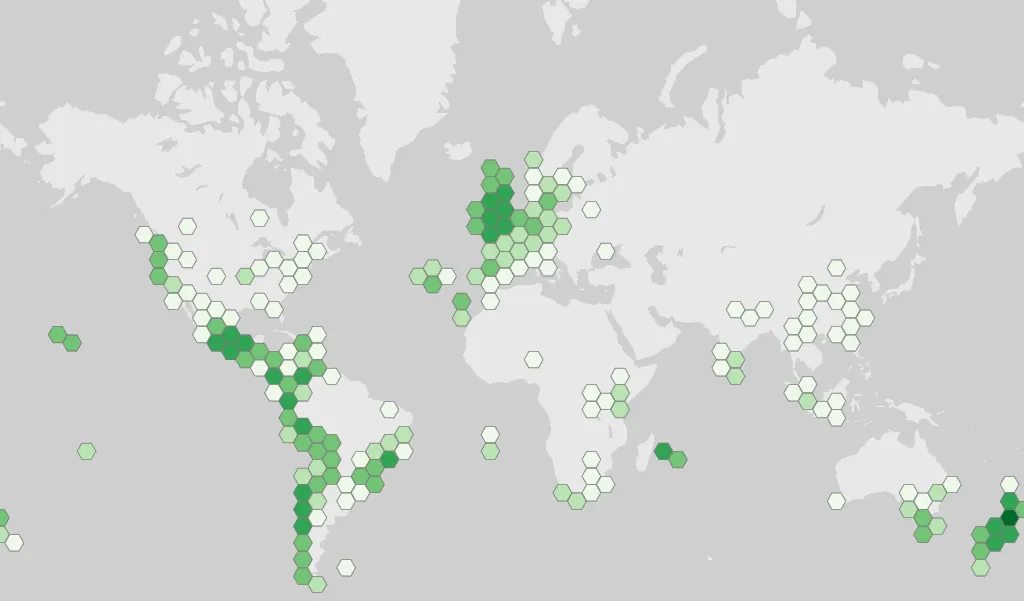
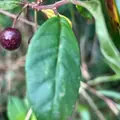
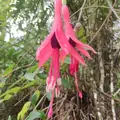
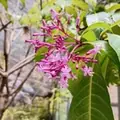
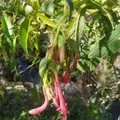
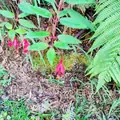
83,870 records of the plant in gardens, fields and the wild worldwide; most photos come from New Zealand, Chile, United Kingdom, Colombia, and Brazil.
Fuchsia care by growth stage
Greenhouse
| Stage | Watering | Temperature | Feeding |
|---|---|---|---|
| Growth | every 2 days | 13…27 °C | balanced (NPK), at the start of the stage; balanced (NPK), 14 days into the stage; balanced (NPK), 28 days into the stage; balanced (NPK), 42 days into the stage |
| Flowering | every 2 days | 13…27 °C | balanced (NPK), at the start of the stage; balanced (NPK), 14 days into the stage; balanced (NPK), 28 days into the stage; balanced (NPK), 42 days into the stage; balanced (NPK), 56 days into the stage; balanced (NPK), 70 days into the stage; balanced (NPK), 84 days into the stage |
Open ground
| Stage | Watering | Temperature | Feeding |
|---|---|---|---|
| Growth | every 3 days | — | balanced (NPK), at the start of the stage; balanced (NPK), 14 days into the stage; balanced (NPK), 28 days into the stage; balanced (NPK), 42 days into the stage |
| Flowering | every 3 days | — | balanced (NPK), at the start of the stage; balanced (NPK), 14 days into the stage; balanced (NPK), 28 days into the stage; balanced (NPK), 42 days into the stage; balanced (NPK), 56 days into the stage; balanced (NPK), 70 days into the stage; balanced (NPK), 84 days into the stage |
At home
| Stage | Watering | Temperature | Feeding |
|---|---|---|---|
| Growth | every day | 13…27 °C | balanced (NPK), at the start of the stage; balanced (NPK), 14 days into the stage; balanced (NPK), 28 days into the stage; balanced (NPK), 42 days into the stage |
| Flowering | every day | 13…27 °C | balanced (NPK), at the start of the stage; balanced (NPK), 14 days into the stage; balanced (NPK), 28 days into the stage; balanced (NPK), 42 days into the stage; balanced (NPK), 56 days into the stage; balanced (NPK), 70 days into the stage; balanced (NPK), 84 days into the stage |
Growing notes
Light
Sun or light shade, sheltered from wind and hot midday sun; it will not flower in deep shade. Triphylla types with long tubular coral-red flowers need full sun.
Soil
Moist but well-drained soil rich in organic matter, slightly acid. It does poorly in soil that is either very dry or soggy. In pots add grit to multipurpose compost and do not leave them standing in a saucer of water, which rots the roots.
Care
Plant out after the last frost, once nights stay near 10 °C, starting in a shady, sheltered spot. Keep the compost evenly moist — in hot weather a hanging basket may need water two or three times a day. Fuchsias like 13–27 °C and flower less in summer heat. Feed every two weeks with a dilute balanced fertiliser until mid-September. Pinch the shoot tips for bushier plants; flowers form on new growth. Before frost move tender fuchsias to a frost-free place at 4–10 °C (Triphylla types 5–7 °C or more), cut them back and water every 3–4 weeks; in March prune hard, repot and bring them into the light. Hardy fuchsias stay in the ground under a thick mulch; cut out dead stems in April. Keep a variety by stem cuttings, as seedlings do not come true. Watch for spider mites, whitefly and fuchsia rust (orange pustules under the leaves). ASPCA lists the honeysuckle fuchsia (F. triphylla) as non-toxic to pets.
Pests and diseases of Fuchsia
3 problems are recorded for fuchsia; each has a page with symptoms, treatment and prevention.
Diseases
Pests
Plant lists it is in
Part of: Garden flowers · Perennial garden flowers · Long-flowering plants · Flowers for shade
Sources
Figures checked against these sources.
- gbif.org/species/5938221
- gbif.org/species/11300394
- wikidata.org/wiki/Q161066
- en.wikipedia.org/wiki/Fuchsia
- uk.wikipedia.org/wiki/Фуксія
- ru.wikipedia.org/wiki/Фуксия
- es.wikipedia.org/wiki/Fuchsia
- it.wikipedia.org/wiki/Fuchsia
- fr.wikipedia.org/wiki/Fuchsia
- pt.wikipedia.org/wiki/Fuchsia
- de.wikipedia.org/wiki/Fuchsien
- cs.wikipedia.org/wiki/Fuchsie
- pl.wikipedia.org/wiki/Fuksja
- rhs.org.uk/plants/fuchsia/tender
- rhs.org.uk/plants/fuchsia/hardy
- plants.ces.ncsu.edu/plants/fuchsia-x-hybrida/
- yardandgarden.extension.iastate.edu/article/2005/9-14/fuchsias.html
- wpcdn.web.wsu.edu/extension/uploads/sites/57/2014/04/9-28-03-Wintering-Fuchsias.pdf
- ask.extension.org/kb/faq.php?id=880488
- rhs.org.uk/disease/fuchsia-rust
- aspca.org/pet-care/aspca-poison-control/toxic-and-non-toxic-plants/honeysuckle-fuchsia
