 Greenly
How to care for gloxinia (Sinningia speciosa)
Sinningia speciosa · Florist's gloxinia, Brazilian gloxinia
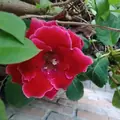
Gloxinia (Sinningia speciosa) — a Brazilian tuberous houseplant, 15–30 cm tall and wide, with a rosette of large velvety leaves and big velvety bell-shaped flowers, often 7 cm across or more, in white, pink, red, purple, blue or two-toned. Gloxinia needs partial shade. Water it about every 4 days while it grows.

Watering and repotting gloxinia through the year
It lives indoors all year, so it has no sowing or planting dates: it grows from March to September and rests from October to February (the other way round in the southern hemisphere).
Repot it about every 12 months.
When to plant gloxinia?
Plant or repot gloxinia in spring, as it starts into growth; early to midsummer also works. It is a houseplant, so it has no outdoor planting date and no frost decides it: just avoid autumn and winter, when growth slows and fresh compost stays wet too long. After that, move it to a slightly larger pot about every year, or sooner once roots circle the pot or grow through the drainage holes.
Watering in the growing and resting halves of the year: Watering and repotting gloxinia through the year.
Sources: RHS: How to repot a plant · Penn State Extension: Repotting houseplants
Quick facts
| Type | Houseplant |
|---|---|
| Latin name | Sinningia speciosa |
| Family | Gesneriaceae |
| Also called | Florist's gloxinia, Brazilian gloxinia |
| Light | Partial shade |
| Frost | does not tolerate frost |
| Repotting | every 12 months |
| Grown in | At home |
Where does gloxinia grow?
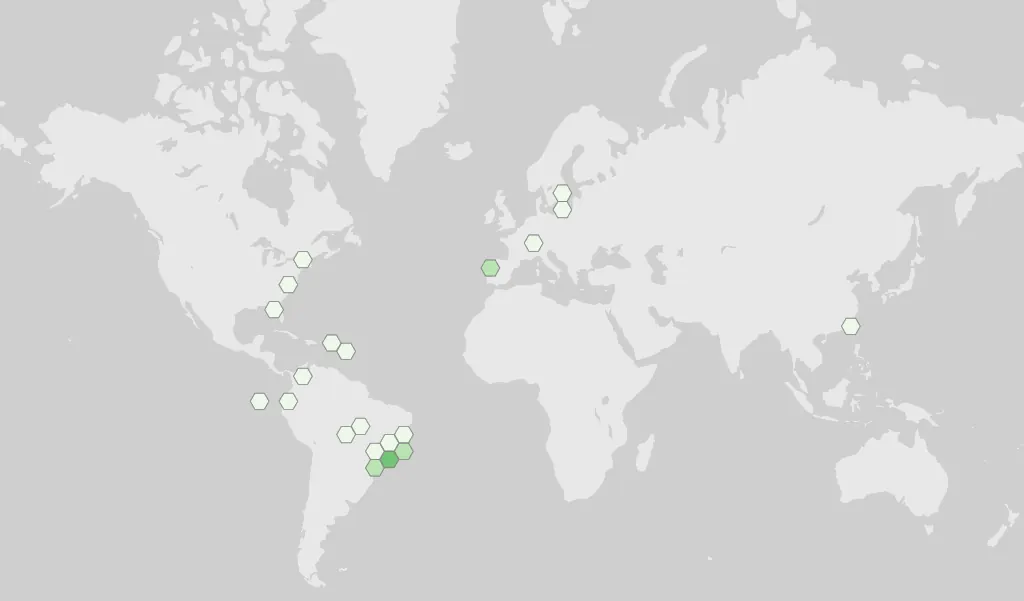
687 records of the plant in gardens, fields and the wild worldwide; most photos come from Brazil and United States.
Gloxinia care by growth stage
At home
| Stage | Watering | Temperature | Feeding |
|---|---|---|---|
| Growth | every 4 days | — | — |
| Winter rest | — | — | — |
Growing notes
Light
Bright light without direct sun, which scorches the leaves; in winter a south or west window, from late spring a spot screened from direct sun. In poor light the stems grow long and spindly.
Soil
A free-draining mix about half organic matter, for example equal parts peat, compost and perlite or vermiculite. Plant the tuber rounded side down, barely covered, and repot it in fresh mix every year when it wakes after its rest.
Care
Keep the mix evenly moist and the room at 18–24 °C; water the soil, not the leaves and crown, as overhead watering and soggy compost bring crown rot and grey mould. Once leaves appear, feed with a liquid fertiliser as the label directs. After the first flush cut the stems back to the lowest two leaves to get a second one; remove spent flowers and yellow leaves. In autumn, when the leaves start to die, gradually stop watering, cut off the dead foliage and rest the tuber for two to four months in a cool (13–16 °C), dark place, dry or just misted now and then so it does not shrivel. When new shoots appear, repot it, give it a bright, warm, humid spot and water sparingly at first, because tubers rot easily. Leaf cuttings root in spring. Watch for broad mites (twisted new leaves), vine weevil, scale and aphids. Non-toxic to cats and dogs.
Pests and diseases of Gloxinia
5 problems are recorded for gloxinia; each has a page with symptoms, treatment and prevention.
Gloxinia: all pests and diseases with photos
Diseases
Pests
Other plants of the Gesneriaceae family
Gloxinia belongs to Gesneriaceae; 3 other plants of this family have a guide here.
 African violet
 Flame violet
 Cape primrose
Plant lists it is in
Part of: Houseplants · Houseplants safe for cats and dogs · Flowering houseplants · Thirsty houseplants
Sources
Figures checked against these sources.
- aspca.org/pet-care/aspca-poison-control/toxic-and-non-toxic-plants/gloxinia
- plants.ces.ncsu.edu/plants/sinningia-speciosa/
- gbif.org/species/3825228
- wikidata.org/wiki/Q163267
- wikidata.org/wiki/Q159407
- en.wikipedia.org/wiki/Sinningia_speciosa
- ru.wikipedia.org/wiki/Синнингия_красивая
- es.wikipedia.org/wiki/Sinningia_speciosa
- it.wikipedia.org/wiki/Sinningia
- fr.wikipedia.org/wiki/Écozone_paléarctique_:_plantes_à_graines_par_nom_scientifique_(S)
- pt.wikipedia.org/wiki/Sinningia_speciosa
- de.wikipedia.org/wiki/Gloxinie
- cs.wikipedia.org/wiki/Gloxinie
- pl.wikipedia.org/wiki/Ostrojowate
- uk.wikipedia.org/wiki/Глоксинія
- planttalk.colostate.edu/topics/houseplants/1308-gloxinia/
- yardandgarden.extension.iastate.edu/faq/how-do-you-care-gloxinia
- hort.extension.wisc.edu/articles/cyclamen-and-broad-mites/
