 Greenly
How to grow primrose (Primula vulgaris)
Primula vulgaris · primula, common primrose, English primrose
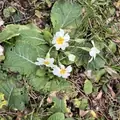
Primrose (Primula vulgaris) — a low evergreen perennial with a rosette of wrinkled dark green leaves, one of the first flowers of spring — the wild primrose has pale yellow blooms, the garden polyanthus clusters of 4–12 flowers on stout stalks in almost every colour but green. It is toxic to cats, dogs and horses, causing mild vomiting. Primrose grows best in partial shade. Water it about every 7 days while it grows.

When to plant primrose?
Planted as a young plant from a nursery while it is dormant — in early spring before the buds open, or in autumn after leaf fall.
Quick facts
| Type | Flower |
|---|---|
| Latin name | Primula vulgaris |
| Family | Primulaceae |
| Also called | primula, common primrose, English primrose, polyanthus |
| Planted as | young plants from a nursery |
| Life span | perennial |
| Planting season | spring |
| Light | Partial shade |
| Frost | tolerates light frost |
| Soil for planting | from 5 °C |
| First flowers | 7 days after growth starts |
| Flowering lasts | 60 days |
| Grown in | Open ground, At home |
How long does primrose take from planting to flowering?
From planting to the first flowers: about 7 days, or 1 weeks.
| Step | Day |
|---|---|
| Planting | 0 |
| Growth starts | 0 |
| First flowers | 7 |
| End of flowering | 67 |
Days count from the day of sowing or planting, by the figures of the card.
Where does primrose grow?
331,244 records of the plant in gardens, fields and the wild worldwide; most photos come from United Kingdom, France, Italy, Norway, and Austria.
Primrose care by growth stage
Open ground
| Stage | Watering | Temperature | Feeding |
|---|---|---|---|
| Growth | every 7 days | — | potassium, at the start of the stage |
| Flowering | every 7 days | — | potassium, 56 days into the stage |
At home
| Stage | Watering | Temperature | Feeding |
|---|---|---|---|
| Growth | every 3 days | 10…16 °C | — |
| Flowering | every 3 days | 10…16 °C | balanced (NPK), at the start of the stage; balanced (NPK), 14 days into the stage; balanced (NPK), 28 days into the stage; balanced (NPK), 42 days into the stage; balanced (NPK), 56 days into the stage |
Growing notes
Light
Partial shade, or sun in spring and shade once the weather warms; it dislikes harsh direct sun and hot afternoons. Indoors, filtered sun.
Soil
Rich, moist but well-drained soil full of humus — compost and leaf mould — slightly acid, about pH 6.5; it tolerates clay or sandy soil if kept moist.
Care
Plant in spring with the crown at soil level, at least 15 cm apart, in a cool spot. Keep the soil evenly moist and mulch to keep the roots cool. For polyanthus, give tomato feed as the buds form and a final feed when flowering ends; wild primroses need little care. Deadhead, tidy old leaves in winter and divide congested clumps after flowering. Hot, dry summers weaken it. A pot primrose bought in flower in winter lasts longest at 10–16 °C with the mix kept moist and a liquid feed every two weeks; plant it in the garden after flowering. Watch for slugs, vine weevil, red spider mite, grey mould, rust, primula leaf spot and, indoors, whitefly.
Pests and diseases of Primrose
5 problems are recorded for primrose; each has a page with symptoms, treatment and prevention.
Primrose: all pests and diseases with photos
Diseases
Pests
Other plants of the Primulaceae family
Primrose belongs to Primulaceae; 1 other plant of this family has a guide here.
 Cyclamen
Plant lists it is in
Part of: Garden flowers · Perennial garden flowers · Flowers for shade
Sources
Figures checked against these sources.
- gbif.org/species/5414335
- gbif.org/species/5414348
- gbif.org/species/8026112
- wikidata.org/wiki/Q159537
- en.wikipedia.org/wiki/Primula_vulgaris
- en.wikipedia.org/wiki/Primula_×_polyantha
- uk.wikipedia.org/wiki/Первоцвіт_звичайний
- uk.wikipedia.org/wiki/Первоцвіт
- ru.wikipedia.org/wiki/Первоцвет_обыкновенный
- ru.wikipedia.org/wiki/Первоцвет
- es.wikipedia.org/wiki/Primula
- es.wikipedia.org/wiki/Primula_acaulis
- it.wikipedia.org/wiki/Primula_vulgaris
- fr.wikipedia.org/wiki/Primula_vulgaris
- fr.wikipedia.org/wiki/Primevère
- pt.wikipedia.org/wiki/Primula_vulgaris
- pt.wikipedia.org/wiki/Primula
- de.wikipedia.org/wiki/Stängellose_Schlüsselblume
- de.wikipedia.org/wiki/Primeln
- cs.wikipedia.org/wiki/Prvosenka_bezlodyžná
- cs.wikipedia.org/wiki/Prvosenka
- pl.wikipedia.org/wiki/Pierwiosnek_bezłodygowy
- pl.wikipedia.org/wiki/Pierwiosnek_(roślina)
- plants.ces.ncsu.edu/plants/primula-vulgaris/
- plants.ces.ncsu.edu/plants/primula-x-polyantha/
- missouribotanicalgarden.org/PlantFinder/PlantFinderDetails.aspx?kempercode=b564
- aspca.org/pet-care/animal-poison-control/toxic-and-non-toxic-plants/primrose
- libanswers.nybg.org/faq/222852
- gardenersworld.com/how-to/grow-plants/primula-grow-guide/
- weather.gov/media/lsx/climate/stl/temp/temp_stl_freeze_data.pdf
