 Greenly
How to grow blueberry
Vaccinium corymbosum · highbush blueberry
When to plant blueberry?
Planted as a young plant from a nursery while it is dormant — in early spring before the buds open, or in autumn after leaf fall.
Blueberry (Vaccinium corymbosum) — a deciduous shrub grown for its blue berries, which ripen unevenly over several weeks from midsummer. It needs acid soil, so in alkaline gardens grow it in a pot. Most varieties are partly self-fertile, but two or three varieties together crop better. A fully productive bush of about seven years gives 2.25–5 kg. Blueberry grows best in full sun and soil with pH 4.5–5.5. Water it about every 7 days while it grows.

Quick facts
| Type | Berry |
|---|---|
| Latin name | Vaccinium corymbosum |
| Family | Ericaceae |
| Also called | highbush blueberry |
| Planted as | young plants from a nursery |
| Life span | perennial |
| Planting season | spring |
| Light | Full sun |
| Soil pH | 4.5–5.5 |
| Frost | tolerates light frost |
| Soil for planting | from 4 °C |
| First harvest after planting | about 2 years |
| Grown in | Greenhouse, Open ground |
How long does it take to grow blueberries?
From planting to the first harvest: about 27 months (820 days), so the first crop comes more than a year after planting.
- Growing — 820 days
| Step | Day |
|---|---|
| Planting | 0 |
| Growth starts | 0 |
| First harvest | 820 |
Days count from the day of sowing or planting, by the figures of the card. In an unheated greenhouse the Greenly calendar brings the harvest about 10 % sooner.
Blueberry is number 21 of 24 perennials and berry bushes on our list, from the fastest to the slowest. Close to it on the list: asparagus (730 days), goji (730 days), grape (880 days), hardy kiwi (1095 days). Days to harvest: all vegetables, herbs and berries
Autumn feeding: what the garden needs in fall
No feeding after bloom; over-feeding gives tender growth and winter injury.
When to feed: Early spring, before the buds break (ericaceous feed).
Where does blueberry grow?
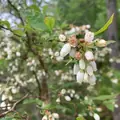
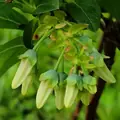
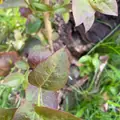
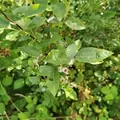
37,147 records of the plant in gardens, fields and the wild worldwide; most photos come from United States, Canada, Czechia, Denmark, and Netherlands.

Blueberry care by growth stage
Greenhouse
| Stage | Watering | Temperature | Feeding |
|---|---|---|---|
| Growth | every 3 days | — | balanced (NPK), at the start of the stage; balanced (NPK), 21 days into the stage |
| Flowering | every 3 days | — | balanced (NPK), at the start of the stage; balanced (NPK), 21 days into the stage |
| Fruiting | every 3 days | — | balanced (NPK), at the start of the stage; balanced (NPK), 21 days into the stage |
| Harvest | every 3 days | — | — |
Open ground
| Stage | Watering | Temperature | Feeding |
|---|---|---|---|
| Growth | every 7 days | — | nitrogen, at the start of the stage; nitrogen, 30 days into the stage |
| Flowering | every 7 days | — | — |
| Fruiting | every 7 days | — | — |
| Harvest | every 7 days | — | — |
Growing notes
Light
Fruits well in a sunny spot; tolerates partial shade but crops less.
Soil
Needs moist, well-drained acid soil, pH 4.5–5.5; test the soil before planting. In pots use peat-free ericaceous compost.
Care
Plant while dormant, from mid-autumn to early spring, 1–2 m apart. Water well after planting and in dry spells, about 25–50 mm a week, using rainwater rather than tap water where you can. Feed in early spring with an ericaceous fertiliser or ammonium sulphate, best split into two halves a month apart, and do not overfeed; never use aluminium sulphate, which harms blueberries. Pot plants get a liquid ericaceous feed every two to three weeks from April to August. Mulch 5–7.5 cm deep with pine bark, pine needles or leafmould, not manure. Remove all flowers for the first two years; after that prune in late winter, taking out dead, crossing and the oldest stems. Net the bushes against birds, and cover them overnight if frost is forecast while they flower.
How to tell it is ripe
- Berry is dusky blue all over, with no green or red left.
- Skin carries a light, whitish waxy bloom.
- A ripe berry rolls off the cluster easily under your thumb.
- Taste one: berries turn blue a day or more before they are fully sweet.
- Roll ripe berries off the cluster into your palm when they are dry, handling them little so the bloom stays on.
Pests and diseases of Blueberry
2 problems are recorded for blueberry; each has a page with symptoms, treatment and prevention.
Pests
- Strawberry blossom weevil: Flower buds hang on a partly severed stalk, wither and drop without opening; the female lays an egg in the bud and then gnaws the stalk.
- Vine weevil
Other plants of the Ericaceae family
Blueberry belongs to Ericaceae; 1 other plant of this family has a guide here.
 Rhododendron
Plant lists it is in
Sources
Figures checked against these sources.
- gbif.org/species/2882849
- wikidata.org/wiki/Q468695
- ru.wikipedia.org/wiki/Голубика_высокорослая
- extension.umaine.edu/publications/2253e/
- extension.illinois.edu/small-fruits/growing-and-caring-blueberries
- rhs.org.uk/fruit/blueberries/grow-your-own
- extension.unh.edu/blog/fall-good-time-plant-trees-and-shrubs
- yardandgarden.extension.iastate.edu/how-to/harvesting-and-storing-small-fruit
- carter.mgcafe.uky.edu/sites/carter.ca.uky.edu/files/Harvesting Blueberries and Blackberrie
