 Greenly
How to grow gladiolus
Gladiolus · sword lily
When to plant gladiolus?
Plant the bulbs straight into the bed after your last spring frost, once the soil has warmed.
In an unheated greenhouse everything moves about three weeks earlier.
It flowers about 70 days after growth starts and keeps flowering for about 21 days.
Gladiolus (Gladiolus) — summer-flowering corm grown for its tall spikes of showy flowers, which open from the base upward and make excellent cut flowers. Plant after the last frost; it blooms 65–100 days after planting. Toxic to cats, dogs and horses, most of all the corms. Gladiolus grows best in full sun and soil with pH 6.5–7. Water it about every 7 days while it grows.

Quick facts
| Type | Flower |
|---|---|
| Latin name | Gladiolus |
| Family | Iridaceae |
| Also called | sword lily |
| Planted as | bulbs |
| Life span | grown for one season |
| Planting season | spring |
| Light | Full sun |
| Soil pH | 6.5–7 |
| Frost | does not tolerate frost |
| Soil for planting | from 10 °C |
| Growth starts | 14 days after planting |
| First flowers | 70 days after growth starts |
| Flowering lasts | 21 days |
| Grown in | Greenhouse, Open ground |
How long does gladiolus take from planting to flowering?
From planting to the first flowers: about 84 days, or 12 weeks.
| Step | Day |
|---|---|
| Planting | 0 |
| Growth starts | 14 |
| First flowers | 84 |
| End of flowering | 105 |
Days count from the day of sowing or planting, by the figures of the card.
Where does gladiolus grow?
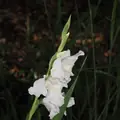
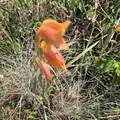
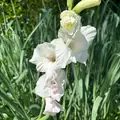
148,641 records of the plant in gardens, fields and the wild worldwide; most photos come from South Africa, France, Russia, Congo - Kinshasa, and Ukraine.

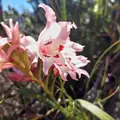
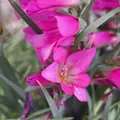
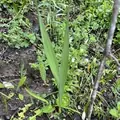
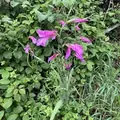

Gladiolus care by growth stage
Greenhouse
| Stage | Watering | Temperature | Feeding |
|---|---|---|---|
| Growth | every 7 days | — | balanced (NPK), at the start of the stage; balanced (NPK), 28 days into the stage |
| Flowering | every 7 days | — | — |
Open ground
| Stage | Watering | Temperature | Feeding |
|---|---|---|---|
| Growth | every 7 days | — | balanced (NPK), at the start of the stage; balanced (NPK), 28 days into the stage |
| Flowering | every 7 days | — | — |
Growing notes
Light
Needs full sun.
Soil
Moist but well-drained soil of average fertility, pH 6.5–7. Improve very sandy or heavy clay soil with compost.
Care
Plant corms after the last frost once the soil has warmed, 8–13 cm deep (three to four times their diameter) and 10–15 cm apart; plant a new batch every 10–14 days for flowers all summer, the last in time to bloom before frost. Work a complete fertiliser such as 10-10-10 into the soil at planting and side-dress once while the plants grow. Give about 25 mm of water a week and keep watering after flowering while the leaves are green. Stake tall spikes. Except in mild-winter areas, lift the corms when the leaves die back, 6–8 weeks after flowering, dry them for a few days and store them dry and frost-free at about 4–10 °C. Thrips are the most common pest; corm and stem rots are the main diseases.
Pests and diseases of Gladiolus
2 problems are recorded for gladiolus; each has a page with symptoms, treatment and prevention.
Diseases
Other plants of the Iridaceae family
Gladiolus belongs to Iridaceae; 4 other plants of this family have a guide here.
 Crocus
 Bearded Iris
 Freesia
 Saffron
Plant lists it is in
Part of: Garden flowers · Summer bulbs and tubers
Sources
Figures checked against these sources.
- gbif.org/species/2749747
- wikidata.org/wiki/Q156207
- en.wikipedia.org/wiki/Gladiolus
- uk.wikipedia.org/wiki/Косарики_(ботаніка)
- ru.wikipedia.org/wiki/Шпажник
- es.wikipedia.org/wiki/Gladiolus
- es.wikipedia.org/wiki/Gladiolus_communis
- extension.msstate.edu/publications/gladiolus-for-the-farmer-florist
- s3.wp.wsu.edu/uploads/sites/2076/2024/07/C049-Gladiolus.pdf
- aspca.org/pet-care/aspca-poison-control/toxic-and-non-toxic-plants/gladiola
