 Greenly
Fusarium wilt: how to recognise and treat it
Disease
Fusarium wilt is a plant disease. It affects tomato, cucumber, watermelon, peas and 16 more plants. Wilting and yellowing that often starts on one side of the plant, a branch or even a leaf; lower leaves yellow first.

Key facts
| Type | Disease |
|---|---|
| Urgency | high — the Greenly treatment plan starts the same day |
| Plants affected | 20 |
| Plant families | Amaryllidaceae, Asparagaceae, Asteraceae, Brassicaceae, Cucurbitaceae, Fabaceae, Iridaceae, Lamiaceae, Passifloraceae, Primulaceae, Rosaceae, Solanaceae |
| Symptoms described | 4 |
| Treatment options | organic and chemical (3 organic steps, 1 chemical) |
| Prevention measures | 4 |
| Sources | 16 |
Symptoms of Fusarium wilt
- Wilting and yellowing that often starts on one side of the plant, a branch or even a leaf; lower leaves yellow first.
- At first the plant seems to recover overnight, but the wilt soon becomes permanent; growth is stunted and few fruits form.
- A cut stem shows brown or reddish-brown water-conducting tissue — lines lengthways, dots or a ring in cross-section.
- White, pink or orange fungal growth may appear on dead stems in wet weather; the whole plant usually dies.
How to treat Fusarium wilt
Organic treatment
- There is no cure — remove and dispose of affected plants, including roots, as soon as possible.
- Do not grow the same kind of plant in that soil for at least 4–5 years, or replace the soil or grow in raised beds with clean soil.
- Dispose of pots that held infected plants, or clean them with a disinfectant along with benches and capillary matting.
Chemical treatment
- There is no fungicide for gardeners that cures or controls Fusarium wilt; rely on resistant varieties and rotation.
Reference information, not a guarantee. Read and follow the label of any product: dose, safety and the days to wait before harvest.
How to prevent Fusarium wilt
- Grow resistant varieties (tomato labels marked F or FF) or tomatoes grafted onto resistant rootstocks.
- Buy seed, cuttings and young plants from a reliable, disease-free source.
- Rotate crops for 3–5 years; the fungus survives in soil for many years, but each strain attacks only its own plant group.
- On acid soil lime to pH 6.5–7.0, use nitrate rather than ammonium nitrogen and avoid overfeeding; solarise the soil before planting.
Which plants are affected by Fusarium wilt?
20 plants are listed for Fusarium wilt; all have a guide and belong to 12 families.
Asteraceae
 China asterCallistephus chinensis
 ChrysanthemumChrysanthemum × morifolium
 DahliaDahlia × pinnata
 LettuceLactuca sativa
Cucurbitaceae
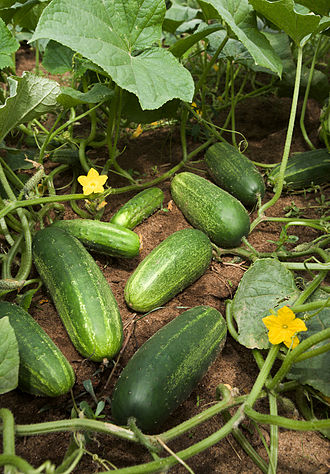 Cucumber
 Melon
 Watermelon
Fabaceae
 Chickpea
 Green Beans
 Peas
Iridaceae
 Freesia
 Gladiolus
Amaryllidaceae
 Daffodil
Asparagaceae
 Asparagus
Brassicaceae
 Cabbage
Lamiaceae
 Basil
Passifloraceae
 Passion fruit
Primulaceae
 Cyclamen
Rosaceae
 Strawberry
Solanaceae
 Tomato
Pests and diseases by plant
What else affects the same plants as Fusarium wilt?
- White mould (Sclerotinia) (Disease, shares 14 plants): A soft, wet rot on stems, often near soil level; plants suddenly turn yellow, wilt and collapse.
- Grey mould (Disease, shares 12 plants): Fuzzy grey-brown mould on decaying buds, flowers, leaves, stems or fruit in humid weather.
- Two-spotted spider mite (Pest, shares 12 plants): Fine pale stippling or mottling on the upper leaf surface; leaves may turn bronze.
- Leaf Miner (Pest, shares 9 plants): Winding white or brown tunnels (mines) inside the leaf, or on beet, chard, spinach and celery large pale blotches that soon turn brown and papery.
- Whitefly (Pest, shares 8 plants): Clouds of tiny white-winged insects, about 1.5 mm long, fly up when the plant is disturbed.
- Downy Mildew (Disease, shares 7 plants): Pale green, yellow, purple or brown blotches on the upper side of leaves, often angular where they are bordered by the veins.
Sources
Figures checked against these sources.
- content.ces.ncsu.edu/fusarium-wilt-of-tomato
- rhs.org.uk/disease/fusarium-wilts
- ipm.ucanr.edu/home-and-landscape/fusarium-wilt/
- pnwhandbooks.org/plantdisease/host-disease/cucumber-cucumis-sativus-fusarium-wilt
- ipm.ucanr.edu/agriculture/strawberry/fusarium-wilt/
- extension.umd.edu/resource/fusarium-wilt-basil
- era.dpi.qld.gov.au/id/eprint/13631/
- ndsu.edu/agriculture/sites/default/files/2022-12/pp2072.pdf
- plants.ces.ncsu.edu/plants/freesia/
- ipm.ucanr.edu/PMG/GARDEN/VEGES/DISEASES/fusarwilt.html
- en.wikipedia.org/wiki/Fusarium_wilt
- uk.wikipedia.org/wiki/Фузаріоз
- ru.wikipedia.org/wiki/Фузариоз
- es.wikipedia.org/wiki/Fusariosis
- pt.wikipedia.org/wiki/Fusariose
- pl.wikipedia.org/wiki/Fuzarioza
