 Greenly
How to grow luffa
Luffa aegyptiaca · loofah, sponge gourd, smooth luffa
When to sow luffa?
Sow for seedlings about 6 weeks before planting out.
Plant out in open ground about a week after your last spring frost, once the soil is warm.
In an unheated greenhouse everything moves about three weeks earlier.
The first harvest comes about 150 days after the shoots appear.
Luffa (Luffa aegyptiaca) — a fast-growing tropical climbing gourd of the cucumber family. Young fruits under about 18 cm are eaten like courgettes or cucumbers; left on the vine, they turn into the fibrous bath sponge. It needs at least four warm, frost-free months, so in cool climates it is grown from transplants. Luffa grows best in full sun and soil with pH 5.5–6.5. Water it about every 5 days while it grows.

Quick facts
| Type | Vegetable |
|---|---|
| Latin name | Luffa aegyptiaca |
| Family | Cucurbitaceae |
| Also called | loofah, sponge gourd, smooth luffa |
| Planted as | seed |
| How it is started | from seedlings or sown straight into the bed |
| Life span | grown for one season |
| Planting season | spring |
| Light | Full sun |
| Soil pH | 5.5–6.5 |
| Frost | does not tolerate frost |
| Soil for sowing | from 18 °C |
| Germination | 14 days |
| Seedlings ready | 28 days |
| Shoots to harvest | 150 days |
| Grown in | Greenhouse, Open ground |
How long does it take to grow luffa?
From sowing to the first harvest: about 164 days (23 weeks). Shoots appear after about 14 days, the seedlings are ready to plant out at about day 42, and the first harvest comes about 122 days after planting out.
- Germination — 14 days
- Seedlings — 28 days
- In the bed — 122 days
| Step | Day |
|---|---|
| Sowing | 0 |
| Shoots appear | 14 |
| Seedlings ready to plant out | 42 |
| First harvest | 164 |
Days count from the day of sowing or planting, by the figures of the card. In an unheated greenhouse the Greenly calendar brings the harvest about 10 % sooner.
Luffa is number 57 of 63 on our list from the fastest crop to the slowest. Close to it on the list: Brussels sprouts (140 days), celery (161 days), celeriac (171 days), chayote (178 days). Days to harvest: all vegetables, herbs and berries
Where does luffa grow?
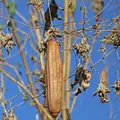
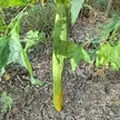
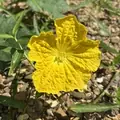
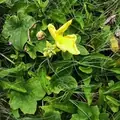
7,974 records of the plant in gardens, fields and the wild worldwide; most photos come from Mexico, Brazil, India, Thailand, and Benin.




Luffa care by growth stage
Greenhouse
| Stage | Watering | Temperature | Feeding |
|---|---|---|---|
| Seedlings | every 3 days | 18…21 °C | — |
| Growth | every 4 days | 23…27 °C | nitrogen, 14 days into the stage |
| Flowering | every 3 days | 23…27 °C | nitrogen, at the start of the stage |
| Fruiting | every 3 days | 23…27 °C | nitrogen, 14 days into the stage |
Open ground
| Stage | Watering | Temperature | Feeding |
|---|---|---|---|
| Growth | every 5 days | 23…27 °C | nitrogen, 14 days into the stage |
| Flowering | every 4 days | 23…27 °C | nitrogen, at the start of the stage |
| Fruiting | every 4 days | 23…27 °C | nitrogen, 14 days into the stage |
Growing notes
Light
Full sun, at least 6 hours a day, with good air movement around the vines.
Soil
Rich, well-drained, evenly moist loam high in organic matter, pH 5.5–6.5. It tolerates poor soil but crops best in fertile ground.
Care
Soak the seeds in warm water for 24 hours and sow 2–3 per pot; germination is slow and patchy, so keep only the strongest seedling. Grow the seedlings at 18–21 °C for 4–6 weeks and plant out after the last frost, once the soil has warmed to about 18 °C; black plastic mulch helps warm it. Build a very sturdy trellis — vines reach 9–15 m, and fruit lying on the ground rots. Space plants 30–45 cm apart and remove the first four side shoots. Keep the soil evenly moist (drip watering is best) and side-dress with nitrogen two or three times during the season. Pick fruits for eating while young. For sponges, leave them until they turn brown, light and dry and the seeds rattle inside, and gather the rest after the first frost. Soak a dry gourd in warm water for 5–20 minutes and the skin peels off.
Pests and diseases of Luffa
4 problems are recorded for luffa; each has a page with symptoms, treatment and prevention.
Luffa: all pests and diseases with photos
Diseases
Pests
- Cucumber beetles
- Squash bug: Adults are flat, grey-brown bugs about 1.6 cm long with orange-striped abdomen edges; young nymphs are pale green, older ones grey with dark wing pads.
- Two-spotted spider mite
Other plants of the Cucurbitaceae family
Luffa belongs to Cucurbitaceae; 8 other plants of this family have a guide here.
 Melon
 Watermelon
 Cucumber
 Pumpkin
 Zucchini
 Chayote
 Achocha
 Kiwano
Plant lists it is in
Sources
Figures checked against these sources.
- gbif.org/species/2874599
- wikidata.org/wiki/Q2308434
- en.wikipedia.org/wiki/Luffa_aegyptiaca
- uk.wikipedia.org/wiki/Люфа
- ru.wikipedia.org/wiki/Люффа_египетская
- es.wikipedia.org/wiki/Luffa_aegyptiaca
- plants.ces.ncsu.edu/plants/luffa-aegyptiaca/
- content.ces.ncsu.edu/commercial-luffa-sponge-gourd-production
- ask.extension.org/kb/faq.php?id=822219
- cucurbitbreeding.wordpress.ncsu.edu/gourd-breeding/luffa-research-report-seed-germination-
- pfaf.org/user/Plant.aspx?LatinName=Luffa+aegyptiaca
