 Greenly
How to grow chayote
Sechium edule · mirliton, vegetable pear, choko
When to sow chayote?
Sow for seedlings about 13 weeks before planting out.
Plant out in open ground about a week after your last spring frost, once the soil is warm.
In an unheated greenhouse everything moves about three weeks earlier.
The first harvest comes about 150 days after the shoots appear.
Chayote (Sechium edule) — a vigorous climbing squash from Central America, grown for its pear-shaped fruit; the young shoots are edible too. It is perennial, but frost kills the vine and temperatures below about 13 °C damage young fruit. Flowers appear only from late summer, so in cool climates it needs a head start in a pot and a long warm season — at least six months. Chayote grows best in full sun and soil with pH 6–6.8. Water it about every 7 days while it grows.

Quick facts
| Type | Vegetable |
|---|---|
| Latin name | Sechium edule |
| Family | Cucurbitaceae |
| Also called | mirliton, vegetable pear, choko, christophine |
| Planted as | seed |
| How it is started | from seedlings or sown straight into the bed |
| Life span | grown for one season |
| Planting season | spring |
| Light | Full sun |
| Soil pH | 6–6.8 |
| Frost | does not tolerate frost |
| Soil for sowing | from 12 °C |
| Germination | 28 days |
| Seedlings ready | 60 days |
| Shoots to harvest | 150 days |
| Grown in | Greenhouse, Open ground |
How long does it take to grow chayote?
From sowing to the first harvest: about 178 days (25 weeks). Shoots appear after about 28 days, the seedlings are ready to plant out at about day 88, and the first harvest comes about 90 days after planting out.
- Germination — 28 days
- Seedlings — 60 days
- In the bed — 90 days
| Step | Day |
|---|---|
| Sowing | 0 |
| Shoots appear | 28 |
| Seedlings ready to plant out | 88 |
| First harvest | 178 |
Days count from the day of sowing or planting, by the figures of the card. In an unheated greenhouse the Greenly calendar brings the harvest about 10 % sooner.
Chayote is number 59 of 63 on our list from the fastest crop to the slowest. Close to it on the list: luffa (164 days), celeriac (171 days), leek (180 days), yacón (210 days). Days to harvest: all vegetables, herbs and berries
Where does chayote grow?
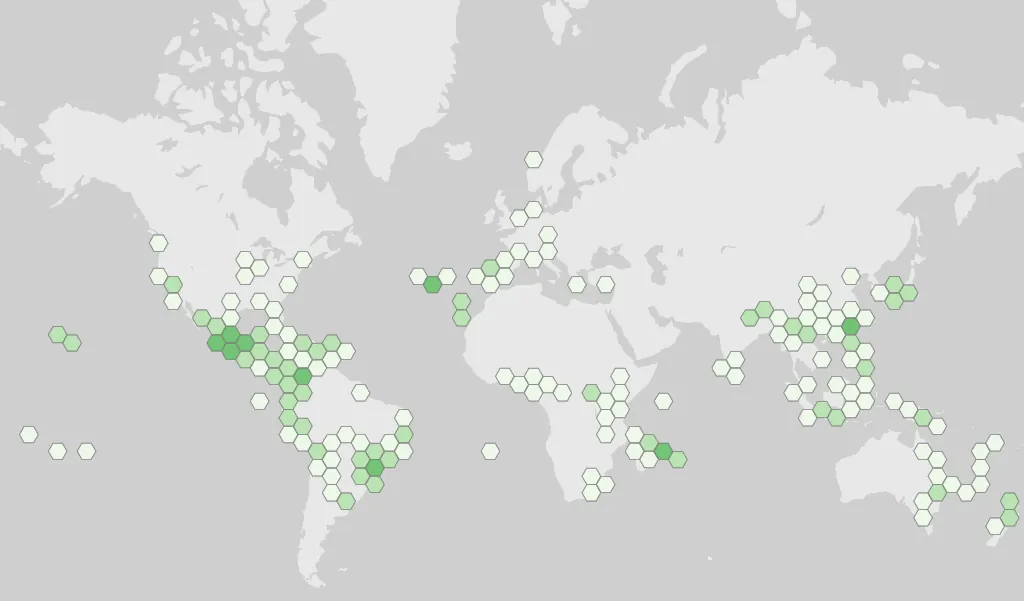
4,250 records of the plant in gardens, fields and the wild worldwide; most photos come from Brazil, Colombia, Mexico, Indonesia, and Argentina.








Chayote care by growth stage
Greenhouse
| Stage | Watering | Temperature | Feeding |
|---|---|---|---|
| Seedlings | every 7 days | 19…30 °C | phosphorus and potassium, at the start of the stage |
| Growth | every 7 days | 19…30 °C | phosphorus and potassium, at the start of the stage; phosphorus and potassium, 60 days into the stage |
| Flowering | every 7 days | 19…30 °C | — |
| Fruiting | every 7 days | 19…30 °C | — |
| Harvest | every 7 days | 19…30 °C | — |
Open ground
| Stage | Watering | Temperature | Feeding |
|---|---|---|---|
| Growth | every 7 days | 19…30 °C | phosphorus and potassium, at the start of the stage; phosphorus and potassium, 60 days into the stage |
| Flowering | every 7 days | 19…30 °C | — |
| Fruiting | every 7 days | 19…30 °C | — |
| Harvest | every 7 days | 19…30 °C | — |
Growing notes
Light
Full sun, at least 6 hours a day; plenty of sun and air also keep leaf diseases down.
Soil
Well-drained, fertile sandy loam rich in organic matter, pH 6.0–6.8. Waterlogging kills it, so on wet ground plant on a mound or in a raised bed. The roots are shallow — mulch instead of digging around the plant.
Care
The whole fruit is planted — its single seed sprouts inside it. Keep a mature fruit in a warm place until a shoot appears from the broad end, usually within about four weeks. Set it in a pot of about 8–12 litres at a 45° angle, sprouted end down, burying two-thirds and leaving the narrow end exposed. Keep the mix only slightly moist, as the fruit feeds the young plant. After the last frost move it to full sun or plant it out, next to a strong trellis or fence; the vine can reach 12 m. Water weekly, checking that the soil is moist but never soggy, and feed a low-nitrogen fertiliser rich in phosphorus and potassium every two months until flowering — too much nitrogen gives leaves instead of fruit. Fruit is ready about 30 days after pollination; pick it while the skin is firm and does not dent under a thumbnail. Do not refrigerate it. Where winters are frosty, keep a few fruits to plant next spring.
Pests and diseases of Chayote
1 problem is recorded for chayote; it has a page with symptoms, treatment and prevention.
Diseases
Other plants of the Cucurbitaceae family
Chayote belongs to Cucurbitaceae; 8 other plants of this family have a guide here.
 Melon
 Watermelon
 Cucumber
 Pumpkin
 Zucchini
 Luffa
 Achocha
 Kiwano
Plant lists it is in
Sources
Figures checked against these sources.
- gbif.org/species/2874612
- wikidata.org/wiki/Q319611
- en.wikipedia.org/wiki/Chayote
- uk.wikipedia.org/wiki/Чайот_їстівний
- ru.wikipedia.org/wiki/Чайот
- es.wikipedia.org/wiki/Sechium_edule
- lsuagcenter.com/articles/page1770909961508
- pfaf.org/user/Plant.aspx?LatinName=Sechium+edule
- mirliton.org/wp-content/uploads/2018/09/A-Guide-to-Growing-Mirlitons-2010-editon-revised-2
