 Greenly
How to grow lupin (Lupinus polyphyllus)
Lupinus polyphyllus · lupine
When to plant lupin?
Planted as a young plant from a nursery while it is dormant — in early spring before the buds open, or in autumn after leaf fall.
Lupin (Lupinus polyphyllus) — a hardy perennial with tall spikes of pea-like flowers from late spring to midsummer, usually living only two to five years. All parts are poisonous, and the seeds can cause severe discomfort if eaten. Lupin grows best in full sun and soil with pH 5.5–7. Water it about every 7 days while it grows.

Quick facts
| Type | Flower |
|---|---|
| Latin name | Lupinus polyphyllus |
| Family | Fabaceae |
| Also called | lupine |
| Planted as | young plants from a nursery |
| Life span | perennial |
| Planting season | spring |
| Light | Full sun |
| Soil pH | 5.5–7 |
| Frost | tolerates light frost |
| Soil for planting | from 5 °C |
| Growth starts | 14 days after planting |
| First flowers | 64 days after growth starts |
| Flowering lasts | 30 days |
| Grown in | Greenhouse, Open ground |
How long does lupin take from planting to flowering?
From planting to the first flowers: about 78 days, or 11 weeks.
| Step | Day |
|---|---|
| Planting | 0 |
| Growth starts | 14 |
| First flowers | 78 |
| End of flowering | 108 |
Days count from the day of sowing or planting, by the figures of the card.
Where does lupin grow?
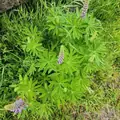
317,007 records of the plant in gardens, fields and the wild worldwide; most photos come from Norway, Russia, Finland, United States, and Germany.








Lupin care by growth stage
Greenhouse
| Stage | Watering | Temperature | Feeding |
|---|---|---|---|
| Germination | every 7 days | — | — |
| Growth | every 7 days | — | — |
| Flowering | every 7 days | — | — |
Open ground
| Stage | Watering | Temperature | Feeding |
|---|---|---|---|
| Germination | every 7 days | — | — |
| Growth | every 7 days | — | — |
| Flowering | every 7 days | — | — |
Growing notes
Light
Needs full sun; in shade it flowers poorly. In hot summers light afternoon shade helps.
Soil
Well-drained, moderately fertile soil, neutral to slightly acid. It grows best where summers are cool and dislikes heat with high humidity.
Care
Plant potted lupins in spring or early summer and water them regularly through the first summer; after that they are fairly drought tolerant. No feeding is needed unless flowering is poor. Cut spent spikes to the base to get more flowers and prevent self-seeding, and stake tall plants. Watch for slugs on young plants, lupin aphid and powdery mildew. From seed, nick the seeds and soak them for 24 hours, then sow in early to mid spring; they germinate in 10–14 days at 10–15 °C and usually flower the following year.
Pests and diseases of Lupin
2 problems are recorded for lupin; each has a page with symptoms, treatment and prevention.
Diseases
Other plants of the Fabaceae family
Lupin belongs to Fabaceae; 7 other plants of this family have a guide here.
 Sweet pea
 Green Beans
 Peas
 Broad bean
 Chickpea
 Peanut
 Soybean
Plant lists it is in
Part of: Garden flowers · Perennial garden flowers
Sources
Figures checked against these sources.
- gbif.org/species/2964355
- en.wikipedia.org/wiki/Lupinus_polyphyllus
- uk.wikipedia.org/wiki/Люпин_багатолистий
- ru.wikipedia.org/wiki/Люпин_многолистный
- es.wikipedia.org/wiki/Lupinus_polyphyllus
- rhs.org.uk/plants/lupins/growing-guide
- plantfinder.mobot.org/PlantFinderDetails.aspx?kempercode=b764
- ask.extension.org/kb/faq.php?id=415438
- weather.gov/media/lsx/climate/stl/temp/temp_stl_freeze_data.pdf
