 Greenly
How to grow green beans
Phaseolus vulgaris · string beans, snap beans
When to sow green beans?
Sow straight into the bed after your last spring frost, once the soil has warmed.
In an unheated greenhouse everything moves about three weeks earlier.
The first harvest comes about 50 days after the shoots appear.
Green Beans (Phaseolus vulgaris) — a frost-tender, fast-growing legume grown for its young pods, either as compact bush beans or as tall climbing (pole) beans. Bush beans crop for a few weeks; climbers crop over a longer season. Green Beans grows best in full sun and soil with pH 6–7. Water it about every 4 days while it grows.

Quick facts
| Type | Vegetable |
|---|---|
| Latin name | Phaseolus vulgaris |
| Family | Fabaceae |
| Also called | string beans, snap beans |
| Planted as | seed |
| How it is started | sown straight into the bed |
| Life span | grown for one season |
| Planting season | spring |
| Light | Full sun |
| Soil pH | 6–7 |
| Frost | does not tolerate frost |
| Soil for sowing | from 16 °C |
| Germination | 10 days |
| Shoots to harvest | 50 days |
| Grown in | Greenhouse, Open ground, At home |
How long does it take to grow green beans?
From sowing to the first harvest: about 60 days (9 weeks). Shoots appear after about 10 days, then it takes about 50 days more to the first harvest.
- Germination — 10 days
- In the bed — 50 days
| Step | Day |
|---|---|
| Sowing | 0 |
| Shoots appear | 10 |
| First harvest | 60 |
Days count from the day of sowing or planting, by the figures of the card. In an unheated greenhouse the Greenly calendar brings the harvest about 10 % sooner.
Green Beans is number 13 of 63 on our list from the fastest crop to the slowest. Close to it on the list: turnip (58 days), beet (60 days), Swiss chard (60 days), cucumber (62 days). Days to harvest: all vegetables, herbs and berries
Where does green beans grow?
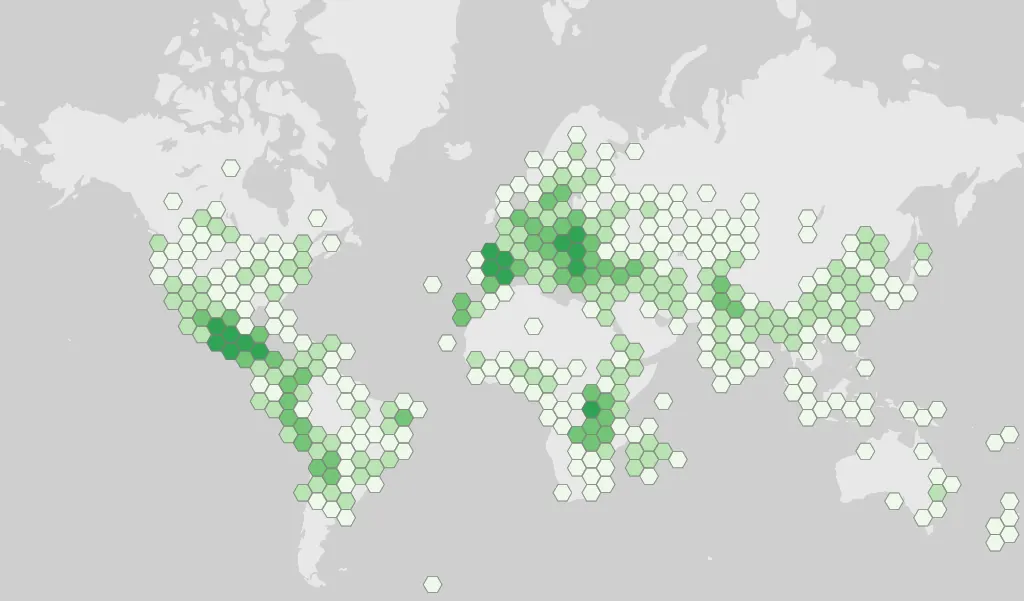
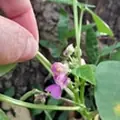
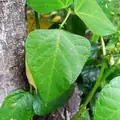
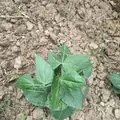
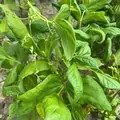
244,141 records of the plant in gardens, fields and the wild worldwide; most photos come from Georgia, Italy, Slovakia, Greece, and Albania.
Green Beans care by growth stage
Greenhouse
| Stage | Watering | Temperature | Feeding |
|---|---|---|---|
| Germination | every 2 days | 18…29 °C | — |
| Growth | every 3 days | 18…29 °C | — |
| Flowering | every 2 days | 18…29 °C | potassium, at the start of the stage |
| Fruiting | every 2 days | 18…29 °C | potassium, at the start of the stage |
| Harvest | every 2 days | 18…29 °C | potassium, at the start of the stage; potassium, 14 days into the stage |
Open ground
| Stage | Watering | Temperature | Feeding |
|---|---|---|---|
| Germination | every 3 days | 18…29 °C | — |
| Growth | every 4 days | 18…29 °C | — |
| Flowering | every 3 days | 18…29 °C | — |
| Fruiting | every 3 days | 18…29 °C | balanced (NPK), at the start of the stage |
| Harvest | every 3 days | 18…29 °C | — |
At home
| Stage | Watering | Temperature | Feeding |
|---|---|---|---|
| Germination | every 2 days | 18…29 °C | — |
| Growth | every 3 days | 18…29 °C | — |
| Flowering | every 2 days | 18…29 °C | potassium, at the start of the stage |
| Fruiting | every 2 days | 18…29 °C | potassium, at the start of the stage |
| Harvest | every 2 days | 18…29 °C | potassium, at the start of the stage; potassium, 14 days into the stage |
Growing notes
Light
Needs full sun: at least 6 hours of direct light a day, ideally 8–10.
Soil
Well-drained soil improved with garden compost or well-rotted manure; pH 6–7. Too much nitrogen gives big plants with few pods, and in cold, wet soil the seed rots.
Care
Sow 2.5–5 cm deep after the last frost, once the soil is at least 16 °C; do not soak the seed, water after sowing instead. Sow bush beans 5–15 cm apart and climbers at the base of 2–2.5 m poles or a trellis. They grow best at 18–29 °C. Water in dry weather, especially once flowers and pods form. In the ground they rarely need feeding, at most a light balanced side-dressing after heavy bloom and pod set; in containers give a high-potash liquid feed every two weeks from the first flowers. Sow again every 2–3 weeks for a steady supply and pick pods at 15–20 cm, while they still snap.
How to tell it is ripe
- Pods are fully elongated, firm and crisp-looking, with no bulge of seeds showing: this is the best eating stage.
- Over-mature pods show the bumps of swelling beans through the skin and become tough.
- A ready pod breaks cleanly with a snap when bent.
- Pick often, once the dew has dried off the plants, holding the brittle stems so they do not break.
Pests and diseases of Green Beans
11 problems are recorded for green beans; each has a page with symptoms, treatment and prevention.
Green Beans: all pests and diseases with photos
Diseases
Pests
Green Beans companion plants: good and bad neighbours
Each pair has a source and an evidence level: many companion-planting tips are tradition, not research.
What to plant with green beans?
- Corn (practical reason): Pole beans climb corn stalks, and the two root at different depths (Oregon State Extension) — two of the ‘Three Sisters’. The beans’ nitrogen reaches the corn only after their roots decay, so corn still needs feeding (Cornell). Sources: extension.oregonstate.edu, warren.cce.cornell.edu
- Pumpkin (practical reason): Beans and squash complete the ‘Three Sisters’: beans climb the corn while pumpkin covers the ground (Cornell). WSU Extension found no convincing evidence that the trio out-yields separate beds in a garden — grow it for space and tradition. Sources: warren.cce.cornell.edu, pubs.extension.wsu.edu
What not to plant next to green beans?
- Garlic (tradition, little evidence): Charts list garlic as a bad neighbour for beans (UC Master Gardener chart, after ATTRA). It is tradition: we found no trial showing that garlic harms beans. Sources: class.ucanr.edu, pubs.extension.wsu.edu
- Onion (tradition, little evidence): Companion charts, such as the UC Master Gardener chart, say onions stunt beans. We found no trial testing it, and WSU Extension notes that most chart pairings lack evidence — treat it as tradition. Sources: class.ucanr.edu, pubs.extension.wsu.edu
Other plants of the Fabaceae family
Green Beans belongs to Fabaceae; 7 other plants of this family have a guide here.
 Peas
 Broad bean
 Chickpea
 Peanut
 Soybean
 Lupin
 Sweet pea
Plant lists it is in
Sources
Figures checked against these sources.
- gbif.org/species/5350452
- wikidata.org/wiki/Q2987371
- en.wikipedia.org/wiki/Green_bean
- uk.wikipedia.org/wiki/Стручкова_квасоля
- ru.wikipedia.org/wiki/Стручковая_фасоль
- es.wikipedia.org/wiki/Ejote
- pt.wikipedia.org/wiki/Vagem
- ipm.ucanr.edu/home-and-landscape/cultural-tips-for-growing-beans/
- extension.umd.edu/resource/beans
- pubs.ext.vt.edu/426/426-402/426-402.html
- rhs.org.uk/vegetables/french-beans/grow-your-own
- extension.illinois.edu/gardening/snap-beans
- extension.oregonstate.edu/gardening/techniques/soil-temperature-conditions-vegetable-seed-
- hgic.clemson.edu/factsheet/harvesting-vegetables/
- extension.illinois.edu/blogs/good-growing/2024-06-28-harvesting-vegetables-when-and-how-pi
