 Greenly
How to grow Gerbera jamesonii
Gerbera jamesonii · Transvaal daisy, Barberton daisy
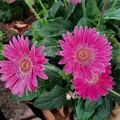
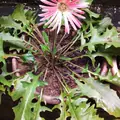
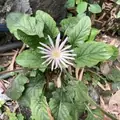
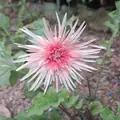
Gerbera (Gerbera jamesonii) — south African perennial daisy with 8–10 cm flowers in yellow, orange, red, pink, white, salmon and bicolours on leafless stems above a rosette of long, slightly hairy leaves, 15–60 cm tall. Most are tender and grown as summer bedding, in pots or as flowering houseplants. Gerbera grows best in full sun. Water it about every 7 days while it grows.

When to plant gerbera?
Planted as a young plant from a nursery while it is dormant — in early spring before the buds open, or in autumn after leaf fall.
Quick facts
| Type | Flower |
|---|---|
| Latin name | Gerbera jamesonii |
| Family | Asteraceae |
| Also called | Transvaal daisy, Barberton daisy |
| Planted as | young plants from a nursery |
| Life span | perennial |
| Planting season | spring |
| Light | Full sun |
| Frost | does not tolerate frost |
| Soil for planting | from 5 °C |
| First flowers | 14 days after growth starts |
| Flowering lasts | 150 days |
| Grown in | Greenhouse, Open ground, At home |
How long does gerbera take from planting to flowering?
From planting to the first flowers: about 14 days, or 2 weeks.
| Step | Day |
|---|---|
| Planting | 0 |
| Growth starts | 0 |
| First flowers | 14 |
| End of flowering | 164 |
Days count from the day of sowing or planting, by the figures of the card.
Where does gerbera grow?
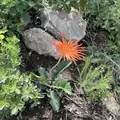
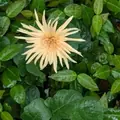
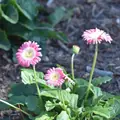
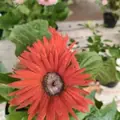
1,126 records of the plant in gardens, fields and the wild worldwide; most photos come from South Africa, United States, Australia, Brazil, and Germany.

Gerbera care by growth stage
Greenhouse
| Stage | Watering | Temperature | Feeding |
|---|---|---|---|
| Growth | every 7 days | 10…20 °C | balanced (NPK), at the start of the stage |
| Flowering | every 7 days | 10…20 °C | potassium, at the start of the stage; potassium, 14 days into the stage; micronutrients, 28 days into the stage; potassium, 42 days into the stage; potassium, 56 days into the stage; potassium, 70 days into the stage; potassium, 84 days into the stage |
Open ground
| Stage | Watering | Temperature | Feeding |
|---|---|---|---|
| Growth | every 7 days | — | balanced (NPK), at the start of the stage |
| Flowering | every 7 days | — | potassium, at the start of the stage; potassium, 14 days into the stage; micronutrients, 28 days into the stage; potassium, 42 days into the stage; potassium, 56 days into the stage; potassium, 70 days into the stage; potassium, 84 days into the stage |
At home
| Stage | Watering | Temperature | Feeding |
|---|---|---|---|
| Growth | every 3 days | 10…20 °C | balanced (NPK), at the start of the stage |
| Flowering | every 3 days | 10…20 °C | potassium, at the start of the stage; potassium, 14 days into the stage; micronutrients, 28 days into the stage; potassium, 42 days into the stage; potassium, 56 days into the stage; potassium, 70 days into the stage; potassium, 84 days into the stage |
Growing notes
Light
A warm, sunny spot; in hot climates morning sun and afternoon shade suit it better. Indoors a bright windowsill, but strong summer sun through glass can scorch it.
Soil
Fertile, well-drained soil enriched with compost. Wet soil rots the crown and roots, so in heavy ground use a raised bed or a pot. Gerberas are deep rooted, so pots should be deep, with gritty, free-draining compost, and never left standing in water.
Care
Plant out when nights stay above 5 °C, 30–45 cm apart, with the crown slightly above the soil so it stays dry. Water at the base early in the day and let the surface dry between waterings; keep the leaves and crown dry. Feed every two weeks with a liquid fertiliser — a high-potassium feed in summer boosts flowering — and give iron and manganese, which potted gerberas often lack. Indoors they flower best at 10–20 °C and pause outside that range. Remove faded flowers with the whole stem. Before nights fall below 5 °C bring plants into a cool (7–10 °C), bright, frost-free place and keep them on the dry side. Divide old clumps in early spring. Watch for whitefly, thrips, spider mites, leaf miners, grey mould and anthracnose. ASPCA lists gerbera as non-toxic to cats, dogs and horses.
Pests and diseases of Gerbera
5 problems are recorded for gerbera; each has a page with symptoms, treatment and prevention.
Gerbera: all pests and diseases with photos
Diseases
Pests
Other plants of the Asteraceae family
Gerbera belongs to Asteraceae; 20 other plants of this family have a guide here.
 Sunflower
 Black-eyed Susan
 Cosmos
 Calendula
 Purple coneflower
 Marigold
 Zinnia
 Dahlia
Plant lists it is in
Part of: Garden flowers · Perennial garden flowers · Long-flowering plants
Sources
Figures checked against these sources.
- gbif.org/species/7969761
- wikidata.org/wiki/Q310654
- wikidata.org/wiki/Q746928
- en.wikipedia.org/wiki/Gerbera_jamesonii
- uk.wikipedia.org/wiki/Гербера
- ru.wikipedia.org/wiki/Гербера_Джеймсона
- es.wikipedia.org/wiki/Gerbera
- it.wikipedia.org/wiki/Gerbera
- fr.wikipedia.org/wiki/Gerbera
- pt.wikipedia.org/wiki/Gerbera_jamesonii
- de.wikipedia.org/wiki/Gerbera
- cs.wikipedia.org/wiki/Gerbera
- pl.wikipedia.org/wiki/Gerbera
- hgic.clemson.edu/factsheet/gerbera-daisy/
- rhs.org.uk/plants/gerbera/growing-guide
- plants.ces.ncsu.edu/plants/gerbera-jamesonii/
- aspca.org/pet-care/aspca-poison-control/toxic-and-non-toxic-plants/gerber-daisy
