 Greenly
How to grow kumquat
Citrus japonica · cumquat
When to plant kumquat?
Plant a young citrus tree in spring, once the danger of frost has passed; a container-grown tree can go in at almost any time of year.
In frost-free tropical climates plant it in the rainy season: in Bahia, Brazil, Embrapa advises June and July.
Where winters bring frost, grow it in a pot and bring it under cover as soon as autumn nights start to turn cold.
Harvest from November to March (northern hemisphere).
Kumquat (Citrus japonica) — the kumquat is a small evergreen citrus tree from southern China with olive-sized orange fruit that is eaten whole, sweet peel and tart flesh together. It is one of the most cold-hardy citrus and, grafted on a dwarfing rootstock, one of the easiest to keep in a pot that winters indoors or in a greenhouse. Grafted trees give their first real crop in the third year. Kumquat grows best in full sun and soil with pH 5.5–6.5. Water it about every 7 days while it grows.

Quick facts
| Type | Fruit tree |
|---|---|
| Latin name | Citrus japonica |
| Family | Rutaceae |
| Also called | cumquat |
| Planted as | young plants from a nursery |
| Life span | perennial |
| Light | Full sun |
| Soil pH | 5.5–6.5 |
| Air humidity | 30–60 % |
| Frost | does not tolerate frost |
| First harvest after planting | about 3 years |
| Flowering | about 60 days after the last spring frost |
| Flowering lasts | 30 days |
| Harvest months | November to March (northern hemisphere) |
| Pruning | in late winter, before growth starts |
| Grown in | Greenhouse, Open ground, At home |
Where does kumquat grow?
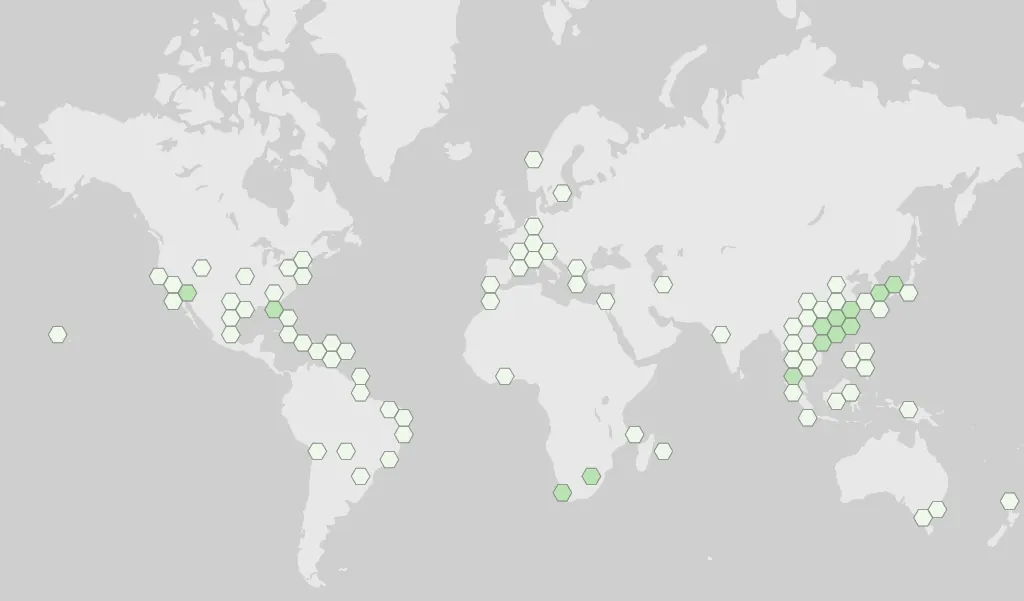
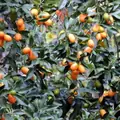
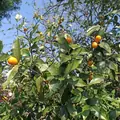
1,143 records of the plant in gardens, fields and the wild worldwide; most photos come from United States, Hong Kong SAR China, China, Japan, and Côte d’Ivoire.

Kumquat care by growth stage
Greenhouse
| Stage | Watering | Temperature | Feeding |
|---|---|---|---|
| Growth | every 7 days | 18…29 °C | nitrogen, at the start of the stage; nitrogen, 42 days into the stage |
| Flowering | every 7 days | 18…29 °C | nitrogen, at the start of the stage |
| Fruiting | every 7 days | 18…29 °C | nitrogen, at the start of the stage; nitrogen, 42 days into the stage; nitrogen, 84 days into the stage |
| Harvest | every 14 days | 7…18 °C | balanced (NPK), at the start of the stage |
| Winter rest | every 14 days | 7…18 °C | balanced (NPK), at the start of the stage; balanced (NPK), 60 days into the stage |
Open ground
| Stage | Watering | Temperature | Feeding |
|---|---|---|---|
| Growth | every 7 days | — | organic, at the start of the stage |
| Flowering | every 7 days | — | organic, at the start of the stage |
| Fruiting | every 7 days | — | — |
| Harvest | every 14 days | — | — |
| Winter rest | — | — | — |
At home
| Stage | Watering | Temperature | Feeding |
|---|---|---|---|
| Growth | every 7 days | 18…29 °C | nitrogen, at the start of the stage; nitrogen, 42 days into the stage |
| Flowering | every 7 days | 18…29 °C | nitrogen, at the start of the stage |
| Fruiting | every 7 days | 18…29 °C | nitrogen, at the start of the stage; nitrogen, 42 days into the stage; nitrogen, 84 days into the stage |
| Harvest | every 14 days | 13…18 °C | balanced (NPK), at the start of the stage |
| Winter rest | every 14 days | 13…18 °C | balanced (NPK), at the start of the stage; balanced (NPK), 60 days into the stage |
Growing notes
Light
Give it the sunniest spot you have, ideally at least 8 hours of sun, such as a south-facing window or a bright conservatory; in summer it can stand outdoors in a sunny, sheltered place.
Soil
Use a free-draining, slightly acidic mix (pH 5.5–6.5) in a pot with drainage holes. Kumquats hate waterlogging, so never leave the pot standing in water.
Care
Water when the top 5–7 cm of the mix feel dry, which in hot weather can be almost every day; in winter let the surface dry partly and err on the dry side. From late March to October feed a high-nitrogen citrus fertiliser, and from November switch to a balanced winter citrus feed. Keep it at about 18–29 °C while growing and cooler in winter, at 13–18 °C indoors or no lower than 7 °C in a greenhouse; harden it off gradually before moving it outside in late spring. Kumquats rest from autumn to spring and flower in early summer, later than other citrus; they are self-fertile, but a soft brush helps indoors. Do not let a potted tree become pot-bound, and prune lightly in early spring. Remove any fruit in the first two years so the young tree builds roots and branches.
How to tell it is ripe
- The fruit has turned fully orange all over, with no green left.
- Kumquats are at their best in late winter and early spring.
- The tree is the best store, so ripe fruit can hang there until you need it.
- Taste one before picking more; citrus fruit does not get sweeter once picked.
- Cut each fruit with secateurs, keeping a short piece of stalk (or a couple of leaves), because pulling it off can tear the peel.
Pests and diseases of Kumquat
5 problems are recorded for kumquat; each has a page with symptoms, treatment and prevention.
Kumquat: all pests and diseases with photos
Diseases
Pests
Other plants of the Rutaceae family
Kumquat belongs to Rutaceae; 3 other plants of this family have a guide here.
 Orange
 Lemon
 Mandarin
Plant lists it is in
Sources
Figures checked against these sources.
- gbif.org/species/3831801
- wikidata.org/wiki/Q5122903
- en.wikipedia.org/wiki/Kumquat
- uk.wikipedia.org/wiki/Кумкват
- ru.wikipedia.org/wiki/Кумкват
- es.wikipedia.org/wiki/Fortunella
- urbanharvest.org/wp-content/uploads/2019/06/Kumquats-2018.pdf
- bexar-tx.tamu.edu/?p=1815
- hort.purdue.edu/newcrop/morton/kumquat.html
- aggie-horticulture.tamu.edu/fruit-nut/fact-sheets/citrus/
- hort.extension.wisc.edu/articles/indoor-citrus/
- hgic.clemson.edu/factsheet/container-citrus-production/
- pfaf.org/user/Plant.aspx?LatinName=Citrus+japonica
- rhs.org.uk/fruit/citrus/grow-your-own
- libguides.nybg.org/citrus
- ipm.ucanr.edu/home-and-landscape/harvesting-and-storing-citrus/
