 Greenly
How to grow nasturtium (Tropaeolum majus)
Tropaeolum majus · Indian cress, garden nasturtium
When to sow nasturtium?
Sow for seedlings about 5 weeks before planting out.
Plant out in open ground about a week after your last spring frost, once the soil is warm.
In an unheated greenhouse everything moves about three weeks earlier.
It flowers about 58 days after the shoots appear and keeps flowering for about 140 days.
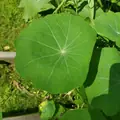
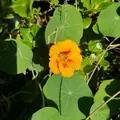
Nasturtium (Tropaeolum majus) — an easy annual in trailing and compact bushy forms, with round leaves and spurred red, orange, yellow or cream flowers from late spring until frost. Leaves, flowers and seeds are edible with a peppery taste; it is not toxic to cats and dogs. Nasturtium grows best in full sun and soil with pH 6–7. Water it about every 7 days while it grows.

Quick facts
| Type | Flower |
|---|---|
| Latin name | Tropaeolum majus |
| Family | Tropaeolaceae |
| Also called | Indian cress, garden nasturtium |
| Planted as | seed |
| How it is started | from seedlings |
| Life span | grown for one season |
| Planting season | spring |
| Light | Full sun |
| Soil pH | 6–7 |
| Frost | does not tolerate frost |
| Soil for sowing | from 10 °C |
| Germination | 10 days |
| Seedlings ready | 28 days |
| First flowers | 58 days after the shoots appear |
| Flowering lasts | 140 days |
| Grown in | Greenhouse, Open ground, At home |
How long does nasturtium take from sowing to flowering?
From sowing to the first flowers: about 68 days, or 10 weeks.
| Step | Day |
|---|---|
| Sowing | 0 |
| Shoots appear | 10 |
| Seedlings ready to plant out | 38 |
| First flowers | 68 |
| End of flowering | 208 |
Days count from the day of sowing or planting, by the figures of the card.
Where does nasturtium grow?
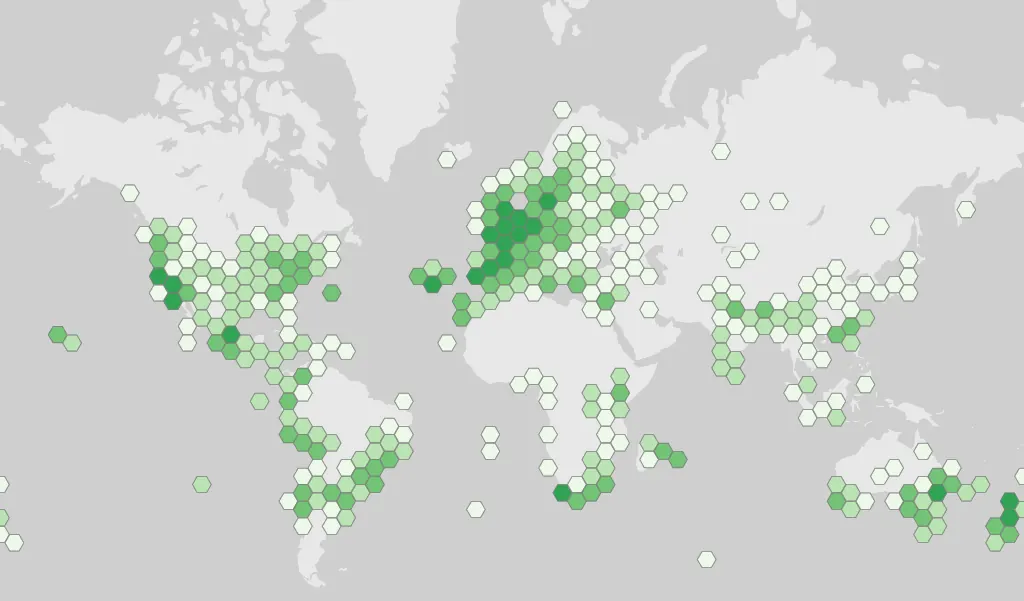
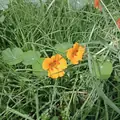
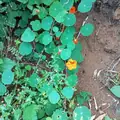
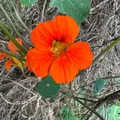
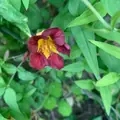
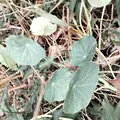
49,524 records of the plant in gardens, fields and the wild worldwide; most photos come from United States, New Zealand, South Africa, Spain, and France.
Nasturtium care by growth stage
Greenhouse
| Stage | Watering | Temperature | Feeding |
|---|---|---|---|
| Seedlings | every 2 days | — | — |
| Growth | every 4 days | — | — |
| Flowering | every 4 days | — | — |
Open ground
| Stage | Watering | Temperature | Feeding |
|---|---|---|---|
| Seedlings | every 2 days | — | — |
| Growth | every 7 days | — | — |
| Flowering | every 7 days | — | — |
At home
| Stage | Watering | Temperature | Feeding |
|---|---|---|---|
| Seedlings | every 2 days | — | — |
| Growth | every 3 days | — | — |
| Flowering | every 3 days | — | — |
Growing notes
Light
Full sun; in partial shade it flowers poorly. Light afternoon shade helps in hot summers.
Soil
Poor to average, well-drained, slightly acid soil. Rich or fertilised soil gives lush leaves and few flowers.
Care
Sow outdoors about 1.5 cm deep and 25–30 cm apart once frost has passed, or in individual pots 4–6 weeks before the last frost; soaking the seed for a few hours helps, and seedlings appear in 7–10 days. Do not feed except on very poor soil. Water regularly through the season, although it tolerates some drought. Pick or deadhead the flowers to keep them coming. Watch for aphids, cabbage white caterpillars and whiteflies.
Pests and diseases of Nasturtium
5 problems are recorded for nasturtium; each has a page with symptoms, treatment and prevention.
Nasturtium: all pests and diseases with photos
Pests
Nasturtium companion plants: good and bad neighbours
Each pair has a source and an evidence level: many companion-planting tips are tradition, not research.
What to plant with nasturtium?
- Tomato (tradition, little evidence): Companion charts list nasturtium as a good neighbour for tomatoes (UC Master Gardener chart), often as a trap plant for aphids — a tradition we found no trial for. WSU Extension notes that scent-based trap crops draw insects only from about five metres. Sources: class.ucanr.edu, pubs.extension.wsu.edu
- Zucchini (tradition, little evidence): Nasturtium is a traditional companion for squash and zucchini (UC Master Gardener chart). No trial we found measured a benefit, and WSU Extension says scent-based trap crops work only over short distances. Sources: class.ucanr.edu, pubs.extension.wsu.edu
Plant lists it is in
Part of: Garden flowers · Annual flowers from seed · Long-flowering plants · Quick-flowering annuals
Sources
Figures checked against these sources.
- gbif.org/species/2889934
- en.wikipedia.org/wiki/Tropaeolum_majus
- uk.wikipedia.org/wiki/Красоля_велика
- ru.wikipedia.org/wiki/Настурция_большая
- es.wikipedia.org/wiki/Tropaeolum_majus
- plantfinder.mobot.org/PlantFinderDetails.aspx?taxonid=264612
- hort.extension.wisc.edu/articles/nasturtium-tropaeolum-majus/
- plants.ces.ncsu.edu/plants/tropaeolum-majus/
- aspca.org/pet-care/animal-poison-control/toxic-and-non-toxic-plants/nasturtium
- johnnyseeds.com/on/demandware.static/-/Library-Sites-JSSSharedLibrary/default/dweed6cbb6/a
- weather.gov/media/lsx/climate/stl/temp/temp_stl_freeze_data.pdf
