 Greenly
How to grow hazelnut
Corylus avellana · common hazel, hazel, cobnut
When to plant hazelnut?
Planted as a young plant from a nursery while it is dormant — in early spring before the buds open, or in autumn after leaf fall.
Harvest from September to October (northern hemisphere).
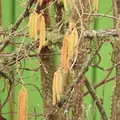
Hazelnut (Corylus avellana) — a shrub or small tree, usually 3–8 m tall, grown for its hazelnuts. Its catkins release pollen on the wind in late winter, long before the leaves, and the nuts drop from mid-September to October. Hazelnut grows best in full sun and soil with pH 6.5–7.5. Water it about every 7 days while it grows.

Quick facts
| Type | Fruit tree |
|---|---|
| Latin name | Corylus avellana |
| Family | Betulaceae |
| Also called | common hazel, hazel, cobnut |
| Planted as | young plants from a nursery |
| Life span | perennial |
| Light | Full sun |
| Soil pH | 6.5–7.5 |
| Frost | tolerates light frost |
| First harvest after planting | about 3 years |
| Flowering | about 60 days before the last spring frost |
| Flowering lasts | 35 days |
| Harvest months | September to October (northern hemisphere) |
| Pruning | in late winter, before growth starts |
| Grown in | Open ground |
Where does hazelnut grow?
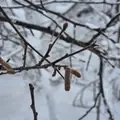
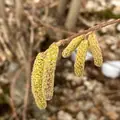
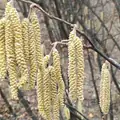
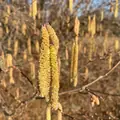
1,440,166 records of the plant in gardens, fields and the wild worldwide; most photos come from United Kingdom, Germany, France, Russia, and Norway.


Hazelnut care by growth stage
Open ground
| Stage | Watering | Temperature | Feeding |
|---|---|---|---|
| Growth | every 7 days | — | — |
| Flowering | — | — | balanced (NPK), at the start of the stage |
| Fruiting | every 7 days | — | — |
| Harvest | every 7 days | — | — |
| Winter rest | — | — | — |
Growing notes
Light
Full sun or light shade, in a sheltered spot away from frost pockets.
Soil
Light, sandy, well-drained soil with a pH of 6.5–7.5; it dislikes clay.
Care
Plant between November and March, while dormant, and mulch young plants to keep in moisture. Water in dry spells in spring and summer, and give a balanced fertiliser every year in late winter. Winter-prune while the catkins shed pollen; in August break and leave hanging the long side shoots (brutting) to encourage female flowers. Pick when the husks turn yellow in late September and dry the nuts in an airy place.
How to tell it is ripe
- The husks begin to turn yellow.
- Ripe nuts fall out of their husks to the ground.
- Shake a branch lightly: ripe nuts drop.
- Gather fallen nuts often, before the autumn rains, and dry them in shallow layers in an airy place, turning them regularly.
Pests and diseases of Hazelnut
1 problem is recorded for hazelnut; it has a page with symptoms, treatment and prevention.
Diseases
Plant lists it is in
Sources
Figures checked against these sources.
- gbif.org/species/2875979
- wikidata.org/wiki/Q124969
- ru.wikipedia.org/wiki/Лещина_обыкновенная
- rhs.org.uk/nuts/cobnuts-filberts
- extension.oregonstate.edu/catalog/pub/em9074?reference=catalog
- ccetompkins.org/gardening/home-gardening/food-gardening/first-planting-dates
- en.wikipedia.org/wiki/Corylus_avellana
- plants.ces.ncsu.edu/plants/corylus-avellana/common-name/hazelnut/
- extension.oregonstate.edu/catalog/pub/ec-819-growing-tree-fruits-nuts-home-orchard
- extension.unh.edu/blog/fall-good-time-plant-trees-and-shrubs
- en.wikipedia.org/wiki/Hazelnut
- extension.oregonstate.edu/sites/extd8/files/documents/12281/harvesting-handling-storing-nu
