 Greenly
How to grow stock (Matthiola incana)
Matthiola incana · hoary stock, gillyflower, Brompton stock
When to sow stock?
Sow for seedlings about 6 weeks before planting out.
It tolerates light frost: plant out in open ground about three weeks before your last spring frost.
In an unheated greenhouse everything moves about three weeks earlier.
It flowers about 70 days after the shoots appear and keeps flowering for about 30 days.
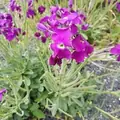
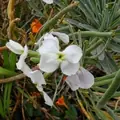
Stock (Matthiola incana) — a cool-season flower of the cabbage family, a biennial or short-lived perennial grown as an annual, with dense spikes of single or double flowers in white, cream, pink, red, purple and yellow and a strong clove-like scent. It flowers from late spring and keeps going into autumn where summers are cool, but stops in the heat. The flowers are edible. Stock grows best in full sun. Water it about every 7 days while it grows.

Quick facts
| Type | Flower |
|---|---|
| Latin name | Matthiola incana |
| Family | Brassicaceae |
| Also called | hoary stock, gillyflower, Brompton stock, Matthiola |
| Planted as | seed |
| How it is started | from seedlings or sown straight into the bed |
| Life span | grown for one season |
| Planting season | spring |
| Light | Full sun |
| Frost | tolerates light frost |
| Soil for sowing | from 10 °C |
| Germination | 10 days |
| Seedlings ready | 35 days |
| First flowers | 70 days after the shoots appear |
| Flowering lasts | 30 days |
| Grown in | Greenhouse, Open ground, At home |
How long does stock take from sowing to flowering?
From sowing to the first flowers: about 80 days, or 11 weeks.
| Step | Day |
|---|---|
| Sowing | 0 |
| Shoots appear | 10 |
| Seedlings ready to plant out | 45 |
| First flowers | 80 |
| End of flowering | 110 |
Days count from the day of sowing or planting, by the figures of the card.
Where does stock grow?
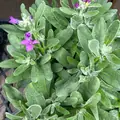
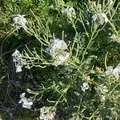
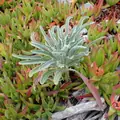
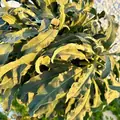
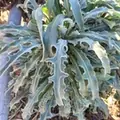
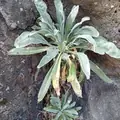
8,819 records of the plant in gardens, fields and the wild worldwide; most photos come from United States, France, New Zealand, Spain, and Italy.

Stock care by growth stage
Greenhouse
| Stage | Watering | Temperature | Feeding |
|---|---|---|---|
| Seedlings | every 2 days | — | — |
| Growth | every 7 days | 10…27 °C | balanced (NPK), at the start of the stage |
| Flowering | every 7 days | 10…27 °C | balanced (NPK), 14 days into the stage |
Open ground
| Stage | Watering | Temperature | Feeding |
|---|---|---|---|
| Seedlings | every 2 days | — | — |
| Growth | every 7 days | 10…27 °C | balanced (NPK), at the start of the stage |
| Flowering | every 7 days | 10…27 °C | balanced (NPK), 14 days into the stage |
At home
| Stage | Watering | Temperature | Feeding |
|---|---|---|---|
| Seedlings | every 2 days | — | — |
| Growth | every 2 days | 10…27 °C | balanced (NPK), at the start of the stage |
| Flowering | every 2 days | 10…27 °C | balanced (NPK), 14 days into the stage |
Growing notes
Light
Full sun; tolerates some light shade.
Soil
Average to humus-rich, evenly moist, well-drained soil, neutral or slightly alkaline — it does poorly in acid soil.
Care
Sow 6 mm deep at 18–24 °C, 5–8 weeks before planting out, or sow outdoors at the last frost date. For more double flowers, keep the seedlings at 4–7 °C for 3–4 days at the seed-leaf stage and keep the lighter green ones — the darker ones flower single. Plants are frost-hardy and need 2–3 weeks of cool weather (10–13 °C) to set buds, so plant them out early, 10–15 cm apart; do not pinch them. Keep the soil evenly moist. Feed at planting and again 6–8 weeks later, without extra nitrogen — it makes stems weak — and watch for brown leaf tips, a sign of potassium shortage. Above about 27 °C flowering stops, so sow again every two weeks for a longer show and give tall varieties netting or a stake. Aphids, thrips, flea beetles and diamondback moth caterpillars attack it; white mould appears in mild, wet weather.
Pests and diseases of Stock
3 problems are recorded for stock; each has a page with symptoms, treatment and prevention.
Diseases
Pests
Other plants of the Brassicaceae family
Stock belongs to Brassicaceae; 16 other plants of this family have a guide here.
 Sweet alyssum
 Watercress
 Bok Choy
 Turnip
 Napa cabbage
 Horseradish
 Broccoli
 Brussels Sprouts
Plant lists it is in
Part of: Garden flowers · Annual flowers from seed · Flowers to sow straight into the bed · Hardy annuals
Sources
Figures checked against these sources.
- gbif.org/species/5377378
- en.wikipedia.org/wiki/Matthiola_incana
- uk.wikipedia.org/wiki/Левкой_сивий
- ru.wikipedia.org/wiki/Левкой_седой
- es.wikipedia.org/wiki/Matthiola_incana
- missouribotanicalgarden.org/PlantFinder/PlantFinderDetails.aspx?taxonid=278041
- plants.ces.ncsu.edu/plants/matthiola-incana/
- extension.msstate.edu/publications/stock-matthiola-incana-for-the-farmer-florist
- pfaf.org/user/Plant.aspx?LatinName=Matthiola+incana
- blogs.cornell.edu/hightunnels/flowers/cut-flowers/cut-flower-crops/stock/
- johnnyseeds.com/growers-library/flowers/stock/stock-key-growing-information.html
- extension.illinois.edu/flowers/caring-annuals
