 Greenly
How to grow horseradish
Armoracia rusticana
When to plant horseradish?
It tolerates light frost: plant rooted cuttings into the bed about three weeks before your last spring frost.
The first harvest comes about 180 days after planting.
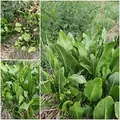
Horseradish (Armoracia rusticana) — a hardy perennial of the cabbage family grown for its pungent white roots. The leaves die down in autumn and regrow every spring, and the plant spreads from any piece of root left in the soil. Horseradish grows best in full sun and soil with pH 6–7.5. Water it about every 7 days while it grows.

Quick facts
| Type | Vegetable |
|---|---|
| Latin name | Armoracia rusticana |
| Family | Brassicaceae |
| Planted as | rooted cuttings |
| Life span | perennial |
| Planting season | spring |
| Light | Full sun |
| Soil pH | 6–7.5 |
| Frost | tolerates light frost |
| Soil for planting | from 7 °C |
| Growth starts | 14 days after planting |
| First harvest after planting | 180 days |
| Grown in | Open ground |
How long does it take to grow horseradish?
From planting to the first harvest: about 180 days (26 weeks). Growth starts after about 14 days, then it takes about 166 days more to the first harvest.
- Before growth starts — 14 days
- Growing — 166 days
| Step | Day |
|---|---|
| Planting | 0 |
| Growth starts | 14 |
| First harvest | 180 |
Days count from the day of sowing or planting, by the figures of the card.
Horseradish is number 6 of 24 perennials and berry bushes on our list, from the fastest to the slowest. Close to it on the list: rosemary (90 days), lemongrass (120 days), jerusalem artichoke (210 days), artichoke (365 days). Days to harvest: all vegetables, herbs and berries
Where does horseradish grow?
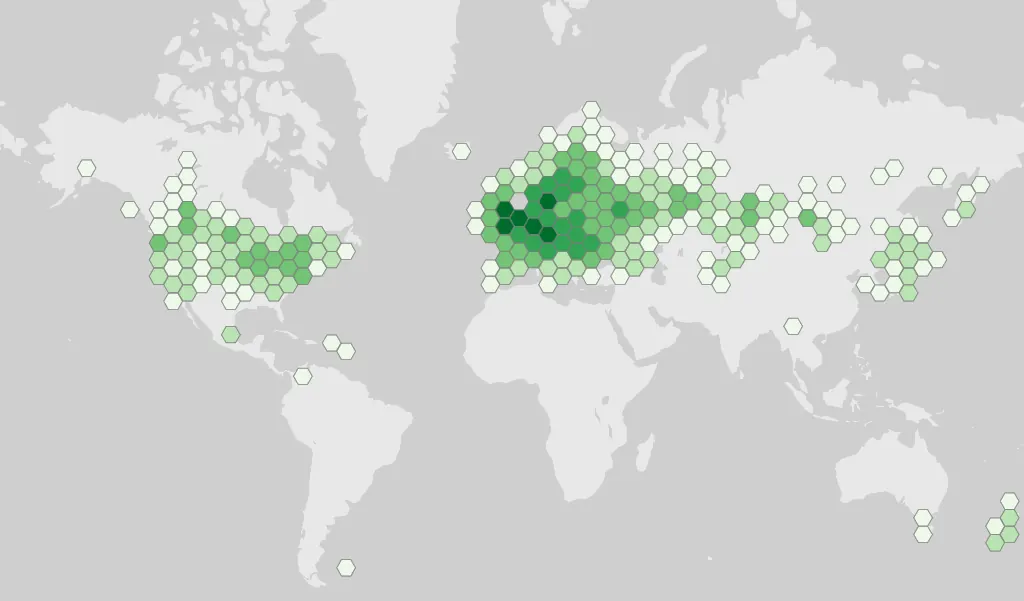
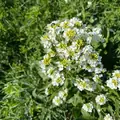
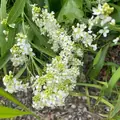
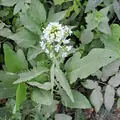
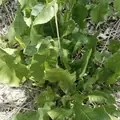
131,712 records of the plant in gardens, fields and the wild worldwide; most photos come from United Kingdom, Russia, Germany, Norway, and United States.
Horseradish care by growth stage
Open ground
| Stage | Watering | Temperature | Feeding |
|---|---|---|---|
| Growth | every 7 days | — | nitrogen, 14 days into the stage; nitrogen, 42 days into the stage |
| Harvest | — | — | — |
Growing notes
Light
Best in full sun but tolerates partial shade.
Soil
Deep, fertile, well-drained soil rich in organic matter, pH 6–7.5. Light soil makes digging easier; in waterlogged soil the roots rot.
Care
Plant root cuttings in spring or autumn at a slant, with the top 5 cm below the surface and 30 cm apart. Water once a week, 25–50 mm, in dry weather; too little water makes the roots woody and weak in flavour, too much makes them soft. Feed a little nitrogen 4 and 8 weeks after planting; too much gives leaves and branched roots. Dig the roots in autumn after frost has killed the leaves, or in early spring. Grow it in a large container or a buried bottomless tub to stop it spreading.
Pests and diseases of Horseradish
2 problems are recorded for horseradish; each has a page with symptoms, treatment and prevention.
Pests
Other plants of the Brassicaceae family
Horseradish belongs to Brassicaceae; 16 other plants of this family have a guide here.
 Watercress
 Bok Choy
 Turnip
 Napa cabbage
 Broccoli
 Brussels Sprouts
 Cabbage
 Cauliflower
Plant lists it is in
Sources
Figures checked against these sources.
- gbif.org/species/3041022
- wikidata.org/wiki/Q26545
- en.wikipedia.org/wiki/Horseradish
- uk.wikipedia.org/wiki/Хрін_звичайний
- ru.wikipedia.org/wiki/Хрен
- es.wikipedia.org/wiki/Armoracia_rusticana
- rhs.org.uk/vegetables/horseradish/grow-your-own
- hort.extension.wisc.edu/articles/horseradish-armoracia-rusticana/
- extension.usu.edu/yardandgarden/research/horseradish-in-the-garden
