 Greenly
How to grow raspberry
Rubus idaeus · red raspberry
When to plant raspberry?
Planted as a young plant from a nursery while it is dormant — in early spring before the buds open, or in autumn after leaf fall.
Raspberry (Rubus idaeus) — a perennial bramble whose canes live for two years. Summer-fruiting varieties crop on last year's canes from early to late summer; autumn-fruiting varieties crop on the current year's canes from late summer into autumn. Raspberries are self-fertile, so one plant fruits on its own, and the canes need support and pruning every year. Raspberry grows best in full sun and soil with pH 5.6–6.7. Water it about every 7 days while it grows.

Quick facts
| Type | Berry |
|---|---|
| Latin name | Rubus idaeus |
| Family | Rosaceae |
| Also called | red raspberry |
| Planted as | young plants from a nursery |
| Life span | perennial |
| Planting season | spring |
| Light | Full sun |
| Soil pH | 5.6–6.7 |
| Frost | tolerates light frost |
| Soil for planting | from 4 °C |
| First harvest after planting | about 1 year |
| Grown in | Greenhouse, Open ground |
How long does it take to grow raspberries?
From planting to the first harvest: about 15 months (450 days), so the first crop comes more than a year after planting.
- Growing — 450 days
| Step | Day |
|---|---|
| Planting | 0 |
| Growth starts | 0 |
| First harvest | 450 |
Days count from the day of sowing or planting, by the figures of the card. In an unheated greenhouse the Greenly calendar brings the harvest about 10 % sooner.
Raspberry is number 14 of 24 perennials and berry bushes on our list, from the fastest to the slowest. Close to it on the list: blackcurrant (450 days), gooseberry (450 days), redcurrant (450 days), blackberry (460 days). Days to harvest: all vegetables, herbs and berries
Autumn feeding: what the garden needs in fall
No feeding: fertilising stops after harvest, late growth suffers in winter; mulch from late autumn.
When to feed: In spring, before new growth starts.
Where does raspberry grow?
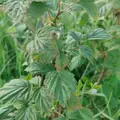
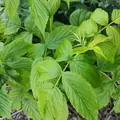
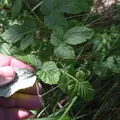
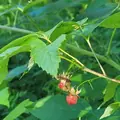
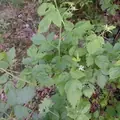
819,330 records of the plant in gardens, fields and the wild worldwide; most photos come from Russia, Canada, United States, United Kingdom, and Norway.




Raspberry care by growth stage
Greenhouse
| Stage | Watering | Temperature | Feeding |
|---|---|---|---|
| Growth | every 3 days | — | balanced (NPK), at the start of the stage; balanced (NPK), 30 days into the stage |
| Flowering | every 3 days | — | balanced (NPK), at the start of the stage |
| Fruiting | every 3 days | — | balanced (NPK), at the start of the stage |
Open ground
| Stage | Watering | Temperature | Feeding |
|---|---|---|---|
| Growth | every 7 days | — | nitrogen, at the start of the stage; nitrogen, 50 days into the stage |
| Flowering | every 7 days | — | — |
| Fruiting | every 7 days | — | — |
Growing notes
Light
Full sun gives the biggest crop. Plants fruit in light shade but crop less and are less healthy; in hot regions light late-afternoon shade helps.
Soil
Fertile, well-drained, slightly acidic soil rich in organic matter, about pH 5.6–6.7. Raspberries won't tolerate waterlogging, especially in winter, and dislike shallow chalky soil; on poorly drained ground plant in raised beds.
Care
Plant dormant canes 40–60 cm apart in rows 1.5–2 m apart, with the top roots no more than 5 cm deep, then cut the canes to 25 cm (except summer varieties sold as long canes). Tie the canes to horizontal wires. Water new plants in dry spells; established plants need about 25–40 mm of water a week, most of all while the fruit develops. Mulch 5–7.5 cm deep in late winter or early spring, keeping it off the canes. Feed with nitrogen as new canes start to grow in spring and again 1½–2 months later. After summer-fruiting varieties crop, cut the fruited canes to the ground and keep six to eight strong new canes per plant; cut all canes of autumn-fruiting varieties to the ground in late winter.
How to tell it is ripe
- Berry is fully and richly coloured for its variety.
- Berry looks plump.
- A ripe berry comes off with a gentle pull and leaves its white core on the plant.
- Ripe fruit feels soft.
- Pick every three to four days when the berries are dry, into a shallow container no more than two or three layers deep.
Pests and diseases of Raspberry
7 problems are recorded for raspberry; each has a page with symptoms, treatment and prevention.
Raspberry: all pests and diseases with photos
Diseases
Pests
- Raspberry beetle: Ripe berries with greyish-brown, dried-up patches at the stalk end.
- Strawberry blossom weevil: Flower buds hang on a partly severed stalk, wither and drop without opening; the female lays an egg in the bud and then gnaws the stalk.
- Two-spotted spider mite
- Vine weevil
Other plants of the Rosaceae family
Raspberry belongs to Rosaceae; 17 other plants of this family have a guide here.
 Blackberry
 Saskatoon serviceberry
 Strawberry
 Aronia
 Rose
 Sweet cherry
 Apple
 Cherry plum
Plant lists it is in
Sources
Figures checked against these sources.
- gbif.org/species/2993094
- wikidata.org/wiki/Q13179
- wikidata.org/wiki/Q12252383
- en.wikipedia.org/wiki/Raspberry
- uk.wikipedia.org/wiki/Малина_звичайна
- ru.wikipedia.org/wiki/Малина_обыкновенная
- fr.wikipedia.org/wiki/Framboisier
- rhs.org.uk/fruit/raspberries/grow-your-own
- extension.unh.edu/blog/fall-good-time-plant-trees-and-shrubs
- extension.oregonstate.edu/catalog/ec-1306-growing-raspberries-your-home-garden
- extension.umd.edu/resource/growing-raspberries-and-blackberries-home-garden
- extension.sdstate.edu/raspberries-harvest-and-storage
- yardandgarden.extension.iastate.edu/how-to/harvesting-and-storing-small-fruit
