 Greenly
How to grow strawberry
Fragaria ananassa · garden strawberry
When to plant strawberry?
Planted as a young plant from a nursery while it is dormant — in early spring before the buds open, or in autumn after leaf fall.
Strawberry (Fragaria ananassa) — a low perennial grown from nursery plants or runners. Summer-fruiting varieties give one heavy crop of two to three weeks in early to late summer; perpetual (everbearing) and day-neutral types fruit in smaller flushes from early summer into autumn. A bed crops well for three to four years. Strawberry grows best in full sun and soil with pH 5.5–6.5. Water it about every 7 days while it grows.

Quick facts
| Type | Berry |
|---|---|
| Latin name | Fragaria ananassa |
| Family | Rosaceae |
| Also called | garden strawberry |
| Planted as | young plants from a nursery |
| Life span | perennial |
| Planting season | spring |
| Light | Full sun |
| Soil pH | 5.5–6.5 |
| Frost | tolerates light frost |
| Soil for planting | from 5 °C |
| First harvest after planting | 75 days |
| Grown in | Greenhouse, Open ground, At home |
How long does it take to grow strawberries?
From planting to the first harvest: about 75 days (11 weeks).
- Growing — 75 days
| Step | Day |
|---|---|
| Planting | 0 |
| Growth starts | 0 |
| First harvest | 75 |
Days count from the day of sowing or planting, by the figures of the card. In an unheated greenhouse the Greenly calendar brings the harvest about 10 % sooner.
Strawberry is number 3 of 24 perennials and berry bushes on our list, from the fastest to the slowest. Close to it on the list: mint (60 days), tarragon (60 days), rosemary (90 days), lemongrass (120 days). Days to harvest: all vegetables, herbs and berries
Autumn feeding: what the garden needs in fall
No fertiliser after 31 August; in late autumn cover with straw or leaf mulch.
When to feed: June-bearers: straight after the last harvest (renovation), a second feed in late August.
Where does strawberry grow?
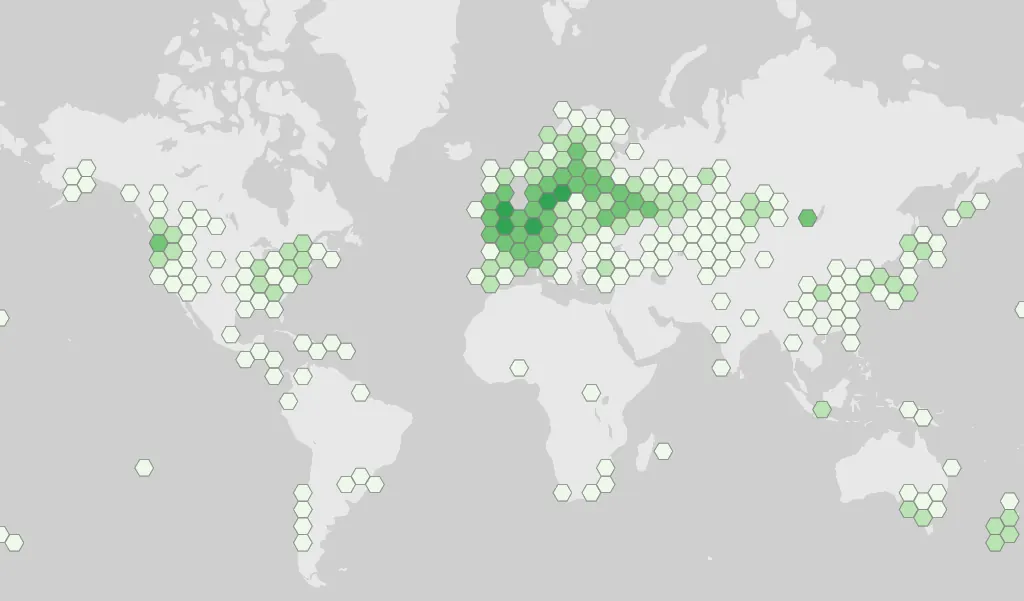
21,223 records of the plant in gardens, fields and the wild worldwide; most photos come from Russia, France, Germany, United Kingdom, and Norway.




Strawberry care by growth stage
Greenhouse
| Stage | Watering | Temperature | Feeding |
|---|---|---|---|
| Growth | every 2 days | — | balanced (NPK), at the start of the stage; balanced (NPK), 14 days into the stage |
| Flowering | every 2 days | — | potassium, at the start of the stage; potassium, 14 days into the stage |
| Fruiting | every 2 days | — | potassium, at the start of the stage; potassium, 14 days into the stage |
| Harvest | every 2 days | — | potassium, at the start of the stage; potassium, 14 days into the stage |
Open ground
| Stage | Watering | Temperature | Feeding |
|---|---|---|---|
| Growth | every 7 days | — | — |
| Flowering | every 4 days | — | — |
| Fruiting | every 4 days | — | — |
| Harvest | every 4 days | — | balanced (NPK), 21 days into the stage |
At home
| Stage | Watering | Temperature | Feeding |
|---|---|---|---|
| Growth | every 2 days | — | balanced (NPK), at the start of the stage; balanced (NPK), 14 days into the stage |
| Flowering | every 2 days | — | potassium, at the start of the stage; potassium, 14 days into the stage |
| Fruiting | every 2 days | — | potassium, at the start of the stage; potassium, 14 days into the stage |
| Harvest | every 2 days | — | potassium, at the start of the stage; potassium, 14 days into the stage |
Growing notes
Light
Full sun, at least 6–8 hours of direct sunlight a day, gives the sweetest fruit; plants tolerate some shade but crop less.
Soil
Fertile, well-drained soil rich in organic matter, slightly acidic at pH 5.5–6.5. In heavy clay grow them in raised beds, and avoid frost pockets, where late frost kills the flowers.
Care
Plant with the base of the crown level with the soil surface, 35–40 cm apart in rows 75 cm apart. Water about 25 mm a week in dry spells and keep the soil moist while plants flower and fruit; water in the morning at the base, keeping the crown and berries dry. Lay straw under the developing fruit. On frosty nights cover open flowers with fleece, as frost turns their centres black and they set no fruit. In pots, feed every two weeks with a general liquid feed, then a high-potassium feed from the first flower buds; under glass, pollinate the flowers with a soft brush. After summer-fruiting varieties finish, cut the old leaves off about 10 cm above the crown and remove unwanted runners. Replant in a new spot every three to four years.
How to tell it is ripe
- Berry is bright red all over.
- The red reaches right up to the green cap, with no white or green shoulders.
- Cut one berry in half: a wide white ring inside means it is not fully ripe.
- Taste one, because varieties differ in the shade of red that means ripe.
- Pinch through the stalk about 6 mm above the cap instead of pulling the berry, and pick every two to four days.
Pests and diseases of Strawberry
12 problems are recorded for strawberry; each has a page with symptoms, treatment and prevention.
Strawberry: all pests and diseases with photos
Diseases
- Anthracnose
- Fusarium wilt
- Grey mould
- Strawberry leaf spot: Small round dark-purple spots on the upper side of the leaves.
- Verticillium wilt
- White mould (Sclerotinia)
Pests
- Chafer grubs
- Strawberry blossom weevil: Flower buds hang on a partly severed stalk, wither and drop without opening; the female lays an egg in the bud and then gnaws the stalk.
- Two-spotted spider mite
- Vine weevil
- Whitefly
Nutrient deficiencies
Strawberry companion plants: good and bad neighbours
Each pair has a source and an evidence level: many companion-planting tips are tradition, not research.
What not to plant next to strawberry?
- Potato (practical reason): Potatoes build up Verticillium wilt in the soil, a disease strawberries suffer from too. Penn State Extension advises against a new strawberry bed where potatoes or their relatives grew, with a 3–5 year rotation. Sources: extension.psu.edu
- Tomato (practical reason): Tomatoes can leave Verticillium wilt in the soil, and strawberries catch it. Penn State Extension advises not to start a strawberry bed after tomatoes, potatoes or eggplant, and to rotate for 3–5 years. Sources: extension.psu.edu
Other plants of the Rosaceae family
Strawberry belongs to Rosaceae; 17 other plants of this family have a guide here.
 Raspberry
 Blackberry
 Saskatoon serviceberry
 Aronia
 Rose
 Sweet cherry
 Apple
 Cherry plum
Plant lists it is in
Sources
Figures checked against these sources.
- gbif.org/species/3029912
- wikidata.org/wiki/Q13158
- en.wikipedia.org/wiki/Strawberry
- uk.wikipedia.org/wiki/Полуниці_садові
- ru.wikipedia.org/wiki/Земляника_ананасная
- fr.wikipedia.org/wiki/Fragaria_×ananassa
- pt.wikipedia.org/wiki/Morango
- publications.ca.uky.edu/sites/publications.ca.uky.edu/files/NEP244.pdf
- njaes.rutgers.edu/fs097
- rhs.org.uk/fruit/strawberries/grow-your-own
- byf.unl.edu/strawberries
- extension.illinois.edu/small-fruits/strawberries
- yardandgarden.extension.iastate.edu/faq/when-should-strawberries-be-harvested
- yardandgarden.extension.iastate.edu/how-to/harvesting-and-storing-small-fruit
- iowaspecialtycrop.org/strawberry-care/
