 Greenly
How to grow haskap
Lonicera caerulea · honeyberry, blue honeysuckle, edible honeysuckle
When to plant haskap?
Planted as a young plant from a nursery while it is dormant — in early spring before the buds open, or in autumn after leaf fall.
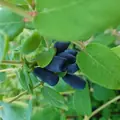
Haskap (Lonicera caerulea) — a very cold-hardy deciduous shrub with elongated blue berries that ripen in late June to early July, before June-bearing strawberries. It can fruit a year after planting, and a grown bush gives 3–4.5 kg. One variety cannot pollinate itself: plant two different varieties that flower at the same time. Haskap grows best in full sun and soil with pH 5–7. Water it about every 7 days while it grows.

Quick facts
| Type | Berry |
|---|---|
| Latin name | Lonicera caerulea |
| Family | Caprifoliaceae |
| Also called | honeyberry, blue honeysuckle, edible honeysuckle |
| Planted as | young plants from a nursery |
| Life span | perennial |
| Planting season | spring |
| Light | Full sun |
| Soil pH | 5–7 |
| Frost | tolerates light frost |
| Soil for planting | from 4 °C |
| First harvest after planting | about 1 year |
| Grown in | Open ground |
How long does it take to grow haskap?
From planting to the first harvest: about 14 months (440 days), so the first crop comes more than a year after planting.
- Growing — 440 days
| Step | Day |
|---|---|
| Planting | 0 |
| Growth starts | 0 |
| First harvest | 440 |
Days count from the day of sowing or planting, by the figures of the card.
Haskap is number 11 of 24 perennials and berry bushes on our list, from the fastest to the slowest. Close to it on the list: passion fruit (365 days), rhubarb (400 days), blackcurrant (450 days), gooseberry (450 days). Days to harvest: all vegetables, herbs and berries
Autumn feeding: what the garden needs in fall
No feeding; newly planted bushes get no fertiliser.
When to feed: Once in early spring: compost or well-rotted manure.
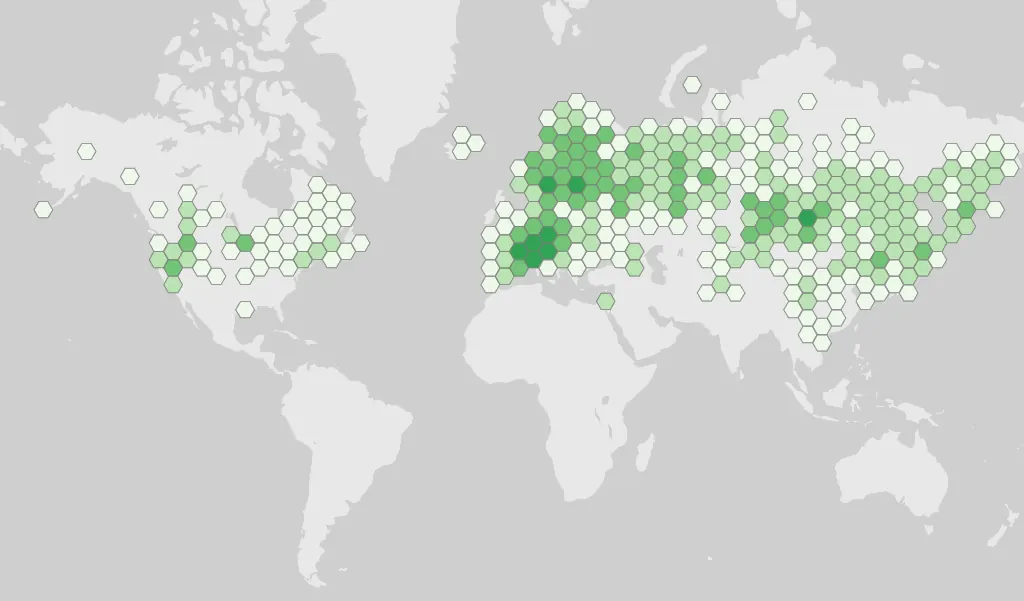
Where does haskap grow?
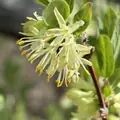
32,566 records of the plant in gardens, fields and the wild worldwide; most photos come from Russia, Norway, France, Austria, and Switzerland.
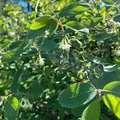
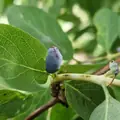
Haskap care by growth stage
Open ground
| Stage | Watering | Temperature | Feeding |
|---|---|---|---|
| Growth | every 7 days | — | organic, at the start of the stage |
| Flowering | every 7 days | — | — |
| Fruiting | every 7 days | — | — |
| Harvest | every 7 days | — | — |
Growing notes
Light
Does best in full sun; partial sun lowers the yield, and deep shade does not suit it.
Soil
Tolerates most soils, including clay that drains, but does best in well-drained loam or sandy loam; ideal pH about 5–7.
Care
Plant bushes 1.2–1.4 m apart, or about 1 m for a hedge, and 2.5–5 cm deeper than they sat in the pot. Keep the soil moist for the first 2–3 weeks, then give about 25 mm of water a week unless it rains; established bushes need little. Do not feed in the planting year; after that spread compost or composted manure each spring, and keep the mulch off the stems. Little pruning is needed: from about the third year, in autumn or winter, remove dead and damaged wood and up to a quarter of the oldest branches. Net the bushes before the berries turn blue, because birds strip them.
How to tell it is ripe
- Skin is deep blue all over.
- A berry cut open is dark purple inside, not green.
- Cut or bite one berry: green flesh and a grassy taste mean it is not ripe yet.
- Berries usually turn blue 5 to 10 days before they are ripe inside.
- Taste a few first, then hand-pick while lifting branches to find hidden berries, or shake them onto a tarp.
Other plants of the Caprifoliaceae family
Haskap belongs to Caprifoliaceae; 2 other plants of this family have a guide here.
 Common honeysuckle
 Weigela
Plant lists it is in
Sources
Figures checked against these sources.
- gbif.org/species/5334269
- wikidata.org/wiki/Q157699
- uk.wikipedia.org/wiki/Жимолость_блакитна
- ru.wikipedia.org/wiki/Жимолость_голубая
- fr.wikipedia.org/wiki/Chèvrefeuille_bleu
- gardening.usask.ca/gardening-advice/gardenline-nested-pages/food-plant-pages/fruit/haskap.
- extension.unh.edu/blog/fall-good-time-plant-trees-and-shrubs
- extension.oregonstate.edu/node/210886
- itgrowsinalaska.community.uaf.edu/2025/04/14/growing-honeyberries-haskaps-in-alaska/
- ces.open.uaf.edu/2025/04/13/haskap-hype-meet-the-hardy-tasty-berry-you-didnt-know-you-need
- en.wikipedia.org/wiki/Lonicera_caerulea
