 Greenly
How to grow mint
Mentha spicata · spearmint, garden mint
When to plant mint?
It tolerates light frost: plant young plants into the bed about three weeks before your last spring frost.
In an unheated greenhouse everything moves about three weeks earlier.
The first harvest comes about 60 days after planting.
Mint (Mentha spicata) — a vigorous, very hardy aromatic perennial that spreads fast by underground rhizomes and can take over a bed. It likes moist soil. Mint grows best in full sun and soil with pH 6–7.5. Water it about every 4 days while it grows.

Quick facts
| Type | Herb |
|---|---|
| Latin name | Mentha spicata |
| Family | Lamiaceae |
| Also called | spearmint, garden mint |
| Planted as | young plants from a nursery |
| Life span | perennial |
| Planting season | spring |
| Light | Full sun |
| Soil pH | 6–7.5 |
| Frost | tolerates light frost |
| Soil for planting | from 10 °C |
| Growth starts | 14 days after planting |
| First harvest after planting | 60 days |
| Grown in | Greenhouse, Open ground, At home |
How long does it take to grow mint?
From planting to the first harvest: about 60 days (9 weeks). Growth starts after about 14 days, then it takes about 46 days more to the first harvest.
- Before growth starts — 14 days
- Growing — 46 days
| Step | Day |
|---|---|
| Planting | 0 |
| Growth starts | 14 |
| First harvest | 60 |
Days count from the day of sowing or planting, by the figures of the card. In an unheated greenhouse the Greenly calendar brings the harvest about 10 % sooner.
Mint is number 1 of 24 perennials and berry bushes on our list, from the fastest to the slowest. Close to it on the list: tarragon (60 days), strawberry (75 days). Days to harvest: all vegetables, herbs and berries
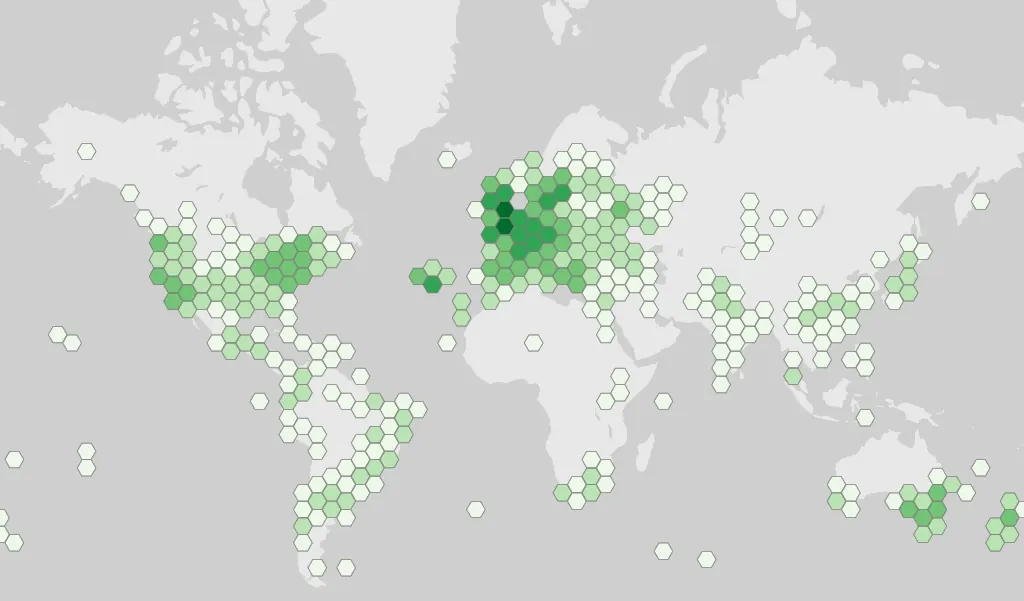
Where does mint grow?
51,939 records of the plant in gardens, fields and the wild worldwide; most photos come from United States, France, Germany, Belgium, and United Kingdom.
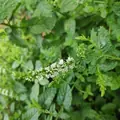
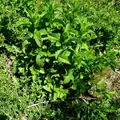

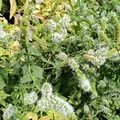
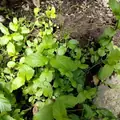
Mint care by growth stage
Greenhouse
| Stage | Watering | Temperature | Feeding |
|---|---|---|---|
| Growth | every 3 days | — | balanced (NPK), at the start of the stage |
| Harvest | every 3 days | — | — |
Open ground
| Stage | Watering | Temperature | Feeding |
|---|---|---|---|
| Growth | every 4 days | — | balanced (NPK), at the start of the stage |
| Harvest | every 4 days | — | — |
At home
| Stage | Watering | Temperature | Feeding |
|---|---|---|---|
| Growth | every 2 days | — | balanced (NPK), at the start of the stage |
| Harvest | every 2 days | — | — |
Growing notes
Light
Full sun or partial shade.
Soil
Rich, moist but well-drained soil high in organic matter, pH about 6–7.5.
Care
Grow it in a pot or a sunken bottomless container so it cannot spread. Water regularly in dry weather but avoid waterlogging, and water the soil rather than the leaves to limit rust. Give one balanced feed in spring; more feeding encourages rust. Pick young shoot tips often to keep plants compact; after flowering cut the whole plant down to about 5 cm. Divide clumps every 3–4 years.
Pests and diseases of Mint
2 problems are recorded for mint; each has a page with symptoms, treatment and prevention.
Diseases
Mint companion plants: good and bad neighbours
Each pair has a source and an evidence level: many companion-planting tips are tradition, not research.
What to plant with mint?
- Cabbage (tradition, little evidence): Mint’s scent is said to keep cabbage pests away. WSU Extension finds that field studies don’t support aromatic plants as repellents in gardens, and Oregon State Extension says there is not enough research yet. Sources: pubs.extension.wsu.edu, extension.oregonstate.edu
Other plants of the Lamiaceae family
Mint belongs to Lamiaceae; 11 other plants of this family have a guide here.
 Oregano
 Rosemary
 Lemon balm
 Thyme
 Sage
 Hyssop
 Basil
 Marjoram
Plant lists it is in
Sources
Figures checked against these sources.
- gbif.org/species/2927175
- wikidata.org/wiki/Q160114
- en.wikipedia.org/wiki/Spearmint
- uk.wikipedia.org/wiki/М'ята_кучерява
- ru.wikipedia.org/wiki/Мята_колосистая
- es.wikipedia.org/wiki/Mentha_spicata
- extension.usu.edu/yardandgarden/research/mint-in-the-garden
- extension.illinois.edu/herbs/mint
- johnnyseeds.com/growers-library/herbs/mint/mint-key-growing-information.html
- johnnyseeds.com/herbs/mint/common-mint-herb-seed-831.html
- rhs.org.uk/herbs/mint/grow-your-own
- plants.ces.ncsu.edu/plants/mentha-spicata/
- extension.oregonstate.edu/catalog/em-9299-integrated-pest-management-strategic-plan-oregon
