 Greenly
How to grow cabbage
Brassica oleracea · white cabbage, green cabbage
When to sow cabbage?
Sow for seedlings about 6 weeks before planting out.
It tolerates light frost: plant out in open ground about three weeks before your last spring frost.
In an unheated greenhouse everything moves about three weeks earlier.
The first harvest comes about 120 days after the shoots appear.
Cabbage (Brassica oleracea) — a hardy cool-season vegetable grown for its dense head. It takes frost well, so different varieties can be grown for spring, summer, autumn and winter harvests. Cabbage grows best in full sun and soil with pH 6–7.5. Water it about every 7 days while it grows.

Quick facts
| Type | Vegetable |
|---|---|
| Latin name | Brassica oleracea |
| Family | Brassicaceae |
| Also called | white cabbage, green cabbage |
| Planted as | seed |
| How it is started | from seedlings or sown straight into the bed |
| Life span | grown for one season |
| Planting season | spring |
| Light | Full sun |
| Soil pH | 6–7.5 |
| Frost | tolerates light frost |
| Soil for sowing | from 5 °C |
| Germination | 10 days |
| Pricking out | 10 days after the shoots appear |
| Seedlings ready | 35 days |
| Shoots to harvest | 120 days |
| Grown in | Greenhouse, Open ground, At home |
How long does it take to grow cabbage?
From sowing to the first harvest: about 130 days (19 weeks). Shoots appear after about 10 days, the seedlings are ready to plant out at about day 45, and the first harvest comes about 85 days after planting out.
- Germination — 10 days
- Seedlings — 35 days
- In the bed — 85 days
| Step | Day |
|---|---|
| Sowing | 0 |
| Shoots appear | 10 |
| Pricking out | 20 |
| Seedlings ready to plant out | 45 |
| First harvest | 130 |
Days count from the day of sowing or planting, by the figures of the card. In an unheated greenhouse the Greenly calendar brings the harvest about 10 % sooner.
Cabbage is number 51 of 63 on our list from the fastest crop to the slowest. Close to it on the list: peanut (127 days), bell pepper (130 days), eggplant (130 days), physalis (130 days). Days to harvest: all vegetables, herbs and berries
Where does cabbage grow?
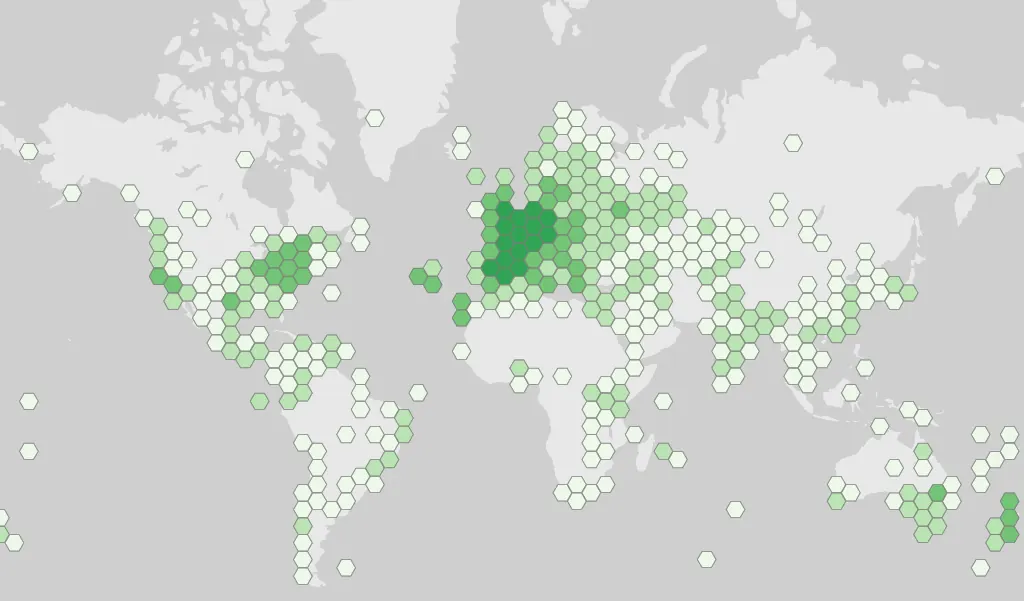
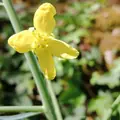
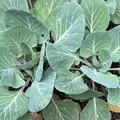
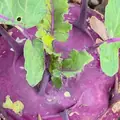
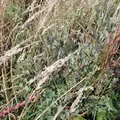
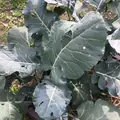
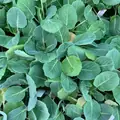
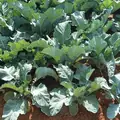
57,208 records of the plant in gardens, fields and the wild worldwide; most photos come from France, Norway, Germany, Spain, and United States.
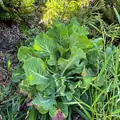
Cabbage care by growth stage
Greenhouse
| Stage | Watering | Temperature | Feeding |
|---|---|---|---|
| Seedlings | every 2 days | 15…21 °C | — |
| Growth | every 4 days | 4…27 °C | nitrogen, 21 days into the stage |
| Harvest | every 5 days | — | — |
Open ground
| Stage | Watering | Temperature | Feeding |
|---|---|---|---|
| Seedlings | every 2 days | 15…21 °C | — |
| Growth | every 7 days | 4…27 °C | nitrogen, 21 days into the stage |
| Harvest | every 7 days | — | — |
At home
| Stage | Watering | Temperature | Feeding |
|---|---|---|---|
| Seedlings | every 2 days | 15…21 °C | — |
| Growth | every 3 days | 4…27 °C | nitrogen, 21 days into the stage |
Growing notes
Light
Needs full sun, at least 6 hours of direct light a day, ideally 8–10.
Soil
Firm, rich, well-drained soil with plenty of organic matter, pH 6–7.5. Lime very acid soil the winter before planting to raise the pH above 6 and deter clubroot.
Care
Water young plants regularly. Once established, give a thorough soaking in dry spells, about 25–50 mm a week; even moisture keeps heads from splitting. Feed nitrogen about three weeks after planting out and stop once heads begin to form. Cover with insect-proof mesh against cabbage white caterpillars. If a ripe head cannot be cut yet, pull the plant up slightly to break some roots so it does not split.
Pests and diseases of Cabbage
12 problems are recorded for cabbage; each has a page with symptoms, treatment and prevention.
Cabbage: all pests and diseases with photos
Diseases
Pests
Nutrient deficiencies
Cabbage companion plants: good and bad neighbours
Each pair has a source and an evidence level: many companion-planting tips are tradition, not research.
What to plant with cabbage?
- Dill (research-backed): In a UNH Extension trial beside brassica crops, flowering dill drew more hoverflies — whose larvae eat aphids — than calendula, phacelia or fennel. Whether that cut aphids on the cabbages was not shown. Sources: extension.unh.edu
- Broad bean (practical reason): Oregon State Extension pairs cabbage-family crops with legumes such as fava beans: legumes add nitrogen to the soil, but only once their roots are left to decay — they don’t feed a neighbouring cabbage the same season (WSU). Sources: extension.oregonstate.edu, pubs.extension.wsu.edu
- Mint (tradition, little evidence): Mint’s scent is said to keep cabbage pests away. WSU Extension finds that field studies don’t support aromatic plants as repellents in gardens, and Oregon State Extension says there is not enough research yet. Sources: pubs.extension.wsu.edu, extension.oregonstate.edu
What not to plant next to cabbage?
- Calendula (research-backed): In a UNH Extension trial of flowers grown beside brassicas to attract beneficial insects, calendula hosted the imported cabbageworm, a cabbage pest, and drew fewer hoverflies than dill or cilantro. Sources: extension.unh.edu
Other plants of the Brassicaceae family
Cabbage belongs to Brassicaceae; 16 other plants of this family have a guide here.
 Watercress
 Bok Choy
 Turnip
 Napa cabbage
 Horseradish
 Broccoli
 Brussels Sprouts
 Cauliflower
Plant lists it is in
Sources
Figures checked against these sources.
- gbif.org/species/3042845
- en.wikipedia.org/wiki/Cabbage
- uk.wikipedia.org/wiki/Качанна_капуста
- ru.wikipedia.org/wiki/Кочанная_капуста
- es.wikipedia.org/wiki/Brassica_oleracea_var._capitata
- extension.umd.edu/resource/growing-cabbage-home-garden
- extension.usu.edu/yardandgarden/research/cabbage-in-the-garden
- extension.colostate.edu/resource/vegetable-planting-guide/
- extension.usu.edu/vegetableguide/brassica/transplant-production
- rhs.org.uk/vegetables/cabbages/grow-your-own
- rhs.org.uk/vegetables/seeds-sowing
- extension.usu.edu/vegetableguide/brassica/soil-fertility
- extension.usu.edu/vegetableguide/brassica/irrigation
- extension.usu.edu/vegetableguide/brassica/planting-spacing-thinning
- extension.umd.edu/resource/care-vegetable-seedlings
