 Greenly
How to grow jerusalem artichoke
Helianthus tuberosus · sunchoke
When to plant jerusalem artichoke?
It tolerates light frost: plant the tubers into the bed about three weeks before your last spring frost.
The first harvest comes about 210 days after planting.
Jerusalem artichoke (Helianthus tuberosus) — a hardy perennial sunflower grown for its knobbly edible tubers, dug from late autumn through winter. Tall plants up to 3 m bear small yellow sunflower-like flowers in late summer and autumn. Jerusalem artichoke grows best in full sun and soil with pH 5.8–7. Water it about every 7 days while it grows.

Quick facts
| Type | Vegetable |
|---|---|
| Latin name | Helianthus tuberosus |
| Family | Asteraceae |
| Also called | sunchoke |
| Planted as | tubers |
| Life span | perennial |
| Planting season | spring |
| Light | Full sun |
| Soil pH | 5.8–7 |
| Frost | tolerates light frost |
| Soil for planting | from 7 °C |
| Growth starts | 14 days after planting |
| First harvest after planting | 210 days |
| Grown in | Open ground |
How long does it take to grow Jerusalem artichokes?
From planting to the first harvest: about 210 days (30 weeks). Growth starts after about 14 days, then it takes about 196 days more to the first harvest.
- Before growth starts — 14 days
- Growing — 196 days
| Step | Day |
|---|---|
| Planting | 0 |
| Growth starts | 14 |
| First harvest | 210 |
Days count from the day of sowing or planting, by the figures of the card.
Jerusalem artichoke is number 7 of 24 perennials and berry bushes on our list, from the fastest to the slowest. Close to it on the list: lemongrass (120 days), horseradish (180 days), artichoke (365 days), passion fruit (365 days). Days to harvest: all vegetables, herbs and berries
Where does jerusalem artichoke grow?
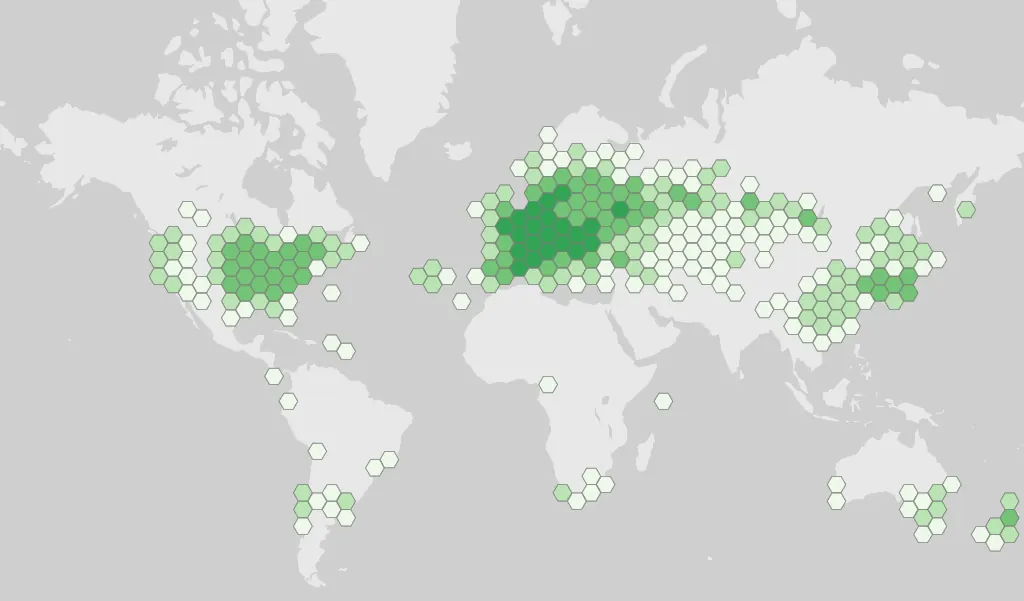
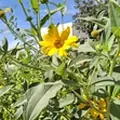
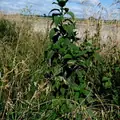
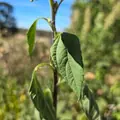
56,264 records of the plant in gardens, fields and the wild worldwide; most photos come from United States, Russia, Germany, France, and Italy.


Jerusalem artichoke care by growth stage
Open ground
| Stage | Watering | Temperature | Feeding |
|---|---|---|---|
| Germination | — | — | — |
| Growth | every 7 days | 18…27 °C | balanced (NPK), 30 days into the stage; balanced (NPK), 60 days into the stage |
| Flowering | every 7 days | 18…27 °C | balanced (NPK), at the start of the stage |
| Harvest | — | — | — |
Growing notes
Light
Best in full sun; it still crops in partial shade, but the harvest is smaller.
Soil
Moderately fertile, moisture-retentive but well-drained soil; adapts to a wide pH range, about pH 5.8–7. Heavy, waterlogged clay rots the tubers and lowers yields.
Care
Plant tubers the size of a hen's egg 10–15 cm deep and 30–60 cm apart in early spring. Water during dry spells, especially from late summer when the tubers swell, and earth up the stems to 15 cm when they are 30 cm tall. Stake or shorten tall stems to 1.5 m in windy sites. Dig the tubers from late autumn, after the foliage dies back; they keep best in the ground, frost is said to improve the flavour, and any tuber left behind will sprout next year.
Pests and diseases of Jerusalem artichoke
1 problem is recorded for jerusalem artichoke; it has a page with symptoms, treatment and prevention.
Diseases
Other plants of the Asteraceae family
Jerusalem artichoke belongs to Asteraceae; 20 other plants of this family have a guide here.
 Lettuce
 Artichoke
 Yacón
 Chicory
 Chamomile
 Sunflower
 Black-eyed Susan
 Cosmos
Plant lists it is in
Sources
Figures checked against these sources.
- gbif.org/species/3119175
- wikidata.org/wiki/Q146190
- en.wikipedia.org/wiki/Jerusalem_artichoke
- uk.wikipedia.org/wiki/Топінамбур
- ru.wikipedia.org/wiki/Топинамбур
- es.wikipedia.org/wiki/Helianthus_tuberosus
- rhs.org.uk/vegetables/jerusalem-artichokes/grow-your-own
- hort.purdue.edu/newcrop/afcm/jerusart.html
- ohioline.osu.edu/factsheet/anr-0167
- uaex.uada.edu/publications/PDF/FSA-6088.pdf
