 Greenly
How to grow potato
Solanum tuberosum · spud
When to plant potato?
Plant the tubers straight into the bed after your last spring frost, once the soil has warmed.
In an unheated greenhouse everything moves about three weeks earlier.
The first harvest comes about 110 days after planting.
Potato (Solanum tuberosum) — a starchy tuber crop grown from certified seed potatoes. Needs loose soil for the tubers and an even supply of water while they form. Potato grows best in full sun and soil with pH 5–6.5. Water it about every 7 days while it grows.

Quick facts
| Type | Vegetable |
|---|---|
| Latin name | Solanum tuberosum |
| Family | Solanaceae |
| Also called | spud |
| Planted as | tubers |
| Life span | grown for one season |
| Planting season | spring |
| Light | Full sun |
| Soil pH | 5–6.5 |
| Frost | does not tolerate frost |
| Soil for planting | from 7 °C |
| Growth starts | 21 days after planting |
| First harvest after planting | 110 days |
| Grown in | Greenhouse, Open ground |
How long does it take to grow potatoes?
From planting to the first harvest: about 110 days (16 weeks). Growth starts after about 21 days, then it takes about 89 days more to the first harvest.
- Before growth starts — 21 days
- Growing — 89 days
| Step | Day |
|---|---|
| Planting | 0 |
| Growth starts | 21 |
| First harvest | 110 |
Days count from the day of sowing or planting, by the figures of the card. In an unheated greenhouse the Greenly calendar brings the harvest about 10 % sooner.
Potato is number 43 of 63 on our list from the fastest crop to the slowest. Close to it on the list: chickpea (110 days), corn (110 days), tiger nut (110 days), melon (117 days). Days to harvest: all vegetables, herbs and berries
Where does potato grow?
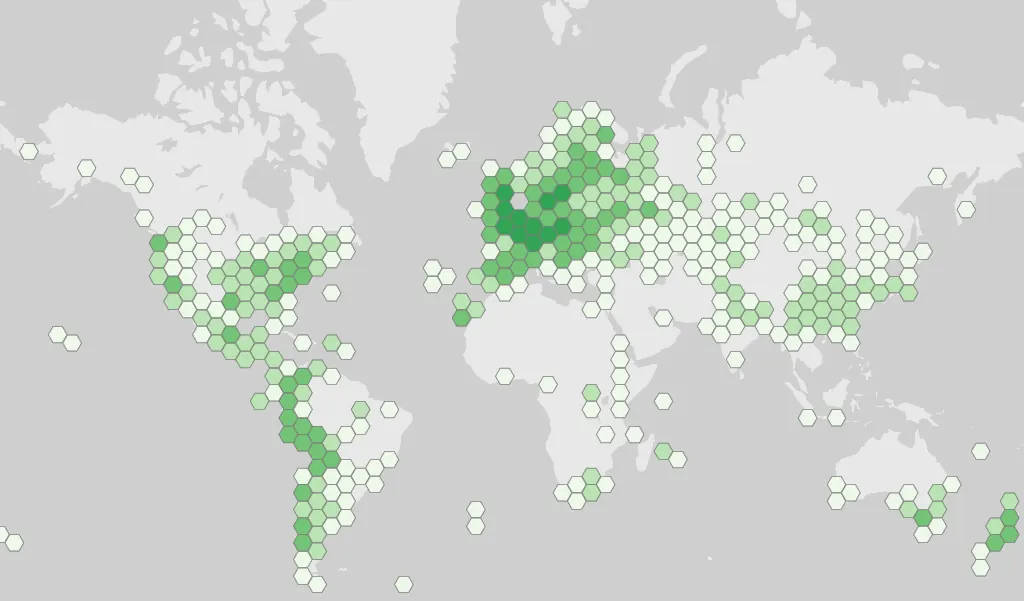
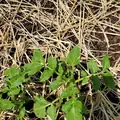
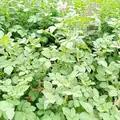
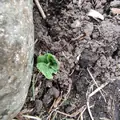
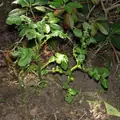
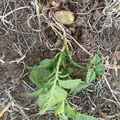
98,671 records of the plant in gardens, fields and the wild worldwide; most photos come from New Zealand, Germany, Norway, Russia, and United States.
Potato care by growth stage
Greenhouse
| Stage | Watering | Temperature | Feeding |
|---|---|---|---|
| Growth | every 4 days | — | balanced (NPK), 21 days into the stage |
| Flowering | every 4 days | — | — |
| Fruiting | every 4 days | — | — |
Open ground
| Stage | Watering | Temperature | Feeding |
|---|---|---|---|
| Growth | every 7 days | — | nitrogen, 21 days into the stage |
| Flowering | every 7 days | — | — |
| Fruiting | every 7 days | — | — |
Growing notes
Light
Full sun for the foliage, at least 6 hours a day. Keep the tubers covered with soil — in light they turn green and poisonous.
Soil
Loose, well-drained, fertile soil, pH 6.0–6.5. Where scab is a persistent problem, a more acidic soil (pH 4.8–5.8) helps; do not add large amounts of fresh manure.
Care
Plant seed potatoes about 10–15 cm deep and 30–37 cm apart. When the shoots are about 23 cm tall, draw soil up around them, and repeat as they grow so no tubers are exposed. Water deeply once a week in dry weather, about 25 mm, especially while tubers are forming; uneven watering causes cracks and hollow tubers. On poor soil give a nitrogen feed about six weeks after planting. Reduce watering when the foliage starts to yellow, and for storage leave the tubers in the ground for two weeks after the tops die so the skins thicken. Under glass, grow early varieties in containers at least 30 cm wide and deep, one seed potato per 30 cm, water regularly and feed with a general-purpose fertiliser.
Pests and diseases of Potato
18 problems are recorded for potato; each has a page with symptoms, treatment and prevention.
Potato: all pests and diseases with photos
Diseases
- Bacterial soft rot
- Bacterial wilt (brown rot of potato): The youngest leaves wilt first, then the whole plant wilts quickly in warm weather while the leaves stay green, even though the soil is moist.
- Black scurf: Hard, irregular black crusts (sclerotia) on the tuber skin that look like dirt but do not wash off; the flesh underneath is sound and they peel away.
- Common scab
- Early Blight: Brown to black spots on the lower, older leaves first, with concentric rings like a target and a yellow halo; spotted leaves yellow and fall.
- Late Blight: Pale green to brown spots with water-soaked edges on the leaves that spread fast; leaves collapse, shrivel and turn brown, and stem lesions are brown to almost black.
- Potato blackleg: Early in the season, some stems are stunted and pale green or yellow, with yellow leaves.
- Tomato spotted wilt virus
- Verticillium wilt
- White mould (Sclerotinia)
Pests
- Broad mite
- Chafer grubs
- Colorado Potato Beetle: Oval yellowish beetles about 1 cm long with ten black stripes on their wing covers.
- Flea beetles
- Leaf Miner
- Tomato hornworm: Thick green caterpillars up to 10 cm long with a horn at the rear end and eight white V-shaped stripes on each side; the similar tobacco hornworm has seven diagonal stripes.
- Tomato russet mite
- Wireworms
Potato companion plants: good and bad neighbours
Each pair has a source and an evidence level: many companion-planting tips are tradition, not research.
What not to plant next to potato?
- Strawberry (practical reason): Potatoes build up Verticillium wilt in the soil, a disease strawberries suffer from too. Penn State Extension advises against a new strawberry bed where potatoes or their relatives grew, with a 3–5 year rotation. Sources: extension.psu.edu
- Tomato (practical reason): The same late blight (Phytophthora infestans) attacks both, and its spores travel on wind and rain splash. WSU Extension advises not to plant potatoes and tomatoes close together; the RHS adds a four-year rotation. Sources: hortsense.cahnrs.wsu.edu, rhs.org.uk
- Walnut (practical reason): Potatoes are listed as sensitive to juglone, which walnut roots give off; the most juglone is right under the tree, where the roots are. English walnut has some juglone, far less than black walnut, so plant potatoes outside its root zone. Sources: hort.extension.wisc.edu, ask.extension.org
- Cucumber (tradition, little evidence): Old companion charts, including the UC Master Gardener chart, say cucumbers and potatoes should not share a bed. No trial we found tests it; WSU Extension says such pairings are mostly folklore. Sources: class.ucanr.edu, pubs.extension.wsu.edu
Other plants of the Solanaceae family
Potato belongs to Solanaceae; 7 other plants of this family have a guide here.
 Tomato
 Bell Pepper
 Chili Pepper
 Eggplant
 Goji
 Physalis
 Petunia
Plant lists it is in
Sources
Figures checked against these sources.
