 Greenly
How to grow walnut
Juglans regia · common walnut, Persian walnut, English walnut
When to plant walnut?
Planted as a young plant from a nursery while it is dormant — in early spring before the buds open, or in autumn after leaf fall.
Harvest from September to November (northern hemisphere).
Walnut (Juglans regia) — a large nut tree, 10–25 m tall, grown for its walnuts, which fall in autumn as the husk splits. It starts bearing at 4–6 years but gives a good crop only after 15–20 years; its roots release juglone, which harms tomatoes and some other plants. Walnut grows best in full sun and soil with pH 6–7. Water it about every 7 days while it grows.

Quick facts
| Type | Fruit tree |
|---|---|
| Latin name | Juglans regia |
| Family | Juglandaceae |
| Also called | common walnut, Persian walnut, English walnut |
| Planted as | young plants from a nursery |
| Life span | perennial |
| Light | Full sun |
| Soil pH | 6–7 |
| Frost | tolerates light frost |
| First harvest after planting | about 4 years |
| Flowering | about 7 days after the last spring frost |
| Flowering lasts | 10 days |
| Harvest months | September to November (northern hemisphere) |
| Pruning | in late winter, before growth starts |
| Grown in | Open ground |
Where does walnut grow?
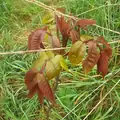
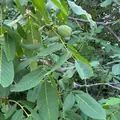
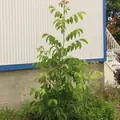
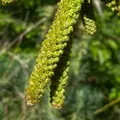
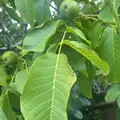
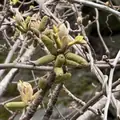
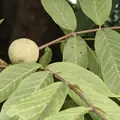
262,013 records of the plant in gardens, fields and the wild worldwide; most photos come from France, Spain, Italy, Germany, and United Kingdom.

Walnut care by growth stage
Open ground
| Stage | Watering | Temperature | Feeding |
|---|---|---|---|
| Growth | every 7 days | — | organic, at the start of the stage |
| Flowering | every 7 days | — | — |
| Fruiting | every 7 days | — | — |
| Harvest | every 7 days | — | — |
| Winter rest | — | — | — |
Growing notes
Light
A light-demanding tree: full sun, at least six hours a day, in a spot sheltered from wind.
Soil
Deep, well-drained, permeable soil at least 1.5 m deep, with a pH of 6–7.
Care
Plant young: the deep taproot makes older trees hard to move, and plant two cultivars so their bloom overlaps. From the second year spread compost around the tree in spring, away from the trunk. Prune in winter, thinning crowded branches to let light in. Gather the nuts when the green hulls start to split and dry them.
How to tell it is ripe
- The green husk cracks open, showing the brown, wrinkled shell.
- Nuts start dropping to the ground.
- Cut into a husk: on a mature nut it comes away cleanly from the shell.
- Knock or shake the nuts down once the husks begin to split, gather fallen ones often wearing gloves because the husk stains skin, and start drying them within a day.
Pests and diseases of Walnut
5 problems are recorded for walnut; each has a page with symptoms, treatment and prevention.
Walnut: all pests and diseases with photos
Diseases
Pests
- Codling moth: A hole in the side or the eye end of the fruit, often plugged with reddish-brown crumbly droppings.
- Leaf rollers
- San José scale
- Scale insects
Walnut companion plants: good and bad neighbours
Each pair has a source and an evidence level: many companion-planting tips are tradition, not research.
What not to plant next to walnut?
- Bell Pepper (practical reason): Peppers are among the vegetables Wisconsin Extension lists as hurt by juglone from walnut roots. English walnut releases much less than black walnut, yet a bed under any walnut also loses light and water to the tree. Sources: hort.extension.wisc.edu, ask.extension.org
- Potato (practical reason): Potatoes are listed as sensitive to juglone, which walnut roots give off; the most juglone is right under the tree, where the roots are. English walnut has some juglone, far less than black walnut, so plant potatoes outside its root zone. Sources: hort.extension.wisc.edu, ask.extension.org
- Tomato (practical reason): Walnut roots release juglone, and tomatoes are on extension lists of sensitive plants (lists based on observation, not trials). Black walnut makes the most; English walnut much less — but under its crown tomatoes also lack sun. Sources: hort.extension.wisc.edu, ask.extension.org
Plant lists it is in
Sources
Figures checked against these sources.
- gbif.org/species/3054368
- wikidata.org/wiki/Q46871
- ru.wikipedia.org/wiki/Орех_грецкий
- plants.ces.ncsu.edu/plants/juglans-regia/
- ucanr.edu/site/uc-marin-master-gardeners/document/walnut
- en.wikipedia.org/wiki/Juglans_regia
- patents.google.com/patent/USPP28529P3/en
- extension.oregonstate.edu/catalog/pub/ec-819-growing-tree-fruits-nuts-home-orchard
- extension.unh.edu/blog/fall-good-time-plant-trees-and-shrubs
- ipm.ucanr.edu/home-and-landscape/harvesting-and-storing-walnuts/
- extension.oregonstate.edu/sites/extd8/files/documents/12281/harvesting-handling-storing-nu
